
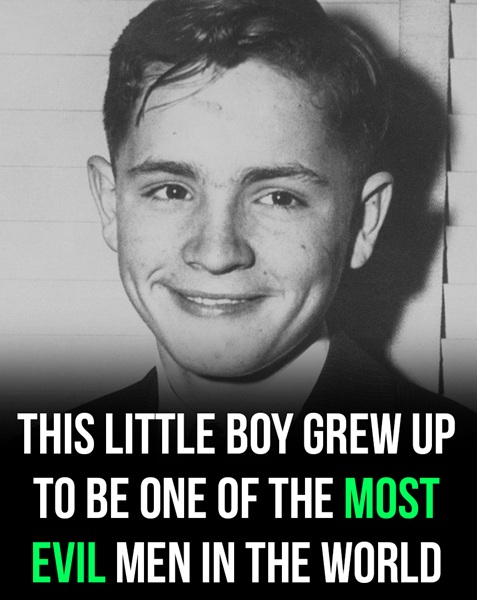
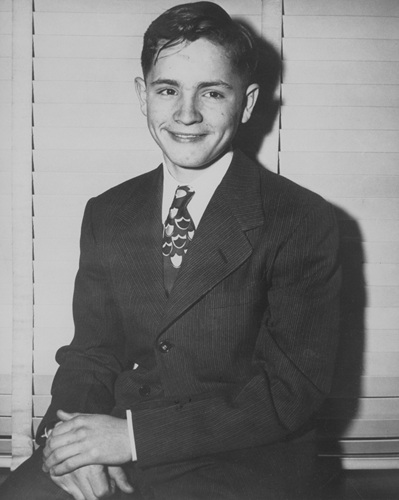
Even the most innocent-looking child can grow into something unrecognizable when their early life is shaped by chaos, violence, abandonment, and instability.
This statement rings tragically true in the case of Charles Manson, one of history’s most infamous criminals. His life story illustrates how a troubled upbringing combined with societal neglect.
Mental instability, and charismatic manipulation can create a figure capable of orchestrating unimaginable violence. What follows is a detailed examination of Manson’s life—from his birth in Cincinnati, Ohio, through a turbulent childhood and adolescence, to his rise as the head of a murderous cult, the Manson Family, culminating in the shocking crimes of 1969 and his decades-long incarceration.
Early Life: Birth into Turmoil
Charles Milles Manson was born on November 12, 1934, in Cincinnati, Ohio, to a 16-year-old mother, Kathleen Maddox. His father was largely absent from his life, a con artist who disappeared before Manson was born, leaving Kathleen to raise him in extremely unstable circumstances. His early years were marked by neglect, abuse, and frequent changes in guardianship.
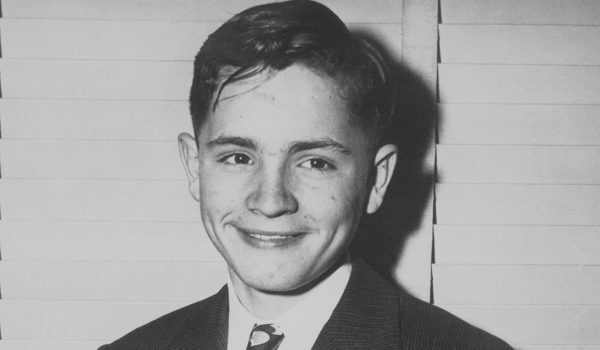
By the age of four, after Kathleen had been arrested for assault and robbery, young Charles was sent to live with his aunt and uncle in McMechen, West Virginia.
Kathleen’s crime had been especially violent: alongside her brother Luther, she had smashed a bottle over a man’s head before stealing his car. Luther received ten years in prison, while Kathleen was sentenced to five years—serving only three.
Despite court-mandated visits with his mother, Manson often resisted. After her release, the initial period of maternal contact was described as the happiest in his young life, but it was short-lived.
Kathleen soon descended into alcoholism, disappearing for days at a time and leaving Charles in the care of a rotating cast of babysitters. Eventually, frustrated with his behavior, she sent him to reform school, though the strict institutions were unable to contain his increasingly aggressive tendencies.
Early Signs of Trouble
By age nine, Manson would later claim, he had set one of his schools on fire, a harbinger of his later fascination with destruction. He also regularly got into trouble for truancy, petty theft, and running away from home.
At 13, he was placed in the Gibault School for Boys in Terre Haute, Indiana, a Catholic institution run by strict priests who used corporal punishment for even minor infractions.
Manson fled multiple times, first returning briefly to his mother, who sent him back, and later heading to Indianapolis, where he began committing burglaries to survive. During this period, he lived homeless in the woods, under bridges, and wherever he could find shelter.
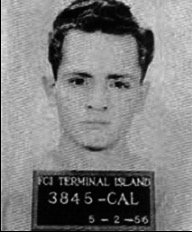
Arrests and juvenile detention stints followed. At a school in Omaha, Nebraska, he and a classmate stole a car and committed armed robberies in just four days, marking the beginning of what would become a lifelong pattern of criminality.
Manson even developed an eccentric “self-defense tactic” he referred to as the ‘insane game,’ in which he would shriek, contort his face, and wildly flail his arms to convince stronger attackers that he was mentally unhinged.
Adolescence: Escalating Crime and Institutionalization
For a brief period, Manson attempted to live a straight life, working as a Western Union messenger. But the pull of crime proved too strong. His antisocial behavior escalated rapidly, and psychiatric evaluations would later describe him as “aggressively anti-social.”
During his time in federal reformatories, Manson committed sexual assaults on other boys at knifepoint, engaged in repeated sexual acts with inmates, and was subsequently transferred to maximum-security facilities. By the time he reached 21, his release set him on a trajectory defined by manipulation, theft, and violence.
Even in adulthood, Manson displayed an unsettling ability to influence and control people, particularly vulnerable women. He moved across states in stolen cars, flirted with criminal enterprises, and attempted to build networks for prostitution and other illicit activities.
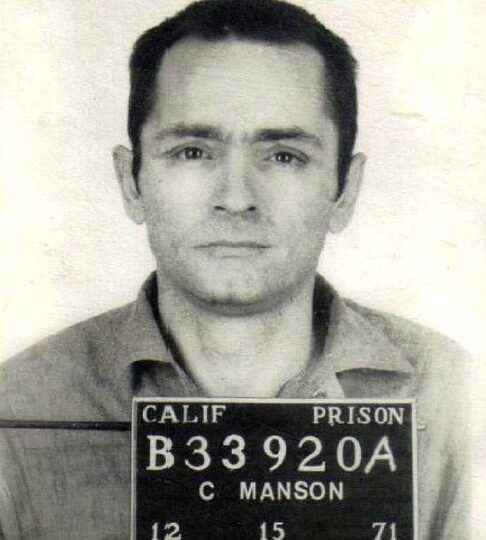
Early Experiments with Hypnosis and Control
During a sentence at McNeil Island penitentiary in Washington, Manson experimented with hypnosis, practicing on fellow inmates, including actor Danny Trejo. These skills would later become tools in manipulating members of what would become known as the Manson Family.
By the late 1960s, Manson’s mental state had fractured further. He began claiming delusions of grandeur, convincing vulnerable followers that he was a prophetic figure.
He even claimed that The Beatles were sending him messages through their songs, interpreting lyrics as instructions for his apocalyptic vision.
The “Helter Skelter” Plan and Cult Formation
From these delusions arose the infamous “Helter Skelter” plan, a supposed prophecy in which Manson envisioned a race war that would destroy society.
He believed that, following the chaos, he and his followers would survive in a hidden desert bunker and then dominate the world’s Black population, whom he imagined could not survive independently.
Prior to these crimes, Manson had attempted a music career on the West Coast. He mingled with notable figures in the Los Angeles music scene and even befriended Dennis Wilson of The Beach Boys, hoping to gain fame and fortune.
However, rejection and humiliation fueled his obsession with revenge, which eventually transformed into violent mania.
The 1969 Murders
In August 1969, Charles Manson orchestrated a series of brutal murders that would shock the world. His cult, the Manson Family, carried out the killings under his direct influence:
Sharon Tate, a rising actress, and her unborn child were murdered.
Four others in Tate’s home were killed: Jay Sebring, Abigail Folger, Wojciech Frykowski, and Steven Parent.
The following night, Leno and Rosemary LaBianca were killed in a similarly gruesome fashion.
Tex Watson, one of Manson’s followers, later recounted that Manson instructed them to “totally destroy everyone” and make the killings “as gruesome as you can.”
These murders were carried out with chilling precision and brutality, leaving the nation in shock. The term “Manson Family murders” would become synonymous with pure evil in the public imagination.
Manson’s Criminal Profile and Influence
Even though Manson never physically committed the murders, prosecutors argued that his beliefs, manipulations, and teachings directly facilitated the killings.
His charisma allowed him to control and influence multiple vulnerable followers, demonstrating a unique blend of psychological manipulation, charisma, and sadism.
Victims were chosen carefully to create terror, and symbols were left at crime scenes to sow confusion and panic. Manson’s actions showed a strategic, albeit deranged, criminal mind, combining elements of cult leadership, extreme psychopathy, and meticulous planning.
Trial and Conviction
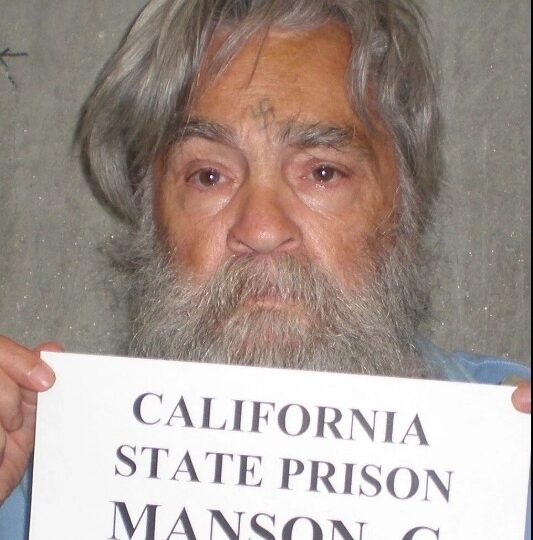
In 1971, Charles Manson was convicted of multiple murders, including those of Tate, LaBianca, musician Gary Hinman, and ranch hand Donald Shea. He was sentenced to death, with prosecutors emphasizing that, even though he did not personally commit the murders, his orders and ideological influence were tantamount to direct responsibility.
Shortly afterward, his sentence was commuted to life imprisonment after California abolished the death penalty. Manson would spend the remainder of his life incarcerated, applying for parole twelve times, each request denied.
Life in Prison and Death
While in prison, Manson continued to be a figure of fascination, attracting media attention and maintaining influence among followers outside the facility. Despite his notoriety, he remained incarcerated for nearly five decades, largely isolated from the general population.
Charles Manson died in 2017 at the age of 83, following complications from colon cancer and cardiac arrest. His death marked the end of a life characterized by violence, manipulation, and profound psychological disturbance.
Legacy: Cultural and Social Impact
Even after his death, Manson’s influence lingered over pop culture, criminology, and psychology:
The name “Manson” became synonymous with evil and manipulation.
Musicians, filmmakers, and authors drew inspiration from his crimes, with countless books, documentaries, and films exploring the story of the Manson Family.
He became a subject in discussions of cult psychology, criminal manipulation, and the impact of childhood trauma on adult behavior.
Prosecutor Vincent Bugliosi, who helped secure Manson’s conviction, famously noted: “The very name Manson has become a metaphor for evil—and evil has its allure.”
Indeed, the allure of Manson’s story lies not in admiration, but in its horrifying demonstration of how charisma, delusion, and sociopathy can converge with catastrophic results.
Early Trauma as a Factor
Psychologists and criminologists have examined Manson’s early life in depth. His abandoned, chaotic upbringing—marked by neglect, instability, and abuse—likely contributed to his development as a manipulative and antisocial individual.
While this context does not excuse his actions, it provides insight into the interplay of nature, nurture, and environment in creating one of history’s most infamous criminals.
From a young age, Manson experienced:
Neglect: His mother’s alcoholism and absences left him without stable care.
Abuse: Exposure to institutional beatings and violent household environments.
Criminal Modeling: His mother and uncle were involved in violent crimes.
Societal Alienation: Frequent moves, reform schools, and homelessness prevented him from forming healthy attachments.
These factors, combined with inherent personality traits and later psychosis, shaped his trajectory from a troubled child to a man capable of orchestrating mass murder.
Conclusion
Charles Manson’s story is a chilling reminder of the potential consequences of early trauma, unstable family environments, and charismatic psychopathy.
Born into chaos and neglect, he transformed from a mischievous, troubled child into the leader of one of the most notorious cults in history.
From his early fires and petty thefts to the horrific Tate-LaBianca murders, Manson’s life illustrates the intersection of psychological disturbance, criminal ingenuity, and cult dynamics. Despite spending decades behind bars, his influence—both literal and cultural—remains a grim chapter in the annals of American crime.
Charles Manson died in 2017 at 83, leaving behind a legacy defined not by fame or achievement, but by fear, manipulation, and the darkest extremes of human behavior.
His life is studied, dissected, and remembered, not for admiration, but as a stark cautionary tale: even the most unassuming child, when shaped by trauma and neglect, can evolve into something unthinkably destructive.

