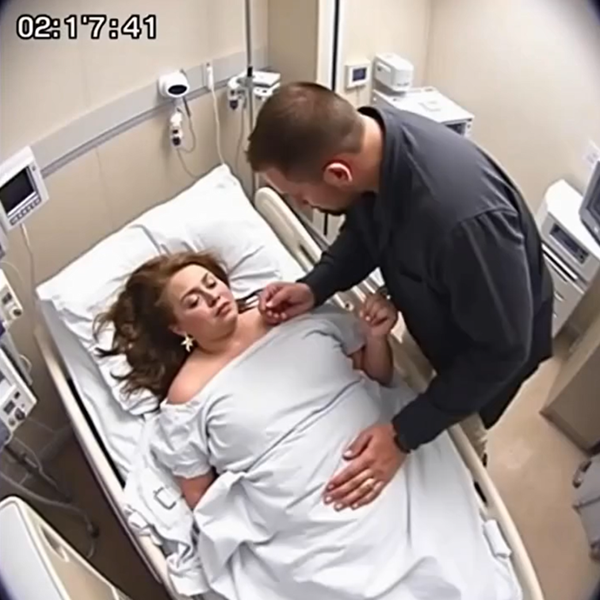
The ward was eerily quiet that night. The only sounds were the rhythmic beeping of the machines and the soft hum of the ventilation system.
A dim night lamp cast a gentle glow across the sterile room, illuminating the pale features of a woman lying motionless on her hospital bed. For three months, she had been in a coma.
Her body unresponsive, yet somehow, her presence filled the room with an invisible weight. Nurses moved quietly around the edges, careful not to disturb her or the man who had been visiting daily for nearly as long.
Her husband, a man whose dedication had become the talk of the hospital staff, entered the room as he did every evening. His face, a mixture of exhaustion, grief, and unshakable love, betrayed the emotional toll that the past three months had taken on him.

Despite the relentless tide of fear, uncertainty, and sadness, he had never missed a single visit. He would hold her hand, brush a strand of hair from her forehead, and whisper soft words of love and encouragement.
To those who witnessed it, his devotion seemed almost otherworldly—a beacon of unwavering commitment in a place often overshadowed by despair.
But that night was different. That night carried a weight unlike any other. The doctors had gathered the courage to have the hardest conversation of their careers.
They had explained, gently yet clearly, that the woman’s body was failing, that every system was gradually shutting down, and that the medical interventions that had kept her alive for these months had reached their limit.
They spoke of the difficult decision that awaited her husband, the necessity of letting go, and the inevitability of saying a final goodbye.
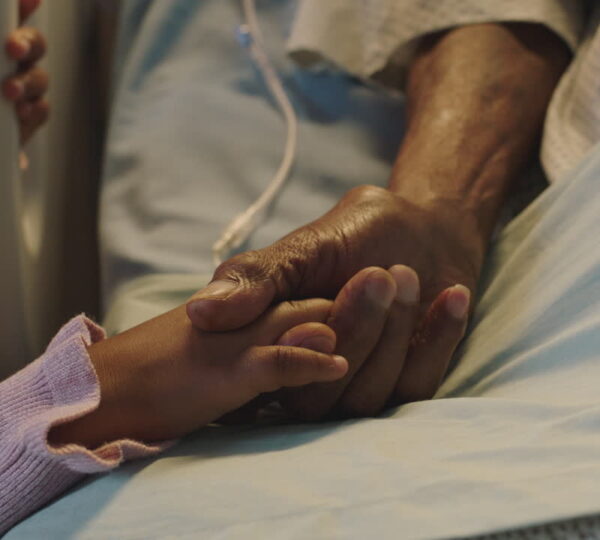
When the words landed, he did not immediately respond. His eyes filled with tears that he could no longer hold back. He sank to the chair beside the bed, grasping her hand tightly as though his very grip could anchor her soul to the world.
His shoulders shook with the weight of his grief, and it was as if the world outside the ward had vanished entirely. Only the two of them existed in that quiet, sterile room.
The air felt thick, almost suffocating, with the intensity of emotion that hung between them.

He begged the doctors for more time, for just a few precious moments to say farewell. They allowed it, stepping quietly to the door and leaving him alone with the woman he had loved for decades.
He leaned closer, pressing his lips gently to her cold forehead. The familiar warmth he had cherished for years seemed distant now, replaced by the clinical chill of hospital life.
And then, in a voice barely audible, trembling with emotion and pain, he whispered something that no one in the room—or even behind the doors—could have anticipated.
The words were horrifying in their content yet born from a place of profound anguish. He confessed, not to the nurses or doctors, but to her alone, a truth he had hidden for years—a secret that had gnawed at his conscience but remained unspoken in their lifetime together.
His revelation was so stark, so chilling, that if anyone had been watching, they would have been frozen in place, unable to look away. Yet, the confession carried no malice, only a desperate human need to unburden the soul before letting go.
Unknown to him, someone had been observing the scene from the doorway. A nurse, compelled by curiosity or perhaps an instinct to ensure his safety, watched silently.
She had seen him enter every day, whispering love and hope into a room that seemed to have no light. She had witnessed his breakdowns, his desperate pleas, and his moments of quiet prayer.
But what she saw that night was unlike anything she could have imagined. The man who had seemed the epitome of devotion was now revealing a dimension of his character that was deeply unsettling, yet profoundly human.
As the seconds ticked by, the room seemed to shrink, the machines’ beeping growing louder in the hushed tension. The husband remained bent over the woman, his voice still low, but steady now.
The words he spoke were a mix of confession, regret, and love—a raw, unfiltered outpouring that spoke to the complexity of human emotion.
It was a moment of complete vulnerability, the kind that leaves a lasting impression on anyone who witnesses it, even from a distance.
After what felt like an eternity, he finally pulled back, resting his forehead against the back of his hand as if drawing strength from the same air she breathed. He sat silently for a few moments longer, holding her hand as though willing her to feel the warmth of his touch one last time.
Then, finally, with trembling hands and a heart heavy with sorrow, he nodded to the doctors. The moment had arrived to disconnect the machines that had kept her alive for these long, difficult months.
The medical team, trained to handle death daily yet never truly immune to its weight, began their preparations. Machines that had once hummed with life were methodically shut down, one by one.
The lights in the room remained dim, preserving the intimacy of the moment, while the husband remained a steadfast presence, refusing to leave her side. Every beep that ceased felt like a small victory and a profound loss simultaneously—a paradox that haunted everyone in the room.
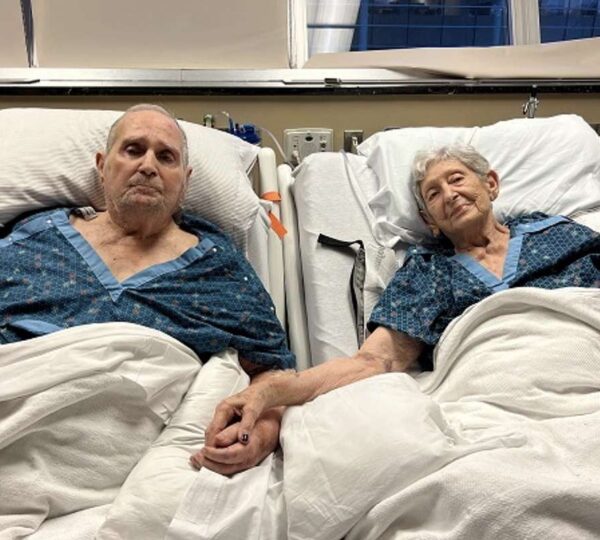
As the final machine went silent, the woman’s body began its slow, inevitable journey toward stillness. The husband leaned closer once more, pressing his lips gently to her hand.
Though she would never hear his words, the whisper he had shared in those final moments was a cathartic release for him, a way to reconcile the guilt and sorrow that had shadowed his heart for so long.
The nurse behind the door, though unseen, felt the depth of the moment as acutely as if she had been part of it.
She realized that sometimes the human heart carries burdens far heavier than the body ever reveals, and that love—complex, flawed, and at times terrifying—is both fragile and unbreakable.
In the days that followed, the story of the husband’s final whisper spread quietly among the hospital staff. Some were shocked by the content of his confession, while others were moved by the profound depth of his love and dedication.
The incident sparked conversations about the hidden dimensions of relationships, the weight of unspoken truths, and the ways in which grief can manifest in unpredictable ways.
It became a cautionary tale and a testament to human vulnerability, a story that reminded everyone that the line between devotion and desperation is often razor-thin.
Though the woman never awoke, her husband found a measure of peace in having spoken his truth. The whisper, terrifying though it was, served as a bridge between life and death—a final act of honesty, love, and reconciliation.
In the sterile quiet of the hospital ward, in the midst of machines and monitors, a profoundly human story unfolded: one that spoke to the pain of loss, the burden of secrets, and the enduring power of love.
This story, shocking yet moving, leaves an indelible mark on all who hear it. It is a reminder that even in the darkest moments, the human heart seeks connection, understanding, and release.
And sometimes, the most horrifying whispers are not those meant to harm, but those meant to unburden the soul before the final farewell.
