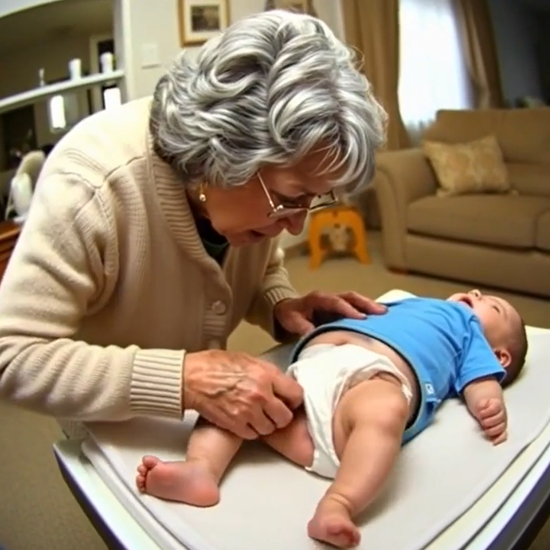
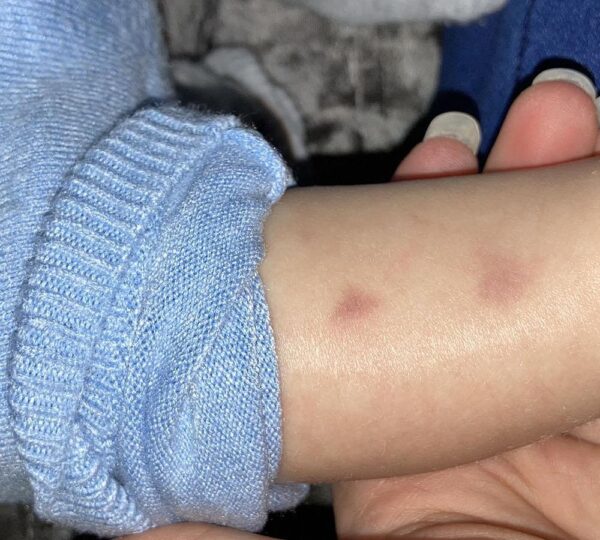
The moment the realization hit, a heavy, painful knot formed deep in my stomach. My hands trembled slightly as I stared at the bruises marring my grandson’s delicate body.
The thought that either my son or daughter-in-law might be responsible was unbearable, almost impossible to comprehend. They were the people I had trusted, the ones I had loved unconditionally.
But the evidence before me could not be ignored. Each mark, each tiny welt on Liam’s arms and legs, screamed of a darkness I could not look away from. That night, sleep eluded me entirely. I sat in a quiet corner of the hospital room, the faint hum of medical equipment the only sound breaking the silence.
Liam lay in his crib, eyes closed, chest rising and falling with the fragile rhythm of a child who had already endured too much. I watched him, memorizing the curve of his cheek, the softness of his hair, the innocence in his small hands. And yet, the bruises told a story I could not reconcile with the child I loved so fiercely.
Memories of recent weeks flashed before me — moments when I had noticed subtle changes in the household. Jared, my son, had always been gentle, patient, and caring. Yet lately, there had been a tension in his shoulders, a sharpness in his tone that hadn’t been there before.
Amanda, his wife, seemed perpetually overwhelmed, rushing through daily tasks, snapping occasionally when minor frustrations mounted. But could those moments truly explain what I saw on Liam’s body? My mind wrestled with denial, hope, and the unbearable weight of truth all at once.
By morning, I knew action had to be taken. Liam’s safety could no longer be compromised. Authorities were contacted, and soon a detective and a child protective services worker were seated across from me in a small, sterile conference room.
The fluorescent lights cast a clinical glare on the polished table, making the moment feel even more stark and real. Their questions were measured but pointed, designed to extract truth without causing undue panic.
“Has Jared or Amanda ever shown signs of aggression?” the detective asked gently, as if trying to offer me comfort while seeking the information they needed.
I hesitated, my mind racing. Memories of Jared’s fleeting irritations, Amanda’s clipped responses, the quiet tension in their home all came rushing forward. But none of it was definitive. They were good parents in many ways. But Liam’s bruises could not be ignored.
“No,” I whispered finally, my voice barely audible. “But… the bruises. They can’t be ignored.”
It was the hardest admission I had ever made. It pained me to suspect my own children, but the reality demanded vigilance. Liam was kept in the hospital for observation while the investigation began.
I visited him as often as I could, watching over him like a guardian, attuned to every small movement, every flicker of his eyes. He was so small, so delicate, and yet remarkably strong in ways that only children can be. His resilience became both my comfort and my heartbreak.
The days stretched into a week, each one a test of patience, faith, and emotional endurance. Jared and Amanda were interviewed separately, their accounts riddled with confusion, defensiveness, and vague explanations.
They claimed the bruises must have occurred at daycare or during an accidental tumble, but their voices lacked conviction. Every answer seemed rehearsed, incomplete, or disconnected from the truth.
One afternoon, as I sat quietly by Liam’s hospital crib, carefully adjusting his blanket, Jared entered. The transformation in him was immediate and stark.
He looked older, worn down by the strain of sleepless nights, worry, and the guilt that came with uncertainty. His eyes were red-rimmed, tears threatening to spill over, his usual composure replaced by a vulnerability I had rarely seen.
“Mom,” he said, his voice cracking as he approached, “we would never hurt him. You have to believe me.”
I wanted to reach out, to cradle him in my arms, to reassure him that everything would be alright. But the image of Liam’s bruises haunted me relentlessly. I took a deep breath, forcing myself to maintain composure, choosing my words with care.
“I want to believe you, Jared. I really do. But until we find out what’s happening, we have to keep Liam safe.”
The tears began to flow freely then, a release I had been holding back for days. Jared nodded, wiping at his eyes with the back of his hand, a gesture of both frustration and surrender. “I just want him to be okay,” he said softly, the honesty of his words piercing my heart.
It was perhaps the most honest statement he could have made, and in that moment, a glimmer of hope emerged. Maybe this crisis could serve as a wake-up call, a catalyst for change, reflection, and healing.
Maybe, just maybe, they could find a way to move forward — as individuals, as parents, and ultimately, as a family.
The investigation was slow and meticulous. Detectives reviewed the timeline, medical staff documented Liam’s injuries, and social workers assessed the home environment. I attended every meeting I could, advocating fiercely for Liam’s safety while struggling to maintain fairness toward my son and daughter-in-law.
It was a delicate balance — protecting Liam without prematurely condemning Jared and Amanda — but I knew the stakes could not be higher.
Each visit to the hospital became a ritual. I would sit by Liam’s side for hours, reading softly, telling him stories from our family’s past, humming lullabies his parents had sung to him when he was smaller.
Every moment was imbued with the urgency of my purpose: to keep him safe, to ensure he felt love and security despite the uncertainty surrounding him.
Meanwhile, I noticed subtle shifts in Jared and Amanda. Jared, once impatient and easily frustrated, began to slow his reactions, taking moments to breathe and reflect before responding.
Amanda, too, seemed to soften, gradually acknowledging the strain she had been under and the ways it had affected her behavior. While the path forward remained uncertain, these glimpses of awareness offered a small measure of hope.
Conversations with the authorities were difficult but necessary. I provided detailed accounts of what I had observed, my interactions with Liam, and the dynamics within the household.
I emphasized the need for professional guidance and intervention, stressing that our priority was to protect Liam while supporting Jared and Amanda in understanding the gravity of the situation.
Gradually, the investigation began to uncover patterns of stress and miscommunication rather than intentional harm.
While the bruises could not be ignored, professionals identified contributing factors such as parental exhaustion, inexperience, and moments of inattention — painful, but not indicative of deliberate abuse. The distinction was subtle, but crucial.
Through counseling sessions and guided interventions, Jared and Amanda began to confront their own stressors. They participated in parenting programs, learned strategies for managing frustration, and gained tools for creating a safer, calmer environment for Liam.

Their commitment was slow at first, fraught with resistance and defensiveness, but over time, the change became evident.
For me, the weeks in the hospital became a test of endurance, patience, and unconditional love. Each night, as I watched Liam sleep peacefully, I reminded myself of why vigilance mattered so deeply.
Love alone could not protect him; it required action, observation, and sometimes difficult decisions. I was reminded that being a grandparent sometimes meant stepping into roles I had never anticipated — advocate, protector, and unwavering guardian.
Eventually, the day came when Liam was cleared to go home. I watched him take tentative steps toward his parents, a small, fragile figure filled with innocence and trust.
Jared and Amanda met him with a mix of relief, gratitude, and resolve. The family had endured a crucible, but it had also opened the door to healing, growth, and renewed awareness.
In the months that followed, our household gradually regained balance. Liam’s routines were carefully structured, his well-being closely monitored, and his parents engaged with renewed understanding and attentiveness.
Jared learned to recognize his own stress triggers, Amanda found strategies to manage her responsibilities without snapping, and together, they began to rebuild the trust that had been fractured.
Looking back, that harrowing week at the hospital remains etched in my memory — a period of fear, uncertainty, and painful decisions.
Yet it also stands as a testament to resilience, love, and the unyielding need to protect those who cannot protect themselves. Liam’s innocence, strength, and capacity to forgive reminded me that hope is often born in the most challenging circumstances.
The experience reshaped our family. It reinforced boundaries, highlighted the importance of vigilance, and reminded us that love without action is incomplete.
I came to understand that protecting those we cherish sometimes requires stepping into uncomfortable truths, confronting the unthinkable, and maintaining faith that healing is possible.
As I watched Liam laugh freely, play without fear, and trust his parents once again, I realized that we had emerged stronger. The bonds between us — grandparent, parent, and child — were tempered by adversity,
tempered but not broken. And while the scars of the past could never be erased, they became reminders of the care, vigilance, and love that had ultimately ensured his safety.
Through every tear, sleepless night, and difficult conversation, I learned that family is both fragile and resilient. We are capable of mistakes, of oversights, and of growth — all simultaneously.
And most importantly, I learned that protecting those we love requires courage, honesty, and unwavering commitment, even when the path forward is uncertain.
Liam’s safety was secured, Jared and Amanda began to heal, and our family found a renewed sense of purpose. The experience remains a poignant reminder that vigilance and love must coexist — that love alone, without action and accountability, is never enough.
