
By the time I turned eighteen, my memory of childhood was less about events and more about scent. I could navigate the corridors of my past through smell alone.
The sharp tang of diesel fumes that clung to my mother’s neon vest, the bleach-soaked floor of our small apartment kitchen, the sour, almost living odor of trash bags stacked behind the dumpster.
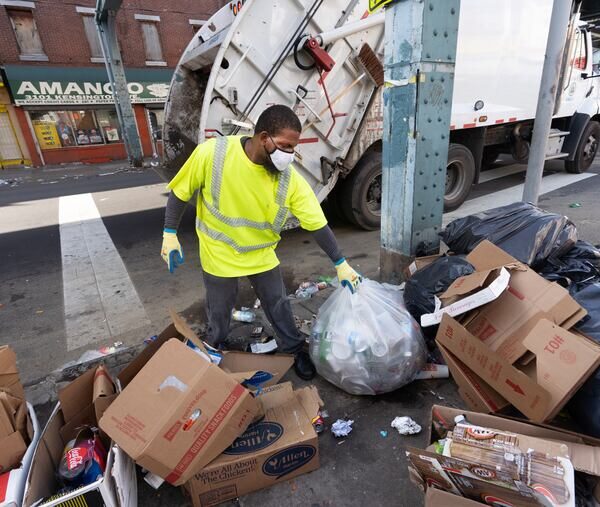
These scents marked time for me, each layer telling the story of the days I spent trailing behind my mother, a woman who rose before dawn to climb onto the back of a garbage truck, lifting bins heavier than most adults could manage, while the city around her still slept.
My mother had imagined a different life once. She had been a nursing student, working toward a career she loved, alongside a husband who came home tired from the construction site but always with a small, comforting smile.
He had been her partner, her anchor, her laughter at the end of the day. But when he fell from that scaffold one late afternoon, life snapped into another rhythm entirely.
Suddenly, the house she had shared with him—the plans they had made, the dreams they had spoken aloud over dinner—was empty of certainty.
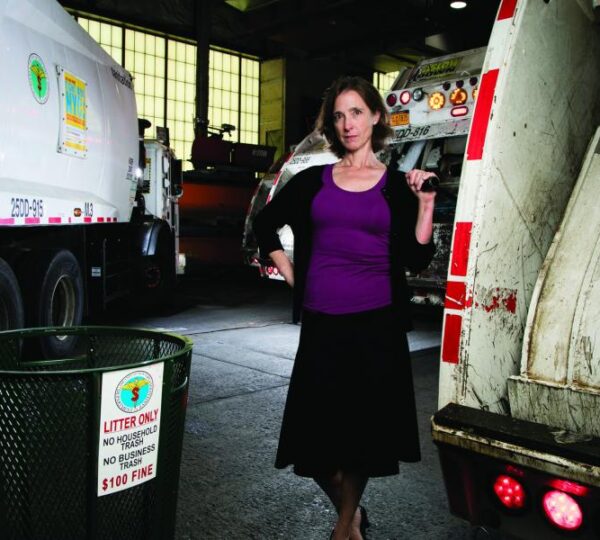
She became a widow overnight, left with unpaid bills, a baby she barely knew, and no real path forward. The sanitation department was the only door that opened, and she walked through it without looking back.
I do not think she imagined how much it would shape both of our lives, how the clang of metal bins and the whir of hydraulic lifts would mark my own childhood in ways that no school could teach.
Growing up under the gaze of the trash truck meant inheriting a nickname I would carry like a brand: “trash lady’s kid.” In elementary school, the taunts were loud and visceral. “Smelly!” “Garbage girl!”
“What’s it like to live in the trash dump?” they would shout, their voices bouncing off linoleum floors and brick walls. The name trailed me like a shadow, sticking to me despite my best efforts to wipe it away.
By middle school, the teasing became quieter, more insidious. It was in the sudden empty seat next to me, the muted snickers behind my back, the sideways glance of a friend who once sat beside me and now edged toward someone “better.”
I learned early that invisibility was safer than defiance. I ate lunch behind the vending machines in the corner, a place that became my sanctuary, the only place I could breathe without judgment.
At home, I said nothing of the shame I carried. My mother’s tired smile, the way she ran her hands over her aching back after a twelve-hour shift, was too precious to burden with my grief or embarrassment.
From a young age, I made a silent promise to myself: if she was willing to break her back for me, to lift bins that weighed more than I could carry, to endure ridicule from neighbors who whispered behind our doors, then I would honor that effort.
Every page I turned in school, every equation I solved, every late-night hour spent hunched over a desk with a desk lamp burning, became part of an unspoken rhythm between us.
While she collected cans and sorted waste, I collected dreams. I studied as though the weight of her labor pressed down on my shoulders, knowing it was as heavy as any dumpster lid.
Then came Mr. Anderson, the math teacher who saw something in me I could barely see myself. He noticed how I lingered after class, my notebook filled with problems I had solved twice over, my pencil worn to the nub.
He gave me challenges I thought were beyond me, problems that stretched my understanding until it felt like my brain might crack under the pressure.
Yet each time I solved one, he would smile and say, “You’re capable of more than you think,” and I felt that tiny spark of belief grow into a quiet blaze.
He offered his classroom as refuge—a sanctuary of numbers and logic, a place where the outside world could not judge or mock. And, slowly, I began to understand that maybe the world had more for me than I had ever dared to imagine.
I still remember the night I received the acceptance letter for the scholarship that would change everything. It was a full ride, including housing, tuition, and a stipend for books and essentials.
I held the letter in my hands as though it were a fragile artifact, a piece of sunlight I had been waiting my whole life to see. For the first time, hope felt tangible.
It was the sunrise after the long winter of my adolescence, the promise that all those nights spent studying under dim lights, all the quiet hours of resilience, were worth it.
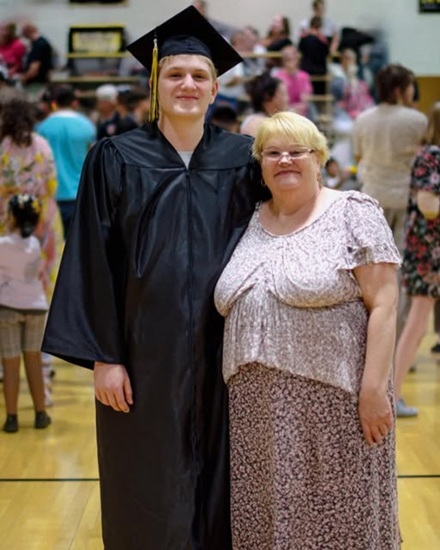
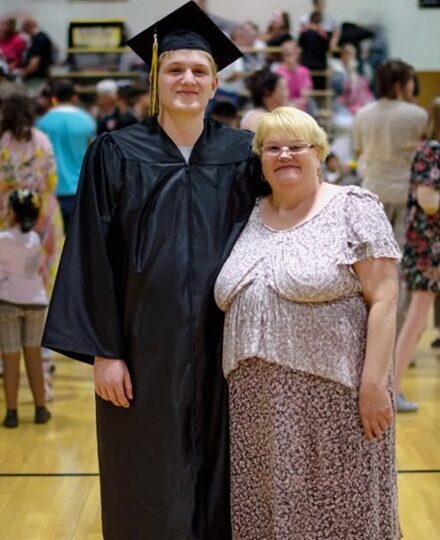
Graduation day arrived, and with it, a chance to tell the truth. I walked into the gymnasium, diploma in hand, the weight of all those years of hidden pain finally pressing against my chest.
I spoke about the bullying, the whispered insults, the lunches eaten alone behind vending machines. I told my classmates and teachers about my mother, the woman they had dismissed and underestimated, the woman who worked before dawn and came home exhausted, yet always had enough strength to love me fiercely.
Then I revealed the scholarship, the opportunity that had lifted me above the world that had tried to define me by shame.
The gym erupted into applause, but nothing in that moment was louder than my mother’s pride. Her eyes shimmered with tears, her smile unwavering, even as her body sagged from years of labor.
She had carried me through garbage bins and city streets, and now she could see the proof that every ache, every sacrifice, every quiet act of endurance had produced something beautiful.
That night, we sat at our tiny kitchen table, the diploma between us. I could see the creases in her hands, the lines in her face, the evidence of years spent carrying the world alone.
And I understood something I had not fully grasped before: being “trash lady’s kid” had never been an insult. It was an inheritance—a legacy of endurance, humility, and a love so fierce it refused to break even under the harshest weight.
The world had called her work dirty, beneath notice, something to be whispered about with disdain. But through her, I had learned the true measure of cleanliness.
Real cleanliness begins not with bleach or polish, but with integrity, effort, and devotion. It begins in the heart and manifests in the work of honest hands.
It is a commitment to doing what is right, even when no one is watching, even when the world will not reward you for it.
Over the years at college, I carried that lesson everywhere. I studied late into the night in dorm rooms lit by a single lamp, knowing that I could honor my mother with every formula solved, every paper written, every exam passed.
I joined clubs and organizations, worked part-time jobs, and navigated challenges I would have once thought impossible.
Each success was a quiet tribute to the woman who had taught me that dignity and resilience are not dependent on titles or recognition, but on steadfast action and unwavering love.
When I returned home during breaks, I watched her still rise before dawn, still climb into the cab of the garbage truck, still greet each day with the same grim determination I had witnessed as a child.
I marveled at her endurance, but more importantly, I felt a profound gratitude. She had prepared me not with words, but with example.
She had shown me that life is rarely fair, that the world will often try to diminish your worth, yet there is always a way to rise. Not magically, not effortlessly, but through sheer persistence, through the quiet accumulation of effort that eventually becomes unstoppable.
By the time I graduated from college, my mother and I had developed a rhythm, a partnership built on mutual respect and admiration. I no longer hid my past; I no longer apologized for her work or my upbringing.
I spoke openly about what it had meant to grow up in the shadow of dumpsters and early mornings, of neighborhoods that whispered judgments and classmates who sneered. And I told the world that I carried pride, not shame.
The lessons she imparted went beyond school or achievement. I learned that dignity is not granted by society but earned daily, in ways that often go unseen.
I learned that love is not measured by comfort but by sacrifice, by the willingness to give when it is hardest, by the refusal to let someone else’s judgment dictate the value of your life.
And I learned that resilience is not a solitary trait—it is nurtured in the spaces between labor and hope, in the quiet glances of encouragement, in the shared smiles that acknowledge the weight carried together.
Looking back now, I understand that my mother’s world, once defined by the smells of diesel, bleach, and sour trash, was in fact a classroom.
She was my first teacher, and her lessons were etched not on paper but into the very rhythm of my existence. Every bin she lifted, every street she navigated, every hour she spent in labor was a demonstration of courage and purpose.
Every time she returned home weary but smiling, she imparted a subtle yet unshakable message: no matter how small your beginnings, no matter how dismissive the world may be, your life can shine if you carry it with honesty, strength, and care.
When I now walk into a city street, I notice the faint smell of diesel and trash, and it no longer stings. Instead, it reminds me of lessons that no classroom could ever teach:
that life is earned, not given; that love and sacrifice leave imprints stronger than any accolade; that the world’s harshest judgments cannot define the worth of someone who refuses to be broken.
And so, the label “trash lady’s kid,” once meant to diminish me, has become a banner I carry with pride. It is a symbol of endurance, of humility, of unwavering love, and of the transformative power of labor, hope, and education.
It is a reminder that the real measure of a person is not what the world sees, but what they persist through, the values they uphold, and the dignity they maintain when no one is watching.
By tracing my life through scent, memory, and experience, I recognize that I inherited not shame, but strength. I inherited a model of resilience that no hardship could extinguish.
I inherited love that insisted on believing in the impossible and patience that allowed dreams to grow quietly, persistently, like flowers blooming between cracks in concrete.
The world may have called her job “dirty,” but through her, I learned what true cleanliness meant: a life lived with integrity, perseverance, and heart.
