...

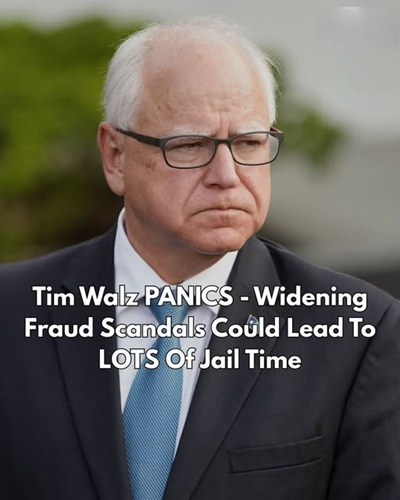
Tim Walz Scrambles With Damage Control After Viral ‘Ghost’ Daycare Video

A video documenting shuttered and apparently inactive childcare facilities in Minnesota has exploded into a national flashpoint.

Not because of cinematic flair, but because of what it seemed to show: publicly funded programs operating in name only.

Across multiple locations, signs labeled “day care” appeared on locked buildings with little or no evidence of children inside, leading many viewers to question how millions of taxpayer dollars were being distributed and monitored in the state.

As the footage spread widely across social media, reactions quickly hardened into competing narratives about government competence, oversight failures, and political responsibility.

Supporters of the video’s message called it proof of systemic abuse, while critics cautioned that viral content alone doesn’t prove fraud.

Meanwhile, elected officials and investigators have been drawn into debates with sharp political and legal implications.

What the Video Showed and Why It Went Viral

In late December 2025, independent creator Nick Shirley — who has over one million subscribers and is known for on‑site reporting and commentary — published a roughly 42‑minute video alleging widespread misuse of public childcare funding in Minnesota.

Shirley and an associate visited nearly a dozen licensed childcare centers in Minneapolis.

In many cases, he captured footage of vacant buildings, locked doors, misspelled signage, and locations that appeared inactive during daytime hours when children should have been present.

One facility singled out in the video, Quality Learning Center, was shown with a sign misreading “Quality Learing Center,” drawing particular public attention.

Shirley claimed that the center had received roughly $1.9 million in 2025 through the state’s Child Care Assistance Program (CCAP) — a federally and state‑funded subsidy that helps low‑income families pay for childcare — despite the apparent lack of active services.

The video quickly went viral, amassing tens of millions of views across platforms such as X (formerly Twitter) and YouTube.

Conservative public figures and social media users amplified the content, with tech billionaire Elon Musk publicly calling for prosecutions and some political figures demanding action from Minnesota officials.

Supporters of the video argued that the footage highlighted glaring problems: taxpayer money flowing into facilities that seemed inactive, insufficient oversight, and years of under‑enforced program rules.

For many viewers, the visual contrast between official assurances and seemingly empty buildings became the core symbol of broader frustration with government programs.

Government and Official Reactions

State officials responded cautiously but earnestly. The Minnesota Department of Children, Youth, and Families (DCYF), which administers CCAP funding, acknowledged awareness of the viral video and said it was taking concerns seriously.

DCYF Commissioner Tikki Brown noted that inspections of the facilities cited in the video did not uncover immediate evidence of fraud, although the department was continuing detailed reviews and site visits.

Governor Tim Walz and his administration emphasized that the state had already been working on fraud prevention efforts and strengthened oversight of childcare programs long before the video surfaced.

A spokesperson noted ongoing investigations and past referrals of suspected cases to law enforcement, as well as legislative requests for broader enforcement authority.

Nevertheless, federal authorities escalated their response. The U.S. Department of Health and Human Services (HHS), which oversees much of the federal funding for CCAP, announced that it was freezing federal child care payments linked to Minnesota until the state could provide detailed documentation proving the funds were being used legitimately.

Deputy Secretary Jim O’Neill said the action was taken in response to “serious allegations” raised by the video and directed Minnesota to conduct comprehensive audits of the centers featured, including attendance records, licensing data, inspection reports, and complaint histories.

HHS also expanded nationwide reporting requirements for childcare funding, requiring justification and evidence before releasing future federal dollars to all states — not just Minnesota.

The department launched a fraud hotline and clarified that states must submit thorough documentation showing legitimate program use before funds are extended.

At the same time, investigations by the Department of Homeland Security (DHS) and the Federal Bureau of Investigation (FBI) were intensified in Minnesota, as federal fraud probes connected to a range of social programs — including nutrition, housing, and autism assistance — have been ongoing in the state since 2022.

Federal law enforcement officials described these efforts as part of a broader effort to ensure the integrity of government funds.

Conflicting Evidence and Ongoing Scrutiny

Despite the dramatic impact of the video, several credentialed news outlets have reported that the picture may be more complicated than the allegations suggest.

For instance, a CBS News investigation found that all but two of the daycare centers mentioned in the video held active licenses according to state records — and that these locations had been visited by state regulators within the last six months.

While inspectors did note licensing violations such as safety and cleanliness issues, the CBS reporting found no recorded evidence of fraud at the time of those inspections.

Additionally, the Minnesota Department of Human Services confirmed that each facility highlighted in the video had undergone routine oversight as part of its licensing process, and that concerns raised by Shirley’s footage were being looked into with standard regulatory procedures.

These discrepancies underscore a core tension in the controversy: large‑scale public anxiety fueled by powerful visuals and political rhetoric versus formal investigation findings that require more time and careful analysis.

As one fact‑seeking discussion online put it, many observers were hoping for clearer evidence before concluding widescale fraud had occurred.

Political and Community Backlash

The political ramifications have been swift and intense. Republican leaders — including Minnesota House GOP Speaker Lisa Demuth — publicly aligned with Shirley’s investigation, helping to identify sites and push for more unannounced state inspections.

Demuth argued that fraud needed to be rooted out more aggressively and that transparency was overdue.

By contrast, some local leaders and civil rights advocates have expressed concern that the viral content — and subsequent political attention — could unfairly target specific communities.

Minnesota’s vibrant Somali community, which operates many licensed childcare providers, became a focal point in social media discussions.

Critics of the viral narrative highlighted that allegations of fraud should not be conflated with claims about the community itself unless substantiated through verified evidence.

They cautioned that unverified online accusations could lead to harassment, threats, or racial profiling.

Indeed, workers and families associated with featured facilities reported harassment, threats, and fear following the video’s spread, demonstrating the real‑world human impact of the controversy.

Historical Context of Fraud Complaints in Minnesota

Minnesota has seen prior scrutiny over social services and program oversight. A 2025 federal Office of the Inspector General audit found that the state lacked adequate attendance documentation oversight for its Child Care Assistance Program, resulting in overpayments in a significant percentage of randomly selected cases.

The audit recommended strengthened monitoring to improve accuracy and reduce risk of abuse.

Additionally, in recent years federal prosecutors convicted dozens of individuals in a large fraud case involving the nonprofit Feeding Our Future, which unlawfully diverted millions in federal funds during the COVID‑19 pandemic.

Authorities have estimated that billions in federal funding across multiple Minnesota programs may have been misappropriated since 2018, prompting broader federal enforcement efforts.

These historical investigations help explain why federal agencies are devoting increased attention to the childcare funding controversy — whether or not the specific allegations in the viral video are fully borne out by evidence.

Public Trust and the Question of Accountability

At its core, the Minnesota controversy reflects a deeper issue of public trust in government programs. Taxpayer funds are intended to support essential services — from childcare to nutrition — that enable families to work and thrive.

When videos surface showing empty buildings allegedly receiving millions in subsidies, the public reaction is swift — and often emotional.

Supporters of stricter enforcement argue that existing oversight mechanisms are too weak, too slow, or too bureaucratic to prevent waste, fraud, and abuse.

Critics worry that political opportunism and social media sensationalism can outpace factual reporting and lead to unwarranted reputational damage for legitimate providers and vulnerable communities.

Meanwhile, state officials emphasize that enforcement actions are ongoing and that accountability mechanisms do exist, even if they are imperfect.

The Walz administration points to its own referrals to law enforcement, closures of noncompliant providers, and long‑standing audits as evidence that Minnesota is confronting the issue — albeit in a way that adheres to legal standards of investigation and due process.

What Comes Next? Investigations, Reforms, and Transparency

The national spotlight on Minnesota’s childcare funding is far from over. Federal agencies have urged the state to comply with data requests regarding recipients of federal child care funds, with deadlines for submission approaching.

These records — including detailed financial flows, attendance data, inspections, and provider information — will be crucial in verifying or refuting claims of improper payments.

A U.S. House committee hearing is also expected to focus on misuse of childcare funds, bringing additional scrutiny and potential legislative action.

Meanwhile, the Department of Health and Human Services has not only frozen funds tied to alleged fraudulent providers but also strengthened reporting requirements nationwide, signaling that tighter oversight may become the norm across multiple states.

Conclusion: A Defining Moment for Public Programs and Oversight

The Minnesota daycare controversy is no longer just a local story — it has become a test of governance, oversight, and public accountability.

In an age where exposure on social media can spread faster than verified facts, institutions are challenged to respond with both transparency and rigor.

For many observers, the question is no longer whether abuse is possible — rather, it’s whether political systems can respond decisively and fairly when serious allegations arise, regardless of partisan affiliation or public pressure.

How Minnesota navigates these allegations — from rigorous audits to potential prosecutions where evidence supports it — may shape future expectations of public program accountability across the U.S. The durability of trust in government programs depends on whether transparency is followed by measurable, evidenced‑based action.

Without that follow‑through, skepticism hardens and the belief grows that wrongdoing can persist as long as it remains politically manageable.

Whether this episode results in lasting reform or fades into another cycle of attention without resolution will influence how voters interpret accountability not just in Minnesota, but in modern government nationwide.

A video documenting shuttered and apparently inactive childcare facilities in Minnesota has exploded into a national flashpoint.

Not because of cinematic flair, but because of what it seemed to show: publicly funded programs operating in name only.

Across multiple locations, signs labeled “day care” appeared on locked buildings with little or no evidence of children inside, leading many viewers to question how millions of taxpayer dollars were being distributed and monitored in the state.

As the footage spread widely across social media, reactions quickly hardened into competing narratives about government competence, oversight failures, and political responsibility.

Supporters of the video’s message called it proof of systemic abuse, while critics cautioned that viral content alone doesn’t prove fraud.

Meanwhile, elected officials and investigators have been drawn into debates with sharp political and legal implications.

What the Video Showed and Why It Went Viral

In late December 2025, independent creator Nick Shirley — who has over one million subscribers and is known for on‑site reporting and commentary — published a roughly 42‑minute video alleging widespread misuse of public childcare funding in Minnesota.

Shirley and an associate visited nearly a dozen licensed childcare centers in Minneapolis.

In many cases, he captured footage of vacant buildings, locked doors, misspelled signage, and locations that appeared inactive during daytime hours when children should have been present.

One facility singled out in the video, Quality Learning Center, was shown with a sign misreading “Quality Learing Center,” drawing particular public attention.

Shirley claimed that the center had received roughly $1.9 million in 2025 through the state’s Child Care Assistance Program (CCAP) — a federally and state‑funded subsidy that helps low‑income families pay for childcare — despite the apparent lack of active services.

The video quickly went viral, amassing tens of millions of views across platforms such as X (formerly Twitter) and YouTube.

Conservative public figures and social media users amplified the content, with tech billionaire Elon Musk publicly calling for prosecutions and some political figures demanding action from Minnesota officials.

Supporters of the video argued that the footage highlighted glaring problems: taxpayer money flowing into facilities that seemed inactive, insufficient oversight, and years of under‑enforced program rules.

For many viewers, the visual contrast between official assurances and seemingly empty buildings became the core symbol of broader frustration with government programs.

Government and Official Reactions

State officials responded cautiously but earnestly. The Minnesota Department of Children, Youth, and Families (DCYF), which administers CCAP funding, acknowledged awareness of the viral video and said it was taking concerns seriously.

DCYF Commissioner Tikki Brown noted that inspections of the facilities cited in the video did not uncover immediate evidence of fraud, although the department was continuing detailed reviews and site visits.

Governor Tim Walz and his administration emphasized that the state had already been working on fraud prevention efforts and strengthened oversight of childcare programs long before the video surfaced.

A spokesperson noted ongoing investigations and past referrals of suspected cases to law enforcement, as well as legislative requests for broader enforcement authority.

Nevertheless, federal authorities escalated their response. The U.S. Department of Health and Human Services (HHS), which oversees much of the federal funding for CCAP, announced that it was freezing federal child care payments linked to Minnesota until the state could provide detailed documentation proving the funds were being used legitimately.

Deputy Secretary Jim O’Neill said the action was taken in response to “serious allegations” raised by the video and directed Minnesota to conduct comprehensive audits of the centers featured, including attendance records, licensing data, inspection reports, and complaint histories.

HHS also expanded nationwide reporting requirements for childcare funding, requiring justification and evidence before releasing future federal dollars to all states — not just Minnesota.

The department launched a fraud hotline and clarified that states must submit thorough documentation showing legitimate program use before funds are extended.

At the same time, investigations by the Department of Homeland Security (DHS) and the Federal Bureau of Investigation (FBI) were intensified in Minnesota, as federal fraud probes connected to a range of social programs — including nutrition, housing, and autism assistance — have been ongoing in the state since 2022.

Federal law enforcement officials described these efforts as part of a broader effort to ensure the integrity of government funds.

Conflicting Evidence and Ongoing Scrutiny

Despite the dramatic impact of the video, several credentialed news outlets have reported that the picture may be more complicated than the allegations suggest.

For instance, a CBS News investigation found that all but two of the daycare centers mentioned in the video held active licenses according to state records — and that these locations had been visited by state regulators within the last six months.

While inspectors did note licensing violations such as safety and cleanliness issues, the CBS reporting found no recorded evidence of fraud at the time of those inspections.

Additionally, the Minnesota Department of Human Services confirmed that each facility highlighted in the video had undergone routine oversight as part of its licensing process, and that concerns raised by Shirley’s footage were being looked into with standard regulatory procedures.

These discrepancies underscore a core tension in the controversy: large‑scale public anxiety fueled by powerful visuals and political rhetoric versus formal investigation findings that require more time and careful analysis.

As one fact‑seeking discussion online put it, many observers were hoping for clearer evidence before concluding widescale fraud had occurred.

Political and Community Backlash

The political ramifications have been swift and intense. Republican leaders — including Minnesota House GOP Speaker Lisa Demuth — publicly aligned with Shirley’s investigation, helping to identify sites and push for more unannounced state inspections.

Demuth argued that fraud needed to be rooted out more aggressively and that transparency was overdue.

By contrast, some local leaders and civil rights advocates have expressed concern that the viral content — and subsequent political attention — could unfairly target specific communities.

Minnesota’s vibrant Somali community, which operates many licensed childcare providers, became a focal point in social media discussions.

Critics of the viral narrative highlighted that allegations of fraud should not be conflated with claims about the community itself unless substantiated through verified evidence.

They cautioned that unverified online accusations could lead to harassment, threats, or racial profiling.

Indeed, workers and families associated with featured facilities reported harassment, threats, and fear following the video’s spread, demonstrating the real‑world human impact of the controversy.

Historical Context of Fraud Complaints in Minnesota

Minnesota has seen prior scrutiny over social services and program oversight. A 2025 federal Office of the Inspector General audit found that the state lacked adequate attendance documentation oversight for its Child Care Assistance Program, resulting in overpayments in a significant percentage of randomly selected cases.

The audit recommended strengthened monitoring to improve accuracy and reduce risk of abuse.

Additionally, in recent years federal prosecutors convicted dozens of individuals in a large fraud case involving the nonprofit Feeding Our Future, which unlawfully diverted millions in federal funds during the COVID‑19 pandemic.

Authorities have estimated that billions in federal funding across multiple Minnesota programs may have been misappropriated since 2018, prompting broader federal enforcement efforts.

These historical investigations help explain why federal agencies are devoting increased attention to the childcare funding controversy — whether or not the specific allegations in the viral video are fully borne out by evidence.

Public Trust and the Question of Accountability

At its core, the Minnesota controversy reflects a deeper issue of public trust in government programs. Taxpayer funds are intended to support essential services — from childcare to nutrition — that enable families to work and thrive.

When videos surface showing empty buildings allegedly receiving millions in subsidies, the public reaction is swift — and often emotional.

Supporters of stricter enforcement argue that existing oversight mechanisms are too weak, too slow, or too bureaucratic to prevent waste, fraud, and abuse.

Critics worry that political opportunism and social media sensationalism can outpace factual reporting and lead to unwarranted reputational damage for legitimate providers and vulnerable communities.

Meanwhile, state officials emphasize that enforcement actions are ongoing and that accountability mechanisms do exist, even if they are imperfect.

The Walz administration points to its own referrals to law enforcement, closures of noncompliant providers, and long‑standing audits as evidence that Minnesota is confronting the issue — albeit in a way that adheres to legal standards of investigation and due process.

What Comes Next? Investigations, Reforms, and Transparency

The national spotlight on Minnesota’s childcare funding is far from over. Federal agencies have urged the state to comply with data requests regarding recipients of federal child care funds, with deadlines for submission approaching.

These records — including detailed financial flows, attendance data, inspections, and provider information — will be crucial in verifying or refuting claims of improper payments.

A U.S. House committee hearing is also expected to focus on misuse of childcare funds, bringing additional scrutiny and potential legislative action.

Meanwhile, the Department of Health and Human Services has not only frozen funds tied to alleged fraudulent providers but also strengthened reporting requirements nationwide, signaling that tighter oversight may become the norm across multiple states.

Conclusion: A Defining Moment for Public Programs and Oversight

The Minnesota daycare controversy is no longer just a local story — it has become a test of governance, oversight, and public accountability.

In an age where exposure on social media can spread faster than verified facts, institutions are challenged to respond with both transparency and rigor.

For many observers, the question is no longer whether abuse is possible — rather, it’s whether political systems can respond decisively and fairly when serious allegations arise, regardless of partisan affiliation or public pressure.

How Minnesota navigates these allegations — from rigorous audits to potential prosecutions where evidence supports it — may shape future expectations of public program accountability across the U.S. The durability of trust in government programs depends on whether transparency is followed by measurable, evidenced‑based action.

Without that follow‑through, skepticism hardens and the belief grows that wrongdoing can persist as long as it remains politically manageable.

Whether this episode results in lasting reform or fades into another cycle of attention without resolution will influence how voters interpret accountability not just in Minnesota, but in modern government nationwide.