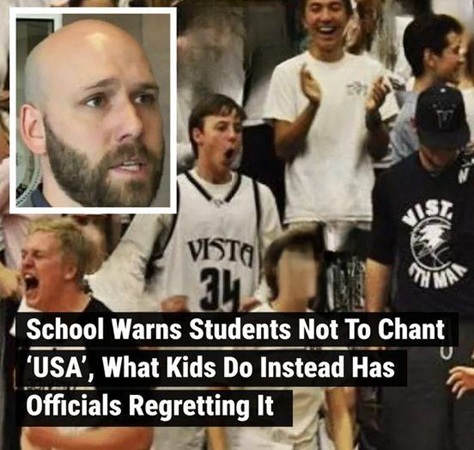
Students Told Not to Cheer ‘USA’ at School, Their Response Leaves Officials Surprised
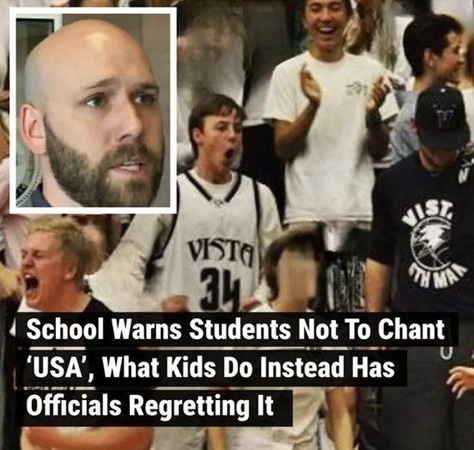
In recent weeks, a seemingly simple act at Vista Del Lago High School in Folsom, California, sparked significant controversy and debate.
Raising questions about patriotism, school policy, and cultural sensitivity. Students at the high school, known for enthusiastically chanting “USA” during sporting events.
Pep rallies, and other school functions, were instructed by school officials to reconsider the timing and context of their chants. The announcement has ignited a conversation among students, parents, and community members about the balance between expressing national pride and fostering inclusivity.
The Tradition of the “USA” Chant
Chanting “USA” has long been a staple of Vista Del Lago’s school culture. During football games, basketball matchups, and spirit assemblies, students have often raised their voices in unison to display national pride and solidarity.
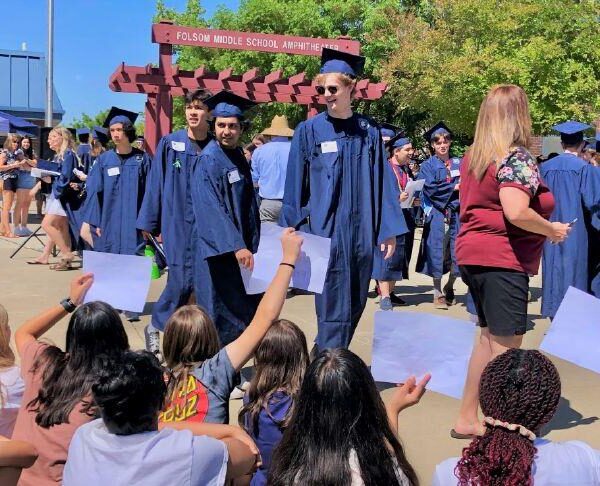
For many, it is a simple, spontaneous expression of community and shared identity—a way for students to demonstrate pride not only in their country but also in their school and peers.
Senior Ryan Bernal, who has been an active participant in student rallies for several years, expressed both confusion and frustration following the school’s advisory.
“I wasn’t angry, but I was definitely like, ‘Why can’t we chant USA?’” Bernal told KOVR. “To say USA, you know, we’re all the same. We’re all American.
It doesn’t matter what your skin tone is or where you’re from. It’s just showing pride in our country and our community.”
For many students like Bernal, the chant has never been associated with exclusion or disrespect. In their view, it is a neutral act, a unifying gesture that crosses backgrounds, beliefs, and personal differences.
School Officials’ Perspective
Vista Del Lago High School staff brought the discussion to students’ attention during a leadership class, emphasizing the importance of empathy, awareness, and thoughtful expression.
Daniel Thigpen, Communications Director for the Folsom Cordova Unified School District, clarified the intent behind the advisory.
“To practice empathy, to practice kindness, and to practice patriotism. You can do both,” Thigpen said.
The school’s administration explained that while the “USA” chant itself is not prohibited, its use can carry different connotations depending on the context.
Officials were particularly concerned about how the chant has occasionally been used in other schools to target or alienate individuals based on ethnicity, nationality, or other personal attributes.
In some situations nationwide, the chant has been co-opted as a tool for exclusion, creating an environment where students from diverse backgrounds may feel unwelcome or marginalized.
“The goal is not to suppress patriotism,” Thigpen continued. “It’s to ensure that our expressions of pride are inclusive and thoughtful, and that we avoid sending unintended messages that could be misinterpreted.”
Expert Opinions and Broader Context
The California Interscholastic Federation (CIF), which oversees high school sports in the state, echoed these concerns, highlighting the need for context in chants and public displays.
Mike Garrison, a CIF spokesperson, noted: “There’s a time and a place to yell that and cheer that.
While showing pride in your country is encouraged, schools must ensure that these displays are not perceived as exclusionary or aggressive toward any member of the community.”
The CIF’s guidance reflects broader national discussions about patriotism and public expression, particularly in diverse school environments.
Across the United States, educators are increasingly encouraged to consider how traditional expressions of national pride might be received differently by students of varying backgrounds, cultures, and personal experiences.
The objective is not to stifle free expression but to promote thoughtful participation that unites rather than divides.
Communication With Families
The principal of Vista Del Lago High School sent an email to families explaining the advisory. The message stressed that the chant is welcome at appropriate times—such as after the Pledge of Allegiance or following the national anthem—but cautioned against casual or spontaneous chanting that could be misinterpreted.
The announcement was also shared with students over the school’s public address system, reinforcing the guidance and encouraging respectful, inclusive expression.
The principal clarified: “Sometimes, by using the chant, we can communicate an unintended message. Our goal is to celebrate patriotism while maintaining an environment where every student feels respected and included.
We encourage the ‘USA’ chant at moments where it aligns with this principle, such as during official patriotic observances.”
Community Reaction
The advisory sparked a variety of reactions among students, parents, and the wider community. Some expressed support for the school’s emphasis on inclusivity and sensitivity, while others viewed the guidance as overly cautious or unnecessary.
Natalie Woodbury, a parent at Vista Del Lago, explained her perspective: “I want to chant USA because I want us to pull together and help, not because I want anybody to feel left out or not a part of our country. For me, it’s about unity and pride, not division.”
Social media quickly became a platform for debate. On Facebook, one commenter wrote: “It is principals like this one that is little by little destroying our public schools and that is SAD!
Be thankful the students were attending their schools sporting events and voiced their love for our country, the Grand Old USA. Shame on the Leadership of that school.”
Another user argued: “Intolerable and offensive? Are you serious! You kids chant USA AS loud as you can!
Thank the Lord for you kids! Hold your ground to your 1st Amendment God-given right! We’re all so proud of you all! God Bless you all!!”
Other community members took a more measured stance, supporting the school’s approach. “It’s important that we teach students to think about how their actions affect others,” one parent noted.
“Showing pride in our country is wonderful, but it can be done in a way that includes everyone and doesn’t unintentionally exclude or intimidate classmates who may feel different.”
The Balance Between Patriotism and Inclusivity
The controversy at Vista Del Lago highlights a broader national challenge: finding a balance between encouraging patriotic expression and ensuring inclusivity. While chants like “USA” can foster school spirit and community pride, administrators must be mindful of context, audience, and timing.
Experts in education and social psychology emphasize that children and adolescents are still learning social cues, cultural sensitivity, and empathy.
Schools play a critical role in guiding students toward expressions of pride and identity that uplift rather than inadvertently alienate peers.
By framing the chant within structured contexts—such as after the Pledge of Allegiance or during specific moments of recognition—the school encourages students to celebrate their nation while remaining aware of diverse perspectives.
Lessons From Other Schools
Vista Del Lago is not alone in navigating this issue. Across the country, several schools have reported incidents in which patriotic chants were used to single out or harass students based on ethnicity or national origin.
While these cases are exceptions rather than the rule, they illustrate the importance of guidance and education in fostering respectful, inclusive school environments.
In some districts, administrators have implemented programs that educate students on responsible expressions of school spirit, including lessons on context, audience, and cultural sensitivity.
By teaching students to recognize how words and actions may be perceived differently, schools hope to prevent misunderstandings and maintain an environment where all students feel safe and valued.
Clarifying Misconceptions
One critical clarification from the Vista Del Lago administration is that there is no ban on chanting “USA.” Students retain the right to express national pride, provided they do so in contexts that align with school guidelines on inclusivity and respect.
The advisory is meant to educate, not prohibit, reinforcing that patriotism and empathy are not mutually exclusive.
The school also emphasized the importance of parental support and community engagement in fostering understanding.
Parents are encouraged to discuss the guidance with their children, helping them understand the distinction between spontaneous enthusiasm and contextually appropriate expression.
Moving Forward
Vista Del Lago’s approach reflects a growing trend in American schools: promoting awareness of the impact of words and actions while respecting individual freedoms.
By balancing the celebration of national pride with inclusivity and sensitivity, schools aim to prepare students for diverse social environments, both inside and outside the classroom.
For students like Ryan Bernal, the goal remains clear: expressing unity, pride, and shared identity.
For educators and parents, the challenge is ensuring that these expressions are communicated in a way that includes all students and fosters empathy alongside enthusiasm.
Conclusion
The controversy over chanting “USA” at Vista Del Lago High School serves as a microcosm of larger societal discussions about patriotism, cultural sensitivity, and the role of schools in guiding youth.
While the chant itself is a simple expression of pride, the reactions and debates surrounding it reveal the complexity of navigating identity, inclusion, and freedom of expression in diverse communities.
Ultimately, the story is not about censorship or restriction—it is about education, awareness, and finding the balance between celebration and respect.
Students retain the ability to chant “USA,” but they are also encouraged to consider context, audience, and the potential impact of their words.
In doing so, Vista Del Lago High School aims to foster a culture where patriotism is inclusive, school spirit is vibrant, and every student feels valued and respected.
The conversation sparked by this advisory continues, both within the school community and beyond, serving as a reminder that even simple acts of expression can carry complex meanings and that teaching empathy, awareness, and respect is an essential part of modern education.
In recent weeks, a seemingly simple act at Vista Del Lago High School in Folsom, California, sparked significant controversy and debate.
Raising questions about patriotism, school policy, and cultural sensitivity. Students at the high school, known for enthusiastically chanting “USA” during sporting events.
Pep rallies, and other school functions, were instructed by school officials to reconsider the timing and context of their chants. The announcement has ignited a conversation among students, parents, and community members about the balance between expressing national pride and fostering inclusivity.
The Tradition of the “USA” Chant
Chanting “USA” has long been a staple of Vista Del Lago’s school culture. During football games, basketball matchups, and spirit assemblies, students have often raised their voices in unison to display national pride and solidarity.
For many, it is a simple, spontaneous expression of community and shared identity—a way for students to demonstrate pride not only in their country but also in their school and peers.
Senior Ryan Bernal, who has been an active participant in student rallies for several years, expressed both confusion and frustration following the school’s advisory.
“I wasn’t angry, but I was definitely like, ‘Why can’t we chant USA?’” Bernal told KOVR. “To say USA, you know, we’re all the same. We’re all American.
It doesn’t matter what your skin tone is or where you’re from. It’s just showing pride in our country and our community.”
For many students like Bernal, the chant has never been associated with exclusion or disrespect. In their view, it is a neutral act, a unifying gesture that crosses backgrounds, beliefs, and personal differences.
School Officials’ Perspective
Vista Del Lago High School staff brought the discussion to students’ attention during a leadership class, emphasizing the importance of empathy, awareness, and thoughtful expression.
Daniel Thigpen, Communications Director for the Folsom Cordova Unified School District, clarified the intent behind the advisory.
“To practice empathy, to practice kindness, and to practice patriotism. You can do both,” Thigpen said.
The school’s administration explained that while the “USA” chant itself is not prohibited, its use can carry different connotations depending on the context.
Officials were particularly concerned about how the chant has occasionally been used in other schools to target or alienate individuals based on ethnicity, nationality, or other personal attributes.
In some situations nationwide, the chant has been co-opted as a tool for exclusion, creating an environment where students from diverse backgrounds may feel unwelcome or marginalized.
“The goal is not to suppress patriotism,” Thigpen continued. “It’s to ensure that our expressions of pride are inclusive and thoughtful, and that we avoid sending unintended messages that could be misinterpreted.”
Expert Opinions and Broader Context
The California Interscholastic Federation (CIF), which oversees high school sports in the state, echoed these concerns, highlighting the need for context in chants and public displays.
Mike Garrison, a CIF spokesperson, noted: “There’s a time and a place to yell that and cheer that.
While showing pride in your country is encouraged, schools must ensure that these displays are not perceived as exclusionary or aggressive toward any member of the community.”
The CIF’s guidance reflects broader national discussions about patriotism and public expression, particularly in diverse school environments.
Across the United States, educators are increasingly encouraged to consider how traditional expressions of national pride might be received differently by students of varying backgrounds, cultures, and personal experiences.
The objective is not to stifle free expression but to promote thoughtful participation that unites rather than divides.
Communication With Families
The principal of Vista Del Lago High School sent an email to families explaining the advisory. The message stressed that the chant is welcome at appropriate times—such as after the Pledge of Allegiance or following the national anthem—but cautioned against casual or spontaneous chanting that could be misinterpreted.
The announcement was also shared with students over the school’s public address system, reinforcing the guidance and encouraging respectful, inclusive expression.
The principal clarified: “Sometimes, by using the chant, we can communicate an unintended message. Our goal is to celebrate patriotism while maintaining an environment where every student feels respected and included.
We encourage the ‘USA’ chant at moments where it aligns with this principle, such as during official patriotic observances.”
Community Reaction
The advisory sparked a variety of reactions among students, parents, and the wider community. Some expressed support for the school’s emphasis on inclusivity and sensitivity, while others viewed the guidance as overly cautious or unnecessary.
Natalie Woodbury, a parent at Vista Del Lago, explained her perspective: “I want to chant USA because I want us to pull together and help, not because I want anybody to feel left out or not a part of our country. For me, it’s about unity and pride, not division.”
Social media quickly became a platform for debate. On Facebook, one commenter wrote: “It is principals like this one that is little by little destroying our public schools and that is SAD!
Be thankful the students were attending their schools sporting events and voiced their love for our country, the Grand Old USA. Shame on the Leadership of that school.”
Another user argued: “Intolerable and offensive? Are you serious! You kids chant USA AS loud as you can!
Thank the Lord for you kids! Hold your ground to your 1st Amendment God-given right! We’re all so proud of you all! God Bless you all!!”
Other community members took a more measured stance, supporting the school’s approach. “It’s important that we teach students to think about how their actions affect others,” one parent noted.
“Showing pride in our country is wonderful, but it can be done in a way that includes everyone and doesn’t unintentionally exclude or intimidate classmates who may feel different.”
The Balance Between Patriotism and Inclusivity
The controversy at Vista Del Lago highlights a broader national challenge: finding a balance between encouraging patriotic expression and ensuring inclusivity. While chants like “USA” can foster school spirit and community pride, administrators must be mindful of context, audience, and timing.
Experts in education and social psychology emphasize that children and adolescents are still learning social cues, cultural sensitivity, and empathy.
Schools play a critical role in guiding students toward expressions of pride and identity that uplift rather than inadvertently alienate peers.
By framing the chant within structured contexts—such as after the Pledge of Allegiance or during specific moments of recognition—the school encourages students to celebrate their nation while remaining aware of diverse perspectives.
Lessons From Other Schools
Vista Del Lago is not alone in navigating this issue. Across the country, several schools have reported incidents in which patriotic chants were used to single out or harass students based on ethnicity or national origin.
While these cases are exceptions rather than the rule, they illustrate the importance of guidance and education in fostering respectful, inclusive school environments.
In some districts, administrators have implemented programs that educate students on responsible expressions of school spirit, including lessons on context, audience, and cultural sensitivity.
By teaching students to recognize how words and actions may be perceived differently, schools hope to prevent misunderstandings and maintain an environment where all students feel safe and valued.
Clarifying Misconceptions
One critical clarification from the Vista Del Lago administration is that there is no ban on chanting “USA.” Students retain the right to express national pride, provided they do so in contexts that align with school guidelines on inclusivity and respect.
The advisory is meant to educate, not prohibit, reinforcing that patriotism and empathy are not mutually exclusive.
The school also emphasized the importance of parental support and community engagement in fostering understanding.
Parents are encouraged to discuss the guidance with their children, helping them understand the distinction between spontaneous enthusiasm and contextually appropriate expression.
Moving Forward
Vista Del Lago’s approach reflects a growing trend in American schools: promoting awareness of the impact of words and actions while respecting individual freedoms.
By balancing the celebration of national pride with inclusivity and sensitivity, schools aim to prepare students for diverse social environments, both inside and outside the classroom.
For students like Ryan Bernal, the goal remains clear: expressing unity, pride, and shared identity.
For educators and parents, the challenge is ensuring that these expressions are communicated in a way that includes all students and fosters empathy alongside enthusiasm.
Conclusion
The controversy over chanting “USA” at Vista Del Lago High School serves as a microcosm of larger societal discussions about patriotism, cultural sensitivity, and the role of schools in guiding youth.
While the chant itself is a simple expression of pride, the reactions and debates surrounding it reveal the complexity of navigating identity, inclusion, and freedom of expression in diverse communities.
Ultimately, the story is not about censorship or restriction—it is about education, awareness, and finding the balance between celebration and respect.
Students retain the ability to chant “USA,” but they are also encouraged to consider context, audience, and the potential impact of their words.
In doing so, Vista Del Lago High School aims to foster a culture where patriotism is inclusive, school spirit is vibrant, and every student feels valued and respected.
The conversation sparked by this advisory continues, both within the school community and beyond, serving as a reminder that even simple acts of expression can carry complex meanings and that teaching empathy, awareness, and respect is an essential part of modern education.


