...

“Everyone Was Talking About the Same Thing Regarding Melania Trump After Thanksgiving”

When President Donald Trump and First Lady Melania Trump returned to Washington, D.C., after spending Thanksgiving at their Mar‑a‑Lago estate in Palm Beach, Florida.

What should have been a routine presidential arrival unexpectedly became a moment of widespread online commentary.

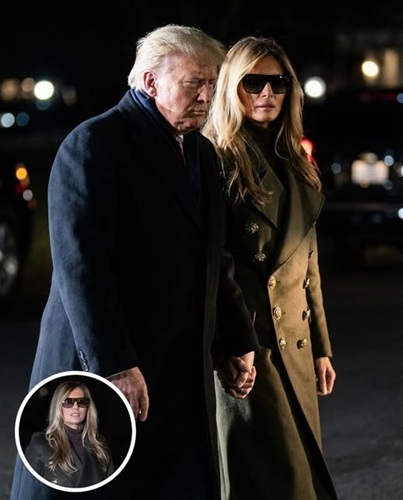
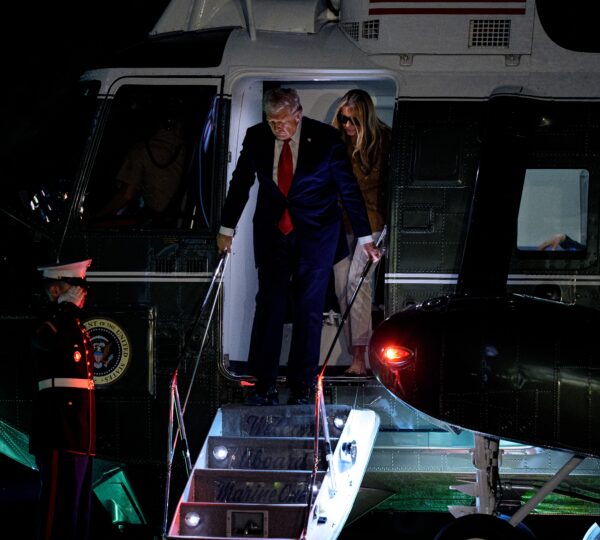
As Marine One touched down on the South Lawn late Sunday night, cameras captured the couple disembarking the helicopter — and within minutes, social media began buzzing — not about policy, speeches, or political moves, but about Melania Trump’s choice of accessory: sunglasses worn at night.

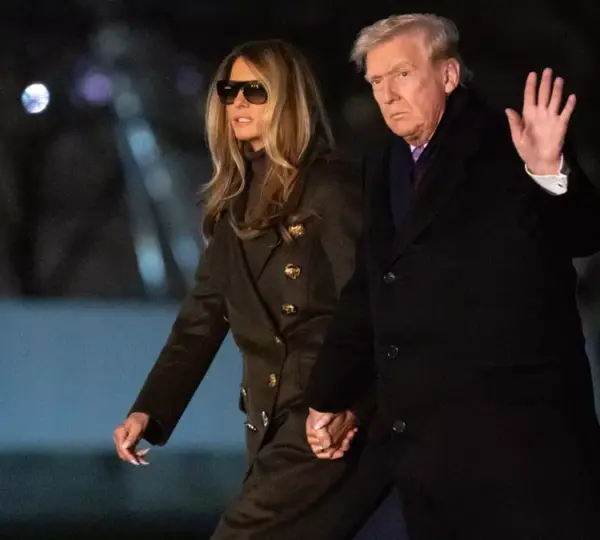
The image circulated widely online, capturing the First Lady stepping off Marine One in darkness, shielding her eyes with oversized shades.
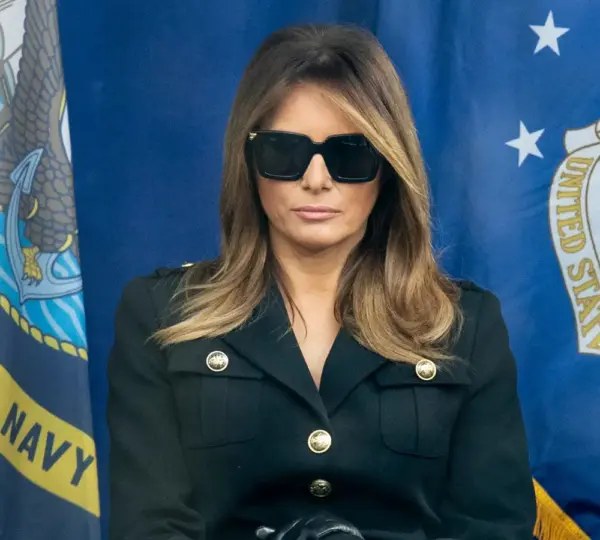
In an era where almost every presidential movement is photographed, livestreamed, and digitally analyzed within seconds, a seemingly mundane detail like nighttime sunglasses became the unexpected star of countless posts, memes, and debates across social platforms.

Context: A Quiet Holiday Weekend at Mar‑a‑Lago

The Trumps spent the Thanksgiving holiday weekend at Mar‑a‑Lago, where the president remained publicly active with appearances and events, while Melania Trump — who has kept a relatively lower public profile during parts of her husband’s second administration — stayed mostly out of the spotlight, reportedly spending time with their son Barron.

Melania’s continued quieter presence at public events this year has been noted amid the long holiday season; beyond ceremonial duties and official functions, she has made select appearances while otherwise maintaining a more private schedule.

That quiet weekend changed abruptly upon the family’s late‑night arrival back in Washington.

The Sunglasses Moment That Caught Everyone’s Eye

As Marine One landed and the Trumps walked toward the White House residence, photographers noticed that Melania Trump was wearing sunglasses despite the late hour and darkness.

The images were quickly shared online, with users pointing out that sunglasses at night are not an everyday fashion choice — especially for someone stepping off a presidential helicopter on the White House lawn.

Some observers immediately turned to humor, speculation, and pop‑culture references, wondering aloud why anyone would shield their eyes in the dark.

Others playfully suggested she was trying to avoid cameras, glare from flashes, or simply retain a sense of privacy after a long travel period. Still others used the moment as fodder for humorous commentary or pop‑culture jokes given how everyday fashion choices can take on outsize symbolic meaning when it comes to public figures.

Social Media Reactions — From Jokes to Theories

On platforms like X (formerly Twitter), Instagram, and TikTok, reactions varied widely. Many users poked fun at the sunglasses choice immediately, joking about sunglasses at night as if it were a fashion statement from a DJ, a nightclub scene, or a movie moment — rather than a presidential arrival.

At the same time, other commenters found the detail so unusual that they revived longstanding online conspiracy theories related to Melania Trump’s public appearances.

One such theory, which has circulated sporadically since 2017, claims without evidence that “the woman seen in some photos isn’t actually Melania Trump.”

These theories trace back to discussions about body doubles and visual differences that circulated on blogs and social media years ago. Mainstream sources have widely debunked these claims as unfounded and not supported by evidence, though they continue to resurface whenever Melania’s public image draws attention online.

Other social media users offered more pragmatic explanations, noting that sunglasses can be worn for reasons that have nothing to do with style — for instance, to block bright camera flashes, reduce eye strain from lights, or simply preserve privacy after a long travel day.

Understanding the Reaction Through the Lens of Public Scrutiny

The moment underscores a broader reality of modern public life: every detail involving high‑profile figures can become an online talking point.

Whether intentional or simply a matter of personal comfort, Melania Trump’s nighttime sunglasses illustrate how even small choices are photographed, shared, and interpreted within seconds in the age of social media.

For public figures like Melania Trump, fashion has often been a focal point of commentary, praise, critique, and analysis.

During her tenure as First Lady — and especially as a former international model and public figure — her attire has attracted attention at events ranging from state dinners to international visits.

While sunglasses at night might seem like a minor detail in a larger presidential calendar, it became notable precisely because it was unexpected and easily shareable in a visual format, which online platforms amplify.
In an environment where every gesture and accessory can be reframed and repurposed by audiences with varied perspectives, it’s not unusual for a seemingly trivial moment to generate significant digital engagement.

Fashion, Privacy, and Public Perception

Melania Trump has long drawn attention for her fashion choices — both conventional and unconventional — throughout her time in public life.

Her style has often been analyzed by commentators, designers, and critics, sometimes earning praise for elegant simplicity and other times drawing critique when choices were seen as unconventional or polarizing.

Some fashion experts note that First Ladies and other high‑profile figures often use accessories like sunglasses for practical reasons: shielding eyes from intense flash photography, creating a sense of personal space in public contexts, or avoiding eye fatigue after flights or long travel schedules.

In the world of presidential optics — where the presence of hundreds of photographers and bright lighting is routine — sunglasses can be as much a tool of practicality as a statement of style.

With trends in recent years toward greater awareness of personal boundaries, celebrities and public officials alike sometimes choose accessories that help them maintain a sense of control over their visual presentation.

This choice can send mixed signals to different audiences: some interpret it as a guarded or aloof gesture, while others simply see it as an ordinary preference for eye comfort.

A Moment That Reflected Broader Trends Online

The detail of Melania Trump’s sunglasses at night highlights a larger trend in how audiences interact with public figures today:

Small Details Get Amplified: In the digital era, even minor details — accessories, gestures, or facial expressions — can capture widespread attention if the image goes viral or is widely shared.
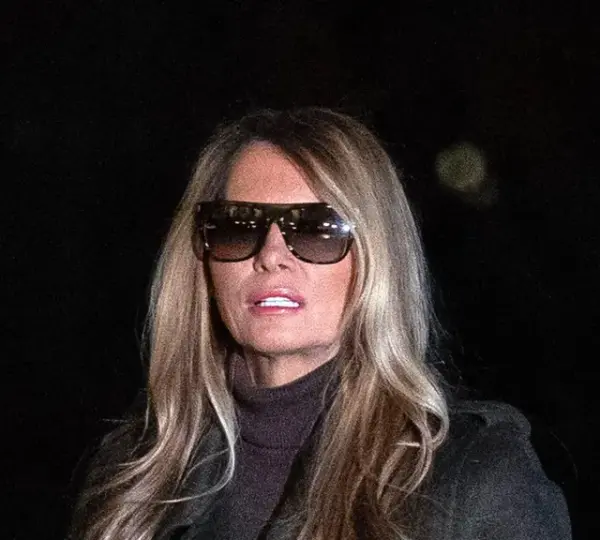
Instant Commentary: Audiences no longer wait for traditional media analysis; social platforms generate immediate reactions, memes, and theories within minutes of an image appearing online.

Diverse Interpretations: A single moment can be interpreted in multiple ways — humorous, critical, speculative, or neutral — depending on the viewer’s perspective, cultural lens, or political stance.

Debate Around Privacy and Exposure: The moment opens discussion about how much privacy a public figure is allowed in routine moments, and how much interpretation the public attaches to what may simply be a comfort choice.

What This Moment Says About Modern Public Life

Melania Trump’s sunglasses moment — from a simple accessory choice to a topic of intense online conversation — illustrates how modern political life intersects with social media culture.

In an era where image and optics play a central role in public perception, the visual language of politics extends beyond speeches and statements to include even the smallest aesthetic choices.

Whether the sunglasses were for practical purposes, personal preference, or simply a stylistic choice, the response reflects the fragmented and highly participatory nature of online commentary.

Ordinary moments involving high‑profile people can quickly become viral talking points, especially when they defy expectations or seem visually unusual in context.

What remained clear in the aftermath of that late‑night arrival is that in today’s media environment, no detail is too small to provoke discussion — or to generate widespread interpretation across platforms and perspectives.

Some viewed the moment with humor, others with curiosity, and still others as fodder for broader online narratives — ultimately demonstrating how public figures navigate a world where every choice, accessory, or gesture can spark dialogue, debate, and cultural attention.
Conclusion: A Small Moment, Big Reaction

Melania Trump’s choice to wear sunglasses at night as she and President Trump returned to Washington after Thanksgiving became a surprising and widely shared moment in the digital public sphere.

What might have been a fleeting visual detail instead became a talking point, illustrating how small gestures can take on large cultural significance in an age of real‑time social media.

Whether viewed as a fashion choice, a practical decision, or a reflection of the endless commentary that surrounds public life, the episode highlights the modern dynamics of public perception, media imagery, and online conversation — where even sunglasses at night can become news.

When President Donald Trump and First Lady Melania Trump returned to Washington, D.C., after spending Thanksgiving at their Mar‑a‑Lago estate in Palm Beach, Florida.

What should have been a routine presidential arrival unexpectedly became a moment of widespread online commentary.

As Marine One touched down on the South Lawn late Sunday night, cameras captured the couple disembarking the helicopter — and within minutes, social media began buzzing — not about policy, speeches, or political moves, but about Melania Trump’s choice of accessory: sunglasses worn at night.

The image circulated widely online, capturing the First Lady stepping off Marine One in darkness, shielding her eyes with oversized shades.

In an era where almost every presidential movement is photographed, livestreamed, and digitally analyzed within seconds, a seemingly mundane detail like nighttime sunglasses became the unexpected star of countless posts, memes, and debates across social platforms.

Context: A Quiet Holiday Weekend at Mar‑a‑Lago

The Trumps spent the Thanksgiving holiday weekend at Mar‑a‑Lago, where the president remained publicly active with appearances and events, while Melania Trump — who has kept a relatively lower public profile during parts of her husband’s second administration — stayed mostly out of the spotlight, reportedly spending time with their son Barron.

Melania’s continued quieter presence at public events this year has been noted amid the long holiday season; beyond ceremonial duties and official functions, she has made select appearances while otherwise maintaining a more private schedule.

That quiet weekend changed abruptly upon the family’s late‑night arrival back in Washington.

The Sunglasses Moment That Caught Everyone’s Eye

As Marine One landed and the Trumps walked toward the White House residence, photographers noticed that Melania Trump was wearing sunglasses despite the late hour and darkness.

The images were quickly shared online, with users pointing out that sunglasses at night are not an everyday fashion choice — especially for someone stepping off a presidential helicopter on the White House lawn.

Some observers immediately turned to humor, speculation, and pop‑culture references, wondering aloud why anyone would shield their eyes in the dark.

Others playfully suggested she was trying to avoid cameras, glare from flashes, or simply retain a sense of privacy after a long travel period. Still others used the moment as fodder for humorous commentary or pop‑culture jokes given how everyday fashion choices can take on outsize symbolic meaning when it comes to public figures.

Social Media Reactions — From Jokes to Theories

On platforms like X (formerly Twitter), Instagram, and TikTok, reactions varied widely. Many users poked fun at the sunglasses choice immediately, joking about sunglasses at night as if it were a fashion statement from a DJ, a nightclub scene, or a movie moment — rather than a presidential arrival.

At the same time, other commenters found the detail so unusual that they revived longstanding online conspiracy theories related to Melania Trump’s public appearances.

One such theory, which has circulated sporadically since 2017, claims without evidence that “the woman seen in some photos isn’t actually Melania Trump.”

These theories trace back to discussions about body doubles and visual differences that circulated on blogs and social media years ago. Mainstream sources have widely debunked these claims as unfounded and not supported by evidence, though they continue to resurface whenever Melania’s public image draws attention online.

Other social media users offered more pragmatic explanations, noting that sunglasses can be worn for reasons that have nothing to do with style — for instance, to block bright camera flashes, reduce eye strain from lights, or simply preserve privacy after a long travel day.

Understanding the Reaction Through the Lens of Public Scrutiny

The moment underscores a broader reality of modern public life: every detail involving high‑profile figures can become an online talking point.

Whether intentional or simply a matter of personal comfort, Melania Trump’s nighttime sunglasses illustrate how even small choices are photographed, shared, and interpreted within seconds in the age of social media.

For public figures like Melania Trump, fashion has often been a focal point of commentary, praise, critique, and analysis.

During her tenure as First Lady — and especially as a former international model and public figure — her attire has attracted attention at events ranging from state dinners to international visits.

While sunglasses at night might seem like a minor detail in a larger presidential calendar, it became notable precisely because it was unexpected and easily shareable in a visual format, which online platforms amplify.

In an environment where every gesture and accessory can be reframed and repurposed by audiences with varied perspectives, it’s not unusual for a seemingly trivial moment to generate significant digital engagement.

Fashion, Privacy, and Public Perception

Melania Trump has long drawn attention for her fashion choices — both conventional and unconventional — throughout her time in public life.

Her style has often been analyzed by commentators, designers, and critics, sometimes earning praise for elegant simplicity and other times drawing critique when choices were seen as unconventional or polarizing.

Some fashion experts note that First Ladies and other high‑profile figures often use accessories like sunglasses for practical reasons: shielding eyes from intense flash photography, creating a sense of personal space in public contexts, or avoiding eye fatigue after flights or long travel schedules.

In the world of presidential optics — where the presence of hundreds of photographers and bright lighting is routine — sunglasses can be as much a tool of practicality as a statement of style.

With trends in recent years toward greater awareness of personal boundaries, celebrities and public officials alike sometimes choose accessories that help them maintain a sense of control over their visual presentation.

This choice can send mixed signals to different audiences: some interpret it as a guarded or aloof gesture, while others simply see it as an ordinary preference for eye comfort.

A Moment That Reflected Broader Trends Online

The detail of Melania Trump’s sunglasses at night highlights a larger trend in how audiences interact with public figures today:

Small Details Get Amplified: In the digital era, even minor details — accessories, gestures, or facial expressions — can capture widespread attention if the image goes viral or is widely shared.

Instant Commentary: Audiences no longer wait for traditional media analysis; social platforms generate immediate reactions, memes, and theories within minutes of an image appearing online.

Diverse Interpretations: A single moment can be interpreted in multiple ways — humorous, critical, speculative, or neutral — depending on the viewer’s perspective, cultural lens, or political stance.

Debate Around Privacy and Exposure: The moment opens discussion about how much privacy a public figure is allowed in routine moments, and how much interpretation the public attaches to what may simply be a comfort choice.

What This Moment Says About Modern Public Life

Melania Trump’s sunglasses moment — from a simple accessory choice to a topic of intense online conversation — illustrates how modern political life intersects with social media culture.

In an era where image and optics play a central role in public perception, the visual language of politics extends beyond speeches and statements to include even the smallest aesthetic choices.

Whether the sunglasses were for practical purposes, personal preference, or simply a stylistic choice, the response reflects the fragmented and highly participatory nature of online commentary.

Ordinary moments involving high‑profile people can quickly become viral talking points, especially when they defy expectations or seem visually unusual in context.

What remained clear in the aftermath of that late‑night arrival is that in today’s media environment, no detail is too small to provoke discussion — or to generate widespread interpretation across platforms and perspectives.

Some viewed the moment with humor, others with curiosity, and still others as fodder for broader online narratives — ultimately demonstrating how public figures navigate a world where every choice, accessory, or gesture can spark dialogue, debate, and cultural attention.

Conclusion: A Small Moment, Big Reaction

Melania Trump’s choice to wear sunglasses at night as she and President Trump returned to Washington after Thanksgiving became a surprising and widely shared moment in the digital public sphere.

What might have been a fleeting visual detail instead became a talking point, illustrating how small gestures can take on large cultural significance in an age of real‑time social media.

Whether viewed as a fashion choice, a practical decision, or a reflection of the endless commentary that surrounds public life, the episode highlights the modern dynamics of public perception, media imagery, and online conversation — where even sunglasses at night can become news.