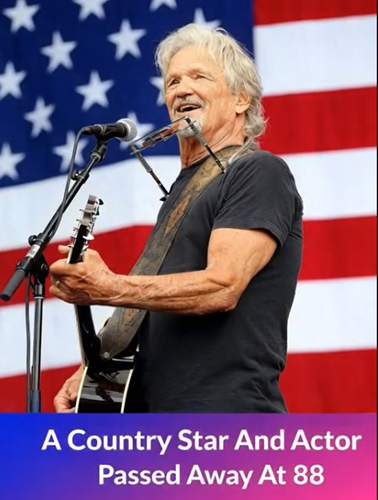
88-Year-Old Country Music and Film Star Dies, Leaving a Legendary Legacy
Kris Kristofferson, the acclaimed country singer‑songwriter, actor, storyteller, and cultural icon, has died at the age of 88.
He passed away peacefully on September 28, 2024, at his home in Maui, Hawaii, surrounded by family, according to statements from his representative and multiple outlets reporting on his passing.
His family shared a heartfelt message saying they were “blessed for our time with him,” and added, “When you see a rainbow, know he’s smiling down at us all.”
The announcement marked the end of a life that touched millions through words, melodies, performances, and a uniquely American journey from soldier to star.
Throughout his eight‑plus decades, Kristofferson was more than an entertainer — he was a man whose path intersected with literature, military service, social change, and multiple art forms.
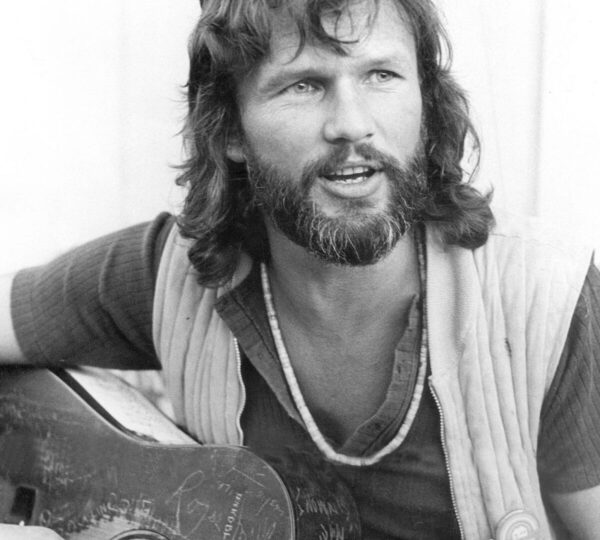
His life was defined by intellectual curiosity, emotional honesty, and the courage to follow his own vocation, even when it led him far from expected paths.
Early Life: A Childhood of Movement and Ambition
Kris Kristofferson was born Kristoffer Kristofferson on June 22, 1936, in Brownsville, Texas, a small town on the U.S.–Mexico border.
He entered the world as the son of Mary Ann (née Ashbrook) and Lars Henry Kristofferson, a Swedish‑American who served as an officer in the U.S. Air Force.
As a result of his father’s military career, Kris spent much of his boyhood moving from base to base, becoming what many described as a military brat — an upbringing marked by discipline, travel, adaptability, and exposure to diverse communities.
The family eventually settled in San Mateo, California, where Kris finished high school and began to develop the intellectual and artistic interests that would shape his future.
From an early age, he displayed talents that went beyond the ordinary: he wrote poetry, showed a precocious interest in literature, and even penned his first song, “I Hate Your Ugly Face,” at just 11 years old — a creative gesture that foreshadowed his lifelong engagement with songcraft as a poetic form.
Education and the Rhodes Scholarship
Kristofferson’s academic promise was undeniable. After graduating from high school in 1954, he attended Pomona College in Southern California, where he majored in creative writing and immersed himself in literature and poetry.
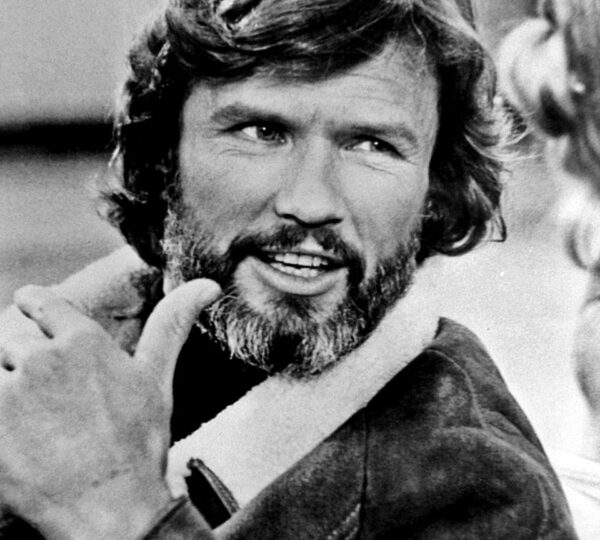
During his college years, he was also an accomplished athlete, playing football and competing as a Golden Gloves boxer — pursuits that reflected his restless energy and competitive spirit.
He excelled both in the classroom and on the field, graduating with honors in 1958.
In the same year, Kristofferson achieved a rare honor: he was named a Rhodes Scholar, one of the most prestigious academic awards in the world.
This scholarship allowed him to study English literature at Merton College, Oxford University in England, further deepening his intellectual roots and exposing him to artistic influences ranging from the Romantic poets to Shakespeare.
It was at Oxford that Kristofferson’s musical identity began to take shape. He started writing songs and performing under the name Kris Carson, playing in small venues around Oxford.
Though he recorded a few songs for a minor label, his early recordings attracted little attention, and he eventually returned to the United States after finishing his studies.
Military Service and a Turning Point
Following Oxford, Kristofferson’s path initially seemed set on a traditional trajectory: he joined the United States Army and served as a helicopter pilot.
He later earned the rank of captain and was even offered a position teaching English at the U.S. Military Academy at West Point.
However, in a definitive act of self‑determination, he chose to forgo the academic post and the promise of a stable military career to pursue something far less certain — his dream of becoming a songwriter in Nashville, Tennessee.
Leaving the military was not an easy decision, particularly given his family’s deep ties to the armed forces. But Kris believed that his creative calling outweighed convention.
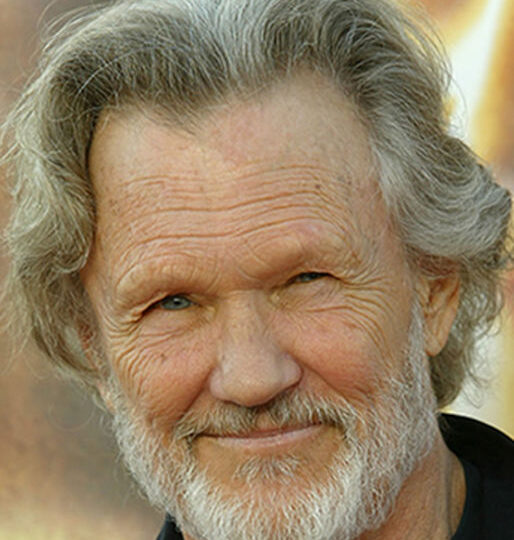
He moved to Nashville in the late 1960s with little more than ambition and his guitar, prepared to start a career for which he had no guarantees.
The Struggle and Breakthrough in Music
Life in Nashville was far from glamorous at first. Kristofferson took on odd jobs to support himself, including working as a janitor at Columbia Studios, where he swept floors and did maintenance while writing songs during his off hours.
This period — marked by perseverance and humility — laid the groundwork for his eventual success.
His breakthrough came in 1970–1971, when other artists began recording his songs and turning them into chart‑topping hits.
Janis Joplin’s rendition of “Me and Bobby McGee” reached No. 1 on the Billboard charts and brought Kristofferson’s songwriting to national attention.
Other major hits he wrote — such as “Sunday Mornin’ Comin’ Down”, “For the Good Times”, and “Help Me Make It Through the Night” — were recorded by legends including Johnny Cash, Ray Price, Sammi Smith, and more, solidifying his reputation as one of country music’s most influential songwriters.
Kristofferson’s lyrics were distinguished by poetic richness, emotional depth, and an authenticity that resonated with listeners across genres.
He helped to shape what became known as outlaw country, a movement that challenged polished Nashville conventions in favor of raw, introspective storytelling — often alongside peers like Willie Nelson, Waylon Jennings, and Johnny Cash.
Performing Career and The Highwaymen
Despite his success as a songwriter, Kristofferson also made his mark as a performing artist. Throughout the 1970s and beyond, he released a series of albums that showcased his distinctive voice — gravelly, expressive, and full of emotional nuance.
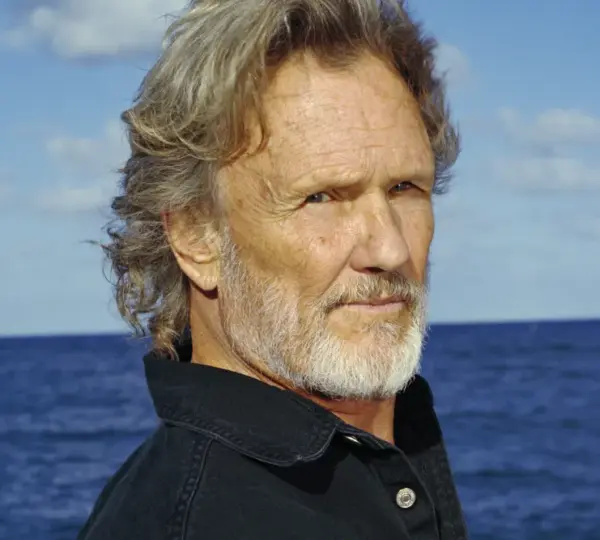
Albums such as Kristofferson (1970), The Silver Tongued Devil and I (1971), and Jesus Was a Capricorn (1972) became beloved by fans and critics alike, blending elements of country, folk, and rock into a style uniquely his own.
In the mid‑1980s, Kristofferson joined with Willie Nelson, Johnny Cash, and Waylon Jennings to form The Highwaymen, a supergroup whose collaborative albums and tours brought outlaw country further into the mainstream.
Their work together was celebrated for its camaraderie, musical chemistry, and reverence for traditional storytelling.
Hollywood and Acting Success
Kristofferson’s talents were not confined to music. Beginning in the early 1970s, he launched a parallel career in film and television, demonstrating a natural screen presence and dramatic range.
One of his most memorable roles came in the 1976 remake of A Star Is Born, in which he co‑starred with Barbra Streisand.
His portrayal of John Norman Howard, a troubled rock star, earned him the Golden Globe Award for Best Actor in 1977 and introduced him to a whole new audience.
Over the years, Kristofferson appeared in a wide range of films, including Pat Garrett & Billy the Kid (1973), Alice Doesn’t Live Here Anymore (1974), Convoy (1978), Stagecoach (1986), Lone Star (1996), and the Blade trilogy in the 1990s and 2000s.
His on‑screen roles often reflected the same complexity and authenticity found in his music — characters marked by grit, depth, humor, and heart.
Personal Life, Advocacy, and Later Years
Throughout his life, Kristofferson’s personal story was as compelling as his professional achievements. He was married three times — first to Frances “Fran” Mavia Beer (1961–1969), then to singer Rita Coolidge (1973–1980), and finally to Lisa Meyers, whom he married in 1983 and remained with for more than four decades.
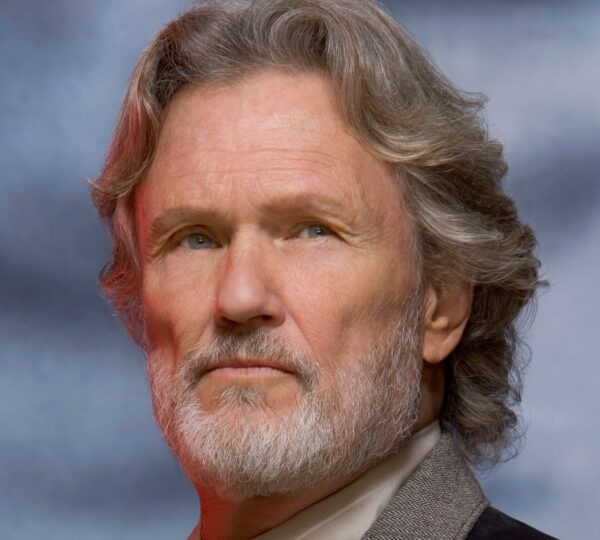
He was a devoted father to eight children from his marriages and was admired by friends and collaborators for his loyalty, generosity, and candid reflections on life.
Kristofferson was also known for his social and political engagement. He supported workers’ rights, campaigned with civil rights leaders like Cesar Chavez, and was an outspoken critic of war and injustice.
He stood by controversial figures when many others stayed silent — most famously supporting Sinead O’Connor at a tribute concert after her 1992 protest on Saturday Night Live, an act that demonstrated his courage and empathy.
In his later years, Kristofferson faced health challenges, including memory issues that some attributed to aging and cumulative impacts from his physically active youth.
Despite these difficulties, he continued to perform into his 80s, delivering heartfelt renditions of his music and connecting with audiences who cherished his sincerity and spirit.
Accolades and Legacy
Kristofferson’s influence on music and culture was recognized through numerous awards and honors. He won three Grammy Awards and was inducted into the Country Music Hall of Fame in 2004.
In 2014, he received the Grammy Lifetime Achievement Award, a testament to his profound and lasting contributions as a songwriter, performer, and artist.
His songs have been recorded by hundreds of artists, and his narratives have become part of the fabric of American music.
From the wistful longing of “Sunday Mornin’ Comin’ Down” to the free‑spirited wanderings of “Me and Bobby McGee,” Kristofferson’s work has touched the hearts of listeners across generations and genres.
Final Years and Passing
By the early 2020s, Kristofferson had stepped back from public performance, announcing his retirement in 2021 after an extraordinary career spanning more than five decades.
His final public performance took place in 2023 at the Hollywood Bowl, where he honored longtime friend Willie Nelson’s 90th birthday with a poignant duet — a fitting farewell to a storied musical life.
Kris Kristofferson died on September 28, 2024, at his home in Hana, Maui, Hawaii, at the age of 88. His family’s statement emphasized peace and gratitude, asking that fans remember him with joy and love.
No cause of death was publicly provided, and his passing drew tributes from across the world — from fellow musicians, actors, writers, and fans reflecting on the profound impact he made.
A Legacy of Words, Music, and Authenticity
Kris Kristofferson’s life was a tapestry woven from diverse experiences: scholar, soldier, songwriter, performer, actor, activist, father, husband, and storyteller.
He defied easy categorization, blending intellectual depth with emotional honesty and a rugged artistic voice that helped redefine American country and folk music.
His songs explored love and loss, freedom and longing, connection and isolation. His acting brought complex characters to life on the silver screen.
And his personal choices — from leaving a military career to embracing social causes — revealed a man committed to living authentically, even when it meant straying from convention.
Kris Kristofferson leaves behind a legacy that transcends charts, awards, and headlines.
His words, melodies, and performances will continue to resonate with listeners and viewers around the world — a testament to a life lived fully, honestly, and without apology.
And as his family asked, when you see a rainbow, perhaps you’ll imagine his gentle smile — one more reminder of a man whose art made us feel seen, understood, and deeply human.
Kris Kristofferson, the acclaimed country singer‑songwriter, actor, storyteller, and cultural icon, has died at the age of 88.
He passed away peacefully on September 28, 2024, at his home in Maui, Hawaii, surrounded by family, according to statements from his representative and multiple outlets reporting on his passing.
His family shared a heartfelt message saying they were “blessed for our time with him,” and added, “When you see a rainbow, know he’s smiling down at us all.”
The announcement marked the end of a life that touched millions through words, melodies, performances, and a uniquely American journey from soldier to star.
Throughout his eight‑plus decades, Kristofferson was more than an entertainer — he was a man whose path intersected with literature, military service, social change, and multiple art forms.
His life was defined by intellectual curiosity, emotional honesty, and the courage to follow his own vocation, even when it led him far from expected paths.
Early Life: A Childhood of Movement and Ambition
Kris Kristofferson was born Kristoffer Kristofferson on June 22, 1936, in Brownsville, Texas, a small town on the U.S.–Mexico border.
He entered the world as the son of Mary Ann (née Ashbrook) and Lars Henry Kristofferson, a Swedish‑American who served as an officer in the U.S. Air Force.
As a result of his father’s military career, Kris spent much of his boyhood moving from base to base, becoming what many described as a military brat — an upbringing marked by discipline, travel, adaptability, and exposure to diverse communities.
The family eventually settled in San Mateo, California, where Kris finished high school and began to develop the intellectual and artistic interests that would shape his future.
From an early age, he displayed talents that went beyond the ordinary: he wrote poetry, showed a precocious interest in literature, and even penned his first song, “I Hate Your Ugly Face,” at just 11 years old — a creative gesture that foreshadowed his lifelong engagement with songcraft as a poetic form.
Education and the Rhodes Scholarship
Kristofferson’s academic promise was undeniable. After graduating from high school in 1954, he attended Pomona College in Southern California, where he majored in creative writing and immersed himself in literature and poetry.
During his college years, he was also an accomplished athlete, playing football and competing as a Golden Gloves boxer — pursuits that reflected his restless energy and competitive spirit.
He excelled both in the classroom and on the field, graduating with honors in 1958.
In the same year, Kristofferson achieved a rare honor: he was named a Rhodes Scholar, one of the most prestigious academic awards in the world.
This scholarship allowed him to study English literature at Merton College, Oxford University in England, further deepening his intellectual roots and exposing him to artistic influences ranging from the Romantic poets to Shakespeare.
It was at Oxford that Kristofferson’s musical identity began to take shape. He started writing songs and performing under the name Kris Carson, playing in small venues around Oxford.
Though he recorded a few songs for a minor label, his early recordings attracted little attention, and he eventually returned to the United States after finishing his studies.
Military Service and a Turning Point
Following Oxford, Kristofferson’s path initially seemed set on a traditional trajectory: he joined the United States Army and served as a helicopter pilot.
He later earned the rank of captain and was even offered a position teaching English at the U.S. Military Academy at West Point.
However, in a definitive act of self‑determination, he chose to forgo the academic post and the promise of a stable military career to pursue something far less certain — his dream of becoming a songwriter in Nashville, Tennessee.
Leaving the military was not an easy decision, particularly given his family’s deep ties to the armed forces. But Kris believed that his creative calling outweighed convention.
He moved to Nashville in the late 1960s with little more than ambition and his guitar, prepared to start a career for which he had no guarantees.
The Struggle and Breakthrough in Music
Life in Nashville was far from glamorous at first. Kristofferson took on odd jobs to support himself, including working as a janitor at Columbia Studios, where he swept floors and did maintenance while writing songs during his off hours.
This period — marked by perseverance and humility — laid the groundwork for his eventual success.
His breakthrough came in 1970–1971, when other artists began recording his songs and turning them into chart‑topping hits.
Janis Joplin’s rendition of “Me and Bobby McGee” reached No. 1 on the Billboard charts and brought Kristofferson’s songwriting to national attention.
Other major hits he wrote — such as “Sunday Mornin’ Comin’ Down”, “For the Good Times”, and “Help Me Make It Through the Night” — were recorded by legends including Johnny Cash, Ray Price, Sammi Smith, and more, solidifying his reputation as one of country music’s most influential songwriters.
Kristofferson’s lyrics were distinguished by poetic richness, emotional depth, and an authenticity that resonated with listeners across genres.
He helped to shape what became known as outlaw country, a movement that challenged polished Nashville conventions in favor of raw, introspective storytelling — often alongside peers like Willie Nelson, Waylon Jennings, and Johnny Cash.
Performing Career and The Highwaymen
Despite his success as a songwriter, Kristofferson also made his mark as a performing artist. Throughout the 1970s and beyond, he released a series of albums that showcased his distinctive voice — gravelly, expressive, and full of emotional nuance.
Albums such as Kristofferson (1970), The Silver Tongued Devil and I (1971), and Jesus Was a Capricorn (1972) became beloved by fans and critics alike, blending elements of country, folk, and rock into a style uniquely his own.
In the mid‑1980s, Kristofferson joined with Willie Nelson, Johnny Cash, and Waylon Jennings to form The Highwaymen, a supergroup whose collaborative albums and tours brought outlaw country further into the mainstream.
Their work together was celebrated for its camaraderie, musical chemistry, and reverence for traditional storytelling.
Hollywood and Acting Success
Kristofferson’s talents were not confined to music. Beginning in the early 1970s, he launched a parallel career in film and television, demonstrating a natural screen presence and dramatic range.
One of his most memorable roles came in the 1976 remake of A Star Is Born, in which he co‑starred with Barbra Streisand.
His portrayal of John Norman Howard, a troubled rock star, earned him the Golden Globe Award for Best Actor in 1977 and introduced him to a whole new audience.
Over the years, Kristofferson appeared in a wide range of films, including Pat Garrett & Billy the Kid (1973), Alice Doesn’t Live Here Anymore (1974), Convoy (1978), Stagecoach (1986), Lone Star (1996), and the Blade trilogy in the 1990s and 2000s.
His on‑screen roles often reflected the same complexity and authenticity found in his music — characters marked by grit, depth, humor, and heart.
Personal Life, Advocacy, and Later Years
Throughout his life, Kristofferson’s personal story was as compelling as his professional achievements. He was married three times — first to Frances “Fran” Mavia Beer (1961–1969), then to singer Rita Coolidge (1973–1980), and finally to Lisa Meyers, whom he married in 1983 and remained with for more than four decades.
He was a devoted father to eight children from his marriages and was admired by friends and collaborators for his loyalty, generosity, and candid reflections on life.
Kristofferson was also known for his social and political engagement. He supported workers’ rights, campaigned with civil rights leaders like Cesar Chavez, and was an outspoken critic of war and injustice.
He stood by controversial figures when many others stayed silent — most famously supporting Sinead O’Connor at a tribute concert after her 1992 protest on Saturday Night Live, an act that demonstrated his courage and empathy.
In his later years, Kristofferson faced health challenges, including memory issues that some attributed to aging and cumulative impacts from his physically active youth.
Despite these difficulties, he continued to perform into his 80s, delivering heartfelt renditions of his music and connecting with audiences who cherished his sincerity and spirit.
Accolades and Legacy
Kristofferson’s influence on music and culture was recognized through numerous awards and honors. He won three Grammy Awards and was inducted into the Country Music Hall of Fame in 2004.
In 2014, he received the Grammy Lifetime Achievement Award, a testament to his profound and lasting contributions as a songwriter, performer, and artist.
His songs have been recorded by hundreds of artists, and his narratives have become part of the fabric of American music.
From the wistful longing of “Sunday Mornin’ Comin’ Down” to the free‑spirited wanderings of “Me and Bobby McGee,” Kristofferson’s work has touched the hearts of listeners across generations and genres.
Final Years and Passing
By the early 2020s, Kristofferson had stepped back from public performance, announcing his retirement in 2021 after an extraordinary career spanning more than five decades.
His final public performance took place in 2023 at the Hollywood Bowl, where he honored longtime friend Willie Nelson’s 90th birthday with a poignant duet — a fitting farewell to a storied musical life.
Kris Kristofferson died on September 28, 2024, at his home in Hana, Maui, Hawaii, at the age of 88. His family’s statement emphasized peace and gratitude, asking that fans remember him with joy and love.
No cause of death was publicly provided, and his passing drew tributes from across the world — from fellow musicians, actors, writers, and fans reflecting on the profound impact he made.
A Legacy of Words, Music, and Authenticity
Kris Kristofferson’s life was a tapestry woven from diverse experiences: scholar, soldier, songwriter, performer, actor, activist, father, husband, and storyteller.
He defied easy categorization, blending intellectual depth with emotional honesty and a rugged artistic voice that helped redefine American country and folk music.
His songs explored love and loss, freedom and longing, connection and isolation. His acting brought complex characters to life on the silver screen.
And his personal choices — from leaving a military career to embracing social causes — revealed a man committed to living authentically, even when it meant straying from convention.
Kris Kristofferson leaves behind a legacy that transcends charts, awards, and headlines.
His words, melodies, and performances will continue to resonate with listeners and viewers around the world — a testament to a life lived fully, honestly, and without apology.
And as his family asked, when you see a rainbow, perhaps you’ll imagine his gentle smile — one more reminder of a man whose art made us feel seen, understood, and deeply human.


