
“The Hidden Reason for That Tiny Loop on the Back of Your Button-Down Shirt”
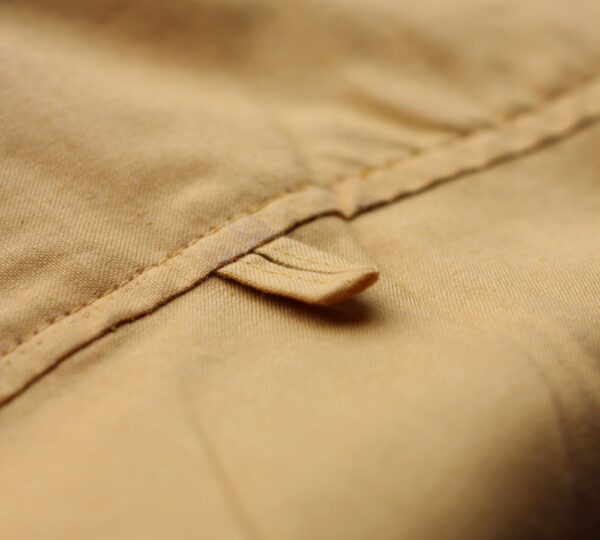
If you own a classic button-down shirt, chances are you’ve seen a small fabric loop stitched just below the collar on the back. For many, it’s a detail that goes unnoticed.
For others, it’s something noticed once or twice, often assumed to be purely decorative or perhaps a leftover remnant from manufacturing.
I was in the latter group for years. Like many people, I assumed the loop was inconsequential—a tiny feature that didn’t really matter.
But once I learned its story, I realized this modest piece of fabric carries a rich history, practical purpose, and a subtle nod to tradition that spans more than a century.
What seems like a minor design detail actually reflects decades of thoughtful craftsmanship, military necessity, and cultural evolution.
Understanding it requires stepping back in time, to an era when clothing was designed first and foremost for utility, and every stitch had a purpose.
A Detail Born From Necessity
To truly appreciate the back-of-collar loop, often called a locker loop or backstay loop, we need to journey back to the early 1900s.
At that time, clothing was not designed primarily with fashion in mind, especially in military contexts.
Function came first, and for members of the United States Navy, practicality wasn’t optional—it was a matter of daily survival and efficiency.
Sailors lived in incredibly tight quarters aboard ships. Personal space was minimal, and storage was scarce. Closets, as we know them today, were rare.
Sailors had to keep their belongings organized, clean, and dry.
Uniforms, including shirts, needed to stay wrinkle-free and ready to wear despite being exposed to the elements at sea.
The solution was deceptively simple: add a small, sturdy fabric loop to the back of the shirt’s collar.
This loop allowed sailors to hang their shirts on hooks rather than folding them or leaving them in a pile on a bunk.
Hanging shirts in this way helped maintain their shape, kept them off the floor, and reduced wrinkling. It was practical, efficient, and required no additional equipment.
At this stage, the loop was not a design flourish, a mark of craftsmanship, or a status symbol. It was purely functional—a tiny yet essential feature born out of necessity.

Sailors called it the locker loop, as it allowed shirts to hang neatly in shipboard lockers, although sometimes it was also referred to as the backstay loop in nautical circles.
From Naval Necessity to Everyday Fashion
Over time, military influence on civilian clothing grew, and functional details began migrating from service uniforms into everyday wear.
Button-down shirts, particularly those made from durable cotton, transitioned from ship decks and naval bases into broader American wardrobes.
By the mid-20th century, the locker loop had made its way into the world of casual and semi-formal menswear.
While its original practical purpose—to hang a shirt neatly in a sailor’s quarters—was largely obsolete for civilians, the loop remained a staple.
Designers and manufacturers chose to preserve it, signaling a subtle appreciation for the shirt’s heritage and craftsmanship.
In this period, the loop started to take on a symbolic meaning beyond function.
It became associated with quality and attention to detail, subtly differentiating higher-quality shirts from cheaper mass-produced alternatives.
For many, the loop was a quiet reminder that even seemingly small details could carry significance.
The Ivy League and the Birth of Campus Tradition
By the 1950s and 1960s, button-down shirts had firmly entrenched themselves in the fashion culture of American college campuses, particularly among Ivy League schools.

Here, the loop took on new significance—not out of necessity, but as part of a cultural and stylistic identity.
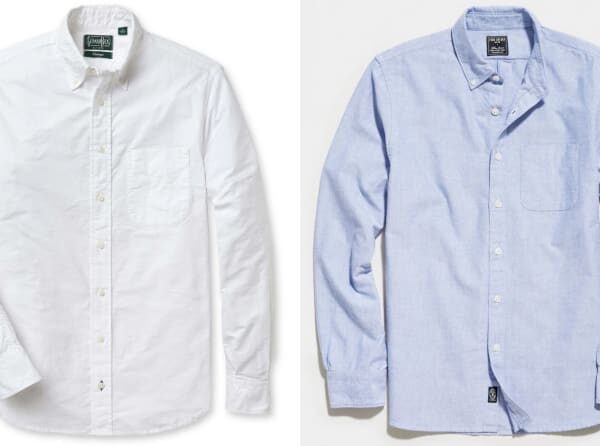
Students embraced Oxford shirts for their polished yet casual appearance, and the locker loop became a discreet signal of adherence to a classic American style.
Its presence subtly communicated tradition, a sense of refinement, and a connection to a lineage of well-crafted clothing.
Even students with closets and ample hangers often appreciated the loop as a nod to the shirt’s heritage, if not for direct practical use.
Over time, the loop became intertwined with campus folklore.
A romantic legend circulated at some colleges, suggesting that removing the loop signaled a committed relationship, sometimes reciprocated by a partner wearing a class pin.
While the truth of this story is debatable, it highlights how cultural meanings can layer over purely functional design elements, turning a simple stitch into a symbol of identity, tradition, or even romance.
The Modern-Day Functionality of the Loop
Today, the loop still serves a practical purpose, especially for those who travel frequently.
While most people own hangers, hotel rooms or temporary accommodations don’t always provide sufficient hanging options.
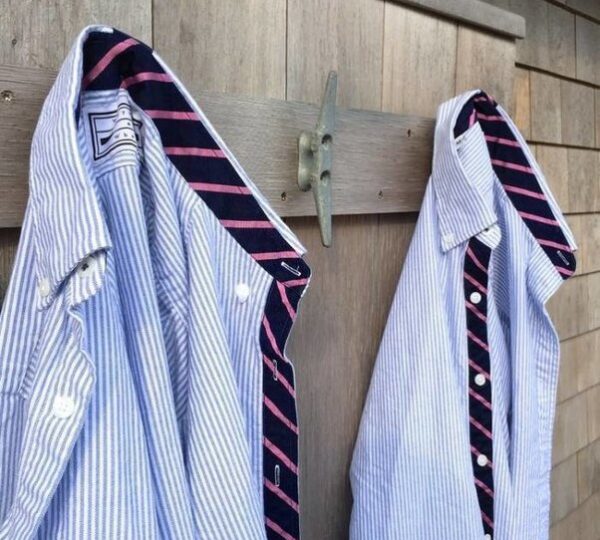
The small loop makes it easy to suspend a shirt from a hook, a doorknob, or even inside a garment bag, helping it remain neat, wrinkle-free, and ready to wear.
For older travelers or anyone prioritizing convenience, the loop can be a subtle yet significant feature.
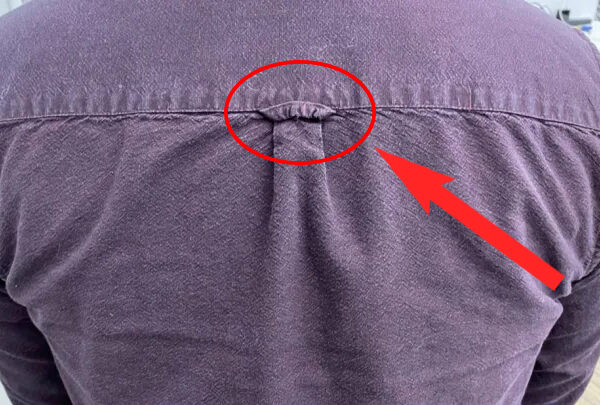
It allows garments to air out, reduces the need for ironing, and provides a simple organizational solution.
Even in everyday life, when it’s rarely used, the loop’s presence is a reassuring touch, a reminder that thoughtful design often anticipates needs we might not even recognize until the moment we require them.
Design Appreciation and Craftsmanship
Beyond utility, the loop is a hallmark of careful design. Many contemporary menswear brands continue to include it as a signal of quality craftsmanship.
Some loops are subtle, blending seamlessly with the shirt fabric, while others use contrast stitching or thicker material to make the feature more visible.
Menswear enthusiasts often note the loop as part of a broader attention to detail in classic shirts.
It reflects a philosophy in which small design choices are intentional, meaningful, and enduring.
Even when not actively used, these loops suggest a respect for tradition, heritage, and functionality that goes beyond mere decoration.
Not all brands maintain the loop today. Some modern styles omit it entirely, prioritizing minimalist aesthetics or different design philosophies.
When present, though, it is rarely accidental—it is a deliberate nod to history and craftsmanship, even in shirts designed for casual wear.
Beyond Fashion: A Symbol of Heritage
The locker loop reminds us that even small design elements carry stories.
Something designed to solve a practical problem for sailors over a century ago can survive into the 21st century as both a functional tool and a symbol of cultural identity.
It exemplifies how thoughtful design endures, bridging gaps between necessity, aesthetics, and tradition.
In the world of menswear, minor details like these often carry disproportionate meaning.
They become talking points, touchstones, or subtle indicators of quality.
The loop’s endurance through changing fashions, from naval uniforms to campus wardrobes to modern casual wear, reflects a remarkable continuity.
Moreover, it underscores the broader principle that craftsmanship is rarely accidental.
Every stitch, seam, or loop can carry multiple layers of meaning: utility, heritage, aesthetic value, and even narrative.
The back-of-collar loop demonstrates how a simple functional feature can accumulate history, folklore, and style without losing its original purpose.
Practical Tips and Observations
For anyone wearing button-down shirts today, noticing the loop can enhance appreciation for the garment. Here are some practical insights:
Travel-Friendly: Use the loop to hang shirts in spaces without hangers, such as hotel bathrooms, closets with limited hooks, or shared accommodations.
Wrinkle Reduction: Hanging shirts by the loop allows gravity to naturally smooth out minor wrinkles, minimizing the need for ironing.
Organizational Aid: In crowded wardrobes or garment bags, loops provide a quick and simple method to hang shirts without folding or piling.
Style Indicator: For enthusiasts, a visible locker loop can indicate adherence to traditional menswear standards, signaling both heritage and attention to detail.
Even if you never actively use it, the loop serves as a visual cue, connecting modern wearers to a long history of design and function.
The Lasting Appeal of Small Details
As we age and become more attuned to craftsmanship, we start to notice small, often overlooked elements.
The locker loop exemplifies this. Once seen as trivial, it becomes a reminder of how much thought, history, and practical insight can be woven into everyday objects.
From shipboard necessity to Ivy League campus tradition, from modern travel convenience to a subtle signal of quality, the loop demonstrates how good design transcends eras.
It also reminds us that every garment carries a story, sometimes stretching across decades, and often bridging the gap between utility and identity.
The next time you put on a button-down shirt, glance at the back of the collar. If there’s a loop, now you know it is far more than decorative.
It is a small piece of history, stitched quietly into your everyday life—a functional, cultural, and stylistic legacy born from necessity and preserved through thoughtful design.
In a world increasingly dominated by mass production and fleeting fashion trends, the back-of-collar loop stands as a testament to enduring quality, practicality, and respect for tradition.
What may have started as a simple solution for sailors over a century ago continues to offer convenience, subtle style, and historical resonance today.
It’s a tiny detail with a story to tell, reminding us that even the smallest elements can carry significance, bridging the past and present in ways we might never have imagined.
If you own a classic button-down shirt, chances are you’ve seen a small fabric loop stitched just below the collar on the back. For many, it’s a detail that goes unnoticed.
For others, it’s something noticed once or twice, often assumed to be purely decorative or perhaps a leftover remnant from manufacturing.
I was in the latter group for years. Like many people, I assumed the loop was inconsequential—a tiny feature that didn’t really matter.
But once I learned its story, I realized this modest piece of fabric carries a rich history, practical purpose, and a subtle nod to tradition that spans more than a century.
What seems like a minor design detail actually reflects decades of thoughtful craftsmanship, military necessity, and cultural evolution.
Understanding it requires stepping back in time, to an era when clothing was designed first and foremost for utility, and every stitch had a purpose.
A Detail Born From Necessity
To truly appreciate the back-of-collar loop, often called a locker loop or backstay loop, we need to journey back to the early 1900s.
At that time, clothing was not designed primarily with fashion in mind, especially in military contexts.
Function came first, and for members of the United States Navy, practicality wasn’t optional—it was a matter of daily survival and efficiency.
Sailors lived in incredibly tight quarters aboard ships. Personal space was minimal, and storage was scarce. Closets, as we know them today, were rare.
Sailors had to keep their belongings organized, clean, and dry.
Uniforms, including shirts, needed to stay wrinkle-free and ready to wear despite being exposed to the elements at sea.
The solution was deceptively simple: add a small, sturdy fabric loop to the back of the shirt’s collar.
This loop allowed sailors to hang their shirts on hooks rather than folding them or leaving them in a pile on a bunk.
Hanging shirts in this way helped maintain their shape, kept them off the floor, and reduced wrinkling. It was practical, efficient, and required no additional equipment.
At this stage, the loop was not a design flourish, a mark of craftsmanship, or a status symbol. It was purely functional—a tiny yet essential feature born out of necessity.
Sailors called it the locker loop, as it allowed shirts to hang neatly in shipboard lockers, although sometimes it was also referred to as the backstay loop in nautical circles.
From Naval Necessity to Everyday Fashion
Over time, military influence on civilian clothing grew, and functional details began migrating from service uniforms into everyday wear.
Button-down shirts, particularly those made from durable cotton, transitioned from ship decks and naval bases into broader American wardrobes.
By the mid-20th century, the locker loop had made its way into the world of casual and semi-formal menswear.
While its original practical purpose—to hang a shirt neatly in a sailor’s quarters—was largely obsolete for civilians, the loop remained a staple.
Designers and manufacturers chose to preserve it, signaling a subtle appreciation for the shirt’s heritage and craftsmanship.
In this period, the loop started to take on a symbolic meaning beyond function.
It became associated with quality and attention to detail, subtly differentiating higher-quality shirts from cheaper mass-produced alternatives.
For many, the loop was a quiet reminder that even seemingly small details could carry significance.
The Ivy League and the Birth of Campus Tradition
By the 1950s and 1960s, button-down shirts had firmly entrenched themselves in the fashion culture of American college campuses, particularly among Ivy League schools.
Here, the loop took on new significance—not out of necessity, but as part of a cultural and stylistic identity.
Students embraced Oxford shirts for their polished yet casual appearance, and the locker loop became a discreet signal of adherence to a classic American style.
Its presence subtly communicated tradition, a sense of refinement, and a connection to a lineage of well-crafted clothing.
Even students with closets and ample hangers often appreciated the loop as a nod to the shirt’s heritage, if not for direct practical use.
Over time, the loop became intertwined with campus folklore.
A romantic legend circulated at some colleges, suggesting that removing the loop signaled a committed relationship, sometimes reciprocated by a partner wearing a class pin.
While the truth of this story is debatable, it highlights how cultural meanings can layer over purely functional design elements, turning a simple stitch into a symbol of identity, tradition, or even romance.
The Modern-Day Functionality of the Loop
Today, the loop still serves a practical purpose, especially for those who travel frequently.
While most people own hangers, hotel rooms or temporary accommodations don’t always provide sufficient hanging options.
The small loop makes it easy to suspend a shirt from a hook, a doorknob, or even inside a garment bag, helping it remain neat, wrinkle-free, and ready to wear.
For older travelers or anyone prioritizing convenience, the loop can be a subtle yet significant feature.
It allows garments to air out, reduces the need for ironing, and provides a simple organizational solution.
Even in everyday life, when it’s rarely used, the loop’s presence is a reassuring touch, a reminder that thoughtful design often anticipates needs we might not even recognize until the moment we require them.
Design Appreciation and Craftsmanship
Beyond utility, the loop is a hallmark of careful design. Many contemporary menswear brands continue to include it as a signal of quality craftsmanship.
Some loops are subtle, blending seamlessly with the shirt fabric, while others use contrast stitching or thicker material to make the feature more visible.
Menswear enthusiasts often note the loop as part of a broader attention to detail in classic shirts.
It reflects a philosophy in which small design choices are intentional, meaningful, and enduring.
Even when not actively used, these loops suggest a respect for tradition, heritage, and functionality that goes beyond mere decoration.
Not all brands maintain the loop today. Some modern styles omit it entirely, prioritizing minimalist aesthetics or different design philosophies.
When present, though, it is rarely accidental—it is a deliberate nod to history and craftsmanship, even in shirts designed for casual wear.
Beyond Fashion: A Symbol of Heritage
The locker loop reminds us that even small design elements carry stories.
Something designed to solve a practical problem for sailors over a century ago can survive into the 21st century as both a functional tool and a symbol of cultural identity.
It exemplifies how thoughtful design endures, bridging gaps between necessity, aesthetics, and tradition.
In the world of menswear, minor details like these often carry disproportionate meaning.
They become talking points, touchstones, or subtle indicators of quality.
The loop’s endurance through changing fashions, from naval uniforms to campus wardrobes to modern casual wear, reflects a remarkable continuity.
Moreover, it underscores the broader principle that craftsmanship is rarely accidental.
Every stitch, seam, or loop can carry multiple layers of meaning: utility, heritage, aesthetic value, and even narrative.
The back-of-collar loop demonstrates how a simple functional feature can accumulate history, folklore, and style without losing its original purpose.
Practical Tips and Observations
For anyone wearing button-down shirts today, noticing the loop can enhance appreciation for the garment. Here are some practical insights:
Travel-Friendly: Use the loop to hang shirts in spaces without hangers, such as hotel bathrooms, closets with limited hooks, or shared accommodations.
Wrinkle Reduction: Hanging shirts by the loop allows gravity to naturally smooth out minor wrinkles, minimizing the need for ironing.
Organizational Aid: In crowded wardrobes or garment bags, loops provide a quick and simple method to hang shirts without folding or piling.
Style Indicator: For enthusiasts, a visible locker loop can indicate adherence to traditional menswear standards, signaling both heritage and attention to detail.
Even if you never actively use it, the loop serves as a visual cue, connecting modern wearers to a long history of design and function.
The Lasting Appeal of Small Details
As we age and become more attuned to craftsmanship, we start to notice small, often overlooked elements.
The locker loop exemplifies this. Once seen as trivial, it becomes a reminder of how much thought, history, and practical insight can be woven into everyday objects.
From shipboard necessity to Ivy League campus tradition, from modern travel convenience to a subtle signal of quality, the loop demonstrates how good design transcends eras.
It also reminds us that every garment carries a story, sometimes stretching across decades, and often bridging the gap between utility and identity.
The next time you put on a button-down shirt, glance at the back of the collar. If there’s a loop, now you know it is far more than decorative.
It is a small piece of history, stitched quietly into your everyday life—a functional, cultural, and stylistic legacy born from necessity and preserved through thoughtful design.
In a world increasingly dominated by mass production and fleeting fashion trends, the back-of-collar loop stands as a testament to enduring quality, practicality, and respect for tradition.
What may have started as a simple solution for sailors over a century ago continues to offer convenience, subtle style, and historical resonance today.
It’s a tiny detail with a story to tell, reminding us that even the smallest elements can carry significance, bridging the past and present in ways we might never have imagined.


