
For my 66th birthday, my son and his wife handed me a list of things to do around the house.
The day my son and his wife returned from their extravagant Mediterranean cruise, I knew the ordinary rhythm of our household was about to collide with the consequences of decisions long deferred.
For weeks, they had been away, basking in foreign sun and the opulent pleasures that travel affords.
They had left expecting the usual order: a home maintained to their standards, meals prepared with care, and their father quietly fading into the backdrop of the life they curated.
What awaited them, however, was anything but predictable. As they drove down the familiar driveway, laughter and chatter already spilling from their children in the backseat, they could not have foreseen the quiet upheaval that had occurred in their absence.
From the moment I first read the innocuous email that revealed their intentions — intentions that cut deeper than I could have imagined — I knew I could no longer remain passive.

The message had been couched in cordial language, yet beneath the surface, it spoke of disregard, entitlement, and an assumption that I would simply acquiesce to their plans.
For years, I had allowed the current of familial politeness and assumed respect to carry me along, often silencing my own needs to maintain harmony.
But now, fortified by reflection, the counsel of a lawyer, and a renewed understanding of my own rights, I was ready to assert control over the one sphere I could govern: my home and the life within it.
During their absence, I set about methodically reclaiming what was unequivocally mine. It was not an act of vengeance, nor a performance designed to shame.
It was a deliberate and measured process, each step carefully executed, each decision rooted in legal authority and moral clarity.
I began by reviewing all documentation pertaining to the property — titles, utility agreements, and household accounts.
Ensuring that my name was restored where it had been quietly omitted, I notified utility companies and service providers of the necessary changes.
The locks were replaced with new ones, chosen not for aggression but for the simple protection of boundaries. Every move was deliberate, a reflection of years of patience now converted into action.
I stripped the house down to essentials. Furniture that had been loaned, borrowed, or simply assumed to remain was carefully packed and stored, labeled with precision and prepared for collection from a warehouse downtown.
Decorative items, trinkets, and personal effects that had been relocated or “temporarily stored” by them were restored to their rightful places or secured until appropriate arrangements could be made.
The home no longer reflected the aesthetic of someone else’s imagination or the temporary whims of visitors; it became a reflection of me, a sanctuary of simplicity, order, and quiet dignity.
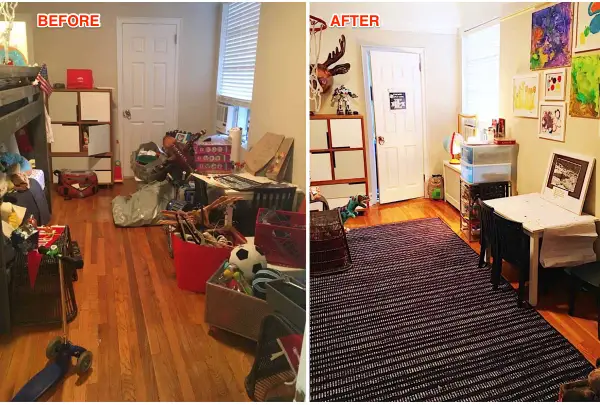
Walls that had been crowded with extraneous items were now open, light streaming unimpeded through curtains that had not been drawn in years.

The floors, once carpeted with layers of shoes and forgotten toys, were cleared, and in the space that had once been clutter, I felt the first true sense of liberation in years.
When they finally arrived, stepping out of their vehicle with luggage in hand, they were met with a reality they could not have anticipated. The familiar hallways were devoid of their belongings.
The rooms had been rearranged to accommodate functionality rather than convenience.
Even the scents of the home — once subtly perfumed with their choice of candles, cooking aromas, and their children’s unwashed clothes — had shifted.
It was now redolent of fresh linens, polished wood, and the faint herbal undertone of tea steeping in the kitchen.
The transition was subtle yet undeniable: this was no longer a house curated for them; it was a home reclaimed for the man who had never lost his capacity for agency.
Affixed to the front door was a straightforward letter, carefully composed, its words deliberate, yet devoid of rancor.
It outlined my legal and moral rationale, articulating the actions I had taken to secure my home and autonomy.
I described, with clarity and precision, the assumptions that had led to the current situation — assumptions that I would be passive, acquiescent, and invisible in the narrative of my own life.
The letter was a boundary drawn not in anger but in clarity, a manifesto of self-respect that demanded acknowledgment.
I made no threats, offered no ultimatums; I merely stated what had been done, why, and with what intention — to create a home that reflected my values and a life lived with dignity.
I watched from the window above the garage as they approached the door.
Their expressions morphed through stages: disbelief, confusion, indignation, and finally a dawning realization of the magnitude of what had transpired.
My grandchildren, innocent witnesses to adult conflict, tugged at sleeves and whispered questions that went unanswered in the moment, their curiosity tempered by unease.
My son and his wife stood frozen, processing the absence of the comfortable routine they had expected, confronted by a reality that challenged their assumptions about entitlement and obedience.
For a long moment, I felt no malice toward them. Instead, I experienced a profound sense of relief, a quiet affirmation that I had honored my own principles and reclaimed the agency that had long been deferred.
Later that afternoon, I reached out to my grandchildren. Their laughter, ringing through the telephone, became a balm to the tension that had accumulated over months and years.
I reassured them that they were welcome at any time, that Grandpa’s house remained a place of warmth and affection, regardless of adult disagreements.
Their innocent curiosity led to questions about grilled cheese sandwiches, one of their favorite treats, and I promised that we would share them soon.
Those conversations, simple yet profound, reminded me that relationships are layered, capable of enduring strain while maintaining the possibility for love, understanding, and reconnection.
In the following days, communication with my son shifted in tone. Initially, the calls and messages were sharp, colored with anger and resentment.
The reality of the action I had taken seemed to provoke defensiveness, a natural response to confrontation. Over time, however, the tone evolved.
Confusion replaced indignation, followed by tentative inquiries, and ultimately expressions that resembled remorse.
I listened without immediate judgment, offering space for dialogue rather than immediate reconciliation. Relationships, I have learned, are never linear.
They are a complex interplay of action, reaction, forgiveness, and understanding, and I recognized that this chapter — significant though it was — did not define the entirety of our family story.
Reclaiming my home was inseparable from reclaiming my sense of self.
For years, I had ceded control in subtle ways, allowing decisions about daily life, possessions, and household operations to be made without my active participation.
In those quiet acts of autonomy — rearranging furniture, repacking belongings, restoring the locks — I reaffirmed not only my legal authority but the moral principle that one must be an active participant in the governance of one’s life.
Each item returned to its proper place, each corner of the house cleared, became a tangible metaphor for the reclamation of my dignity and my voice.
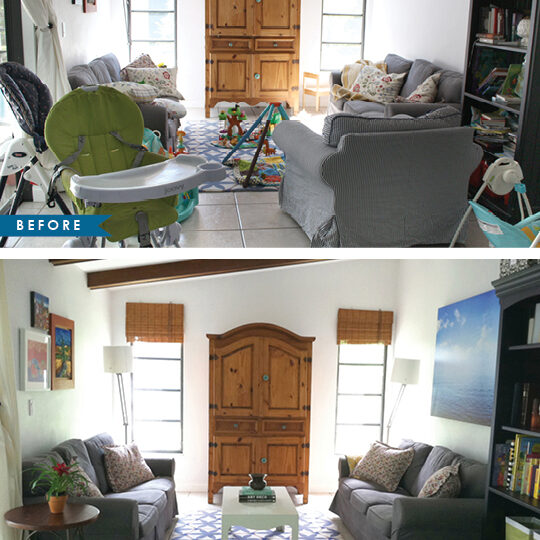
Evenings in the reclaimed home took on a new quality. The rooms, once familiar yet imbued with passive tension, now radiated a sense of intentionality.
The air felt lighter, infused with the quiet comfort of being fully seen and acknowledged. I could sit in the living room and decide, without deference to anyone else, which book to read, which music to play, or how to arrange the spaces that framed my days.
Small acts — boiling water for tea, lighting a lamp in the corner, preparing a simple meal — became rituals of self-respect, quiet affirmations that life continues with dignity when one is willing to claim it.
There was, of course, a reflective quality to this transformation.
I thought about years past, about the compromises I had made in the name of family harmony, and about the lessons embedded in deferred confrontation.
I realized that dignity is not something passively conferred by others. It is something actively maintained, defended, and cherished.
One does not wait for acknowledgment from those who may never grant it; one claims it through deliberate, conscientious action. In this sense, the reclamation of my home was also a reclamation of time, autonomy, and self-worth.
Yet, the act was far from final. Relationships require nurturing, understanding, and dialogue.
My son’s eventual outreach, tinged with vulnerability and tentative remorse, marked the beginning of a slow, potentially fruitful process of reconciliation.
I did not offer immediate forgiveness; that would have undermined the assertion of boundaries that had been necessary. Instead, I listened, considered, and allowed space for his perspective to unfold.
In doing so, I maintained the equilibrium between justice and compassion, demonstrating that assertiveness and love are not mutually exclusive but can coexist in measured, deliberate ways.
The experience offered insight not only into family dynamics but into the broader principle of living authentically.
Life, I recognized, is comprised of decisions both monumental and subtle, and the willingness to act in accordance with one’s principles often defines the quality of those days.
In reclaiming my home, I had reclaimed my voice, my agency, and the quiet joy of existing in a space aligned with my values.
The house, once a passive stage for others’ expectations, had become a sanctuary — a reflection of intentional living, careful thought, and deliberate choice.

In the stillness of the evening, as sunlight faded through the curtains and shadows stretched across the polished floors, I felt a profound sense of completion.
There was no triumphalism, no gloating over error or misjudgment. Instead, there was clarity, peace, and the subtle satisfaction of aligning action with principle.
The house, the rooms, the objects, and the air itself all bore witness to a life reclaimed — one in which dignity, self-respect, and autonomy were once again the guiding forces.
This chapter of life, marked by decisive action, quiet observation, and reflective understanding, reinforced a lesson often forgotten in the pursuit of familial approval: respect for oneself is foundational to all other relationships.
By asserting boundaries, establishing clarity, and upholding my right to participate in decisions that directly affect me, I created a space where future interactions could occur with honesty, accountability, and the potential for meaningful connection.
Ultimately, life had reminded me that dignity is not a passive possession but an active practice.
It is cultivated in moments of decision, fortified through deliberate action, and maintained through the courage to uphold one’s principles even when the stakes are high.
On that day, when my son and his wife were confronted with a home transformed by intention and legality, I did not see conflict; I saw the embodiment of self-respect, the quiet strength of boundaries, and the peaceful assertion of a life fully my own.
And in the laughter of my grandchildren later that evening, in the small joys of grilled cheese sandwiches, in the quiet hum of the house restored to its natural rhythm, I found the reaffirmation I had longed for:
peace resides not in the absence of challenge but in the presence of integrity, clarity, and the courage to reclaim one’s life when it has been overshadowed.
The day my son and his wife returned from their extravagant Mediterranean cruise, I knew the ordinary rhythm of our household was about to collide with the consequences of decisions long deferred.
For weeks, they had been away, basking in foreign sun and the opulent pleasures that travel affords.
They had left expecting the usual order: a home maintained to their standards, meals prepared with care, and their father quietly fading into the backdrop of the life they curated.
What awaited them, however, was anything but predictable. As they drove down the familiar driveway, laughter and chatter already spilling from their children in the backseat, they could not have foreseen the quiet upheaval that had occurred in their absence.
From the moment I first read the innocuous email that revealed their intentions — intentions that cut deeper than I could have imagined — I knew I could no longer remain passive.
The message had been couched in cordial language, yet beneath the surface, it spoke of disregard, entitlement, and an assumption that I would simply acquiesce to their plans.
For years, I had allowed the current of familial politeness and assumed respect to carry me along, often silencing my own needs to maintain harmony.
But now, fortified by reflection, the counsel of a lawyer, and a renewed understanding of my own rights, I was ready to assert control over the one sphere I could govern: my home and the life within it.
During their absence, I set about methodically reclaiming what was unequivocally mine. It was not an act of vengeance, nor a performance designed to shame.
It was a deliberate and measured process, each step carefully executed, each decision rooted in legal authority and moral clarity.
I began by reviewing all documentation pertaining to the property — titles, utility agreements, and household accounts.
Ensuring that my name was restored where it had been quietly omitted, I notified utility companies and service providers of the necessary changes.
The locks were replaced with new ones, chosen not for aggression but for the simple protection of boundaries. Every move was deliberate, a reflection of years of patience now converted into action.
I stripped the house down to essentials. Furniture that had been loaned, borrowed, or simply assumed to remain was carefully packed and stored, labeled with precision and prepared for collection from a warehouse downtown.
Decorative items, trinkets, and personal effects that had been relocated or “temporarily stored” by them were restored to their rightful places or secured until appropriate arrangements could be made.
The home no longer reflected the aesthetic of someone else’s imagination or the temporary whims of visitors; it became a reflection of me, a sanctuary of simplicity, order, and quiet dignity.
Walls that had been crowded with extraneous items were now open, light streaming unimpeded through curtains that had not been drawn in years.
The floors, once carpeted with layers of shoes and forgotten toys, were cleared, and in the space that had once been clutter, I felt the first true sense of liberation in years.
When they finally arrived, stepping out of their vehicle with luggage in hand, they were met with a reality they could not have anticipated. The familiar hallways were devoid of their belongings.
The rooms had been rearranged to accommodate functionality rather than convenience.
Even the scents of the home — once subtly perfumed with their choice of candles, cooking aromas, and their children’s unwashed clothes — had shifted.
It was now redolent of fresh linens, polished wood, and the faint herbal undertone of tea steeping in the kitchen.
The transition was subtle yet undeniable: this was no longer a house curated for them; it was a home reclaimed for the man who had never lost his capacity for agency.
Affixed to the front door was a straightforward letter, carefully composed, its words deliberate, yet devoid of rancor.
It outlined my legal and moral rationale, articulating the actions I had taken to secure my home and autonomy.
I described, with clarity and precision, the assumptions that had led to the current situation — assumptions that I would be passive, acquiescent, and invisible in the narrative of my own life.
The letter was a boundary drawn not in anger but in clarity, a manifesto of self-respect that demanded acknowledgment.
I made no threats, offered no ultimatums; I merely stated what had been done, why, and with what intention — to create a home that reflected my values and a life lived with dignity.
I watched from the window above the garage as they approached the door.
Their expressions morphed through stages: disbelief, confusion, indignation, and finally a dawning realization of the magnitude of what had transpired.
My grandchildren, innocent witnesses to adult conflict, tugged at sleeves and whispered questions that went unanswered in the moment, their curiosity tempered by unease.
My son and his wife stood frozen, processing the absence of the comfortable routine they had expected, confronted by a reality that challenged their assumptions about entitlement and obedience.
For a long moment, I felt no malice toward them. Instead, I experienced a profound sense of relief, a quiet affirmation that I had honored my own principles and reclaimed the agency that had long been deferred.
Later that afternoon, I reached out to my grandchildren. Their laughter, ringing through the telephone, became a balm to the tension that had accumulated over months and years.
I reassured them that they were welcome at any time, that Grandpa’s house remained a place of warmth and affection, regardless of adult disagreements.
Their innocent curiosity led to questions about grilled cheese sandwiches, one of their favorite treats, and I promised that we would share them soon.
Those conversations, simple yet profound, reminded me that relationships are layered, capable of enduring strain while maintaining the possibility for love, understanding, and reconnection.
In the following days, communication with my son shifted in tone. Initially, the calls and messages were sharp, colored with anger and resentment.
The reality of the action I had taken seemed to provoke defensiveness, a natural response to confrontation. Over time, however, the tone evolved.
Confusion replaced indignation, followed by tentative inquiries, and ultimately expressions that resembled remorse.
I listened without immediate judgment, offering space for dialogue rather than immediate reconciliation. Relationships, I have learned, are never linear.
They are a complex interplay of action, reaction, forgiveness, and understanding, and I recognized that this chapter — significant though it was — did not define the entirety of our family story.
Reclaiming my home was inseparable from reclaiming my sense of self.
For years, I had ceded control in subtle ways, allowing decisions about daily life, possessions, and household operations to be made without my active participation.
In those quiet acts of autonomy — rearranging furniture, repacking belongings, restoring the locks — I reaffirmed not only my legal authority but the moral principle that one must be an active participant in the governance of one’s life.
Each item returned to its proper place, each corner of the house cleared, became a tangible metaphor for the reclamation of my dignity and my voice.
Evenings in the reclaimed home took on a new quality. The rooms, once familiar yet imbued with passive tension, now radiated a sense of intentionality.
The air felt lighter, infused with the quiet comfort of being fully seen and acknowledged. I could sit in the living room and decide, without deference to anyone else, which book to read, which music to play, or how to arrange the spaces that framed my days.
Small acts — boiling water for tea, lighting a lamp in the corner, preparing a simple meal — became rituals of self-respect, quiet affirmations that life continues with dignity when one is willing to claim it.
There was, of course, a reflective quality to this transformation.
I thought about years past, about the compromises I had made in the name of family harmony, and about the lessons embedded in deferred confrontation.
I realized that dignity is not something passively conferred by others. It is something actively maintained, defended, and cherished.
One does not wait for acknowledgment from those who may never grant it; one claims it through deliberate, conscientious action. In this sense, the reclamation of my home was also a reclamation of time, autonomy, and self-worth.
Yet, the act was far from final. Relationships require nurturing, understanding, and dialogue.
My son’s eventual outreach, tinged with vulnerability and tentative remorse, marked the beginning of a slow, potentially fruitful process of reconciliation.
I did not offer immediate forgiveness; that would have undermined the assertion of boundaries that had been necessary. Instead, I listened, considered, and allowed space for his perspective to unfold.
In doing so, I maintained the equilibrium between justice and compassion, demonstrating that assertiveness and love are not mutually exclusive but can coexist in measured, deliberate ways.
The experience offered insight not only into family dynamics but into the broader principle of living authentically.
Life, I recognized, is comprised of decisions both monumental and subtle, and the willingness to act in accordance with one’s principles often defines the quality of those days.
In reclaiming my home, I had reclaimed my voice, my agency, and the quiet joy of existing in a space aligned with my values.
The house, once a passive stage for others’ expectations, had become a sanctuary — a reflection of intentional living, careful thought, and deliberate choice.
In the stillness of the evening, as sunlight faded through the curtains and shadows stretched across the polished floors, I felt a profound sense of completion.
There was no triumphalism, no gloating over error or misjudgment. Instead, there was clarity, peace, and the subtle satisfaction of aligning action with principle.
The house, the rooms, the objects, and the air itself all bore witness to a life reclaimed — one in which dignity, self-respect, and autonomy were once again the guiding forces.
This chapter of life, marked by decisive action, quiet observation, and reflective understanding, reinforced a lesson often forgotten in the pursuit of familial approval: respect for oneself is foundational to all other relationships.
By asserting boundaries, establishing clarity, and upholding my right to participate in decisions that directly affect me, I created a space where future interactions could occur with honesty, accountability, and the potential for meaningful connection.
Ultimately, life had reminded me that dignity is not a passive possession but an active practice.
It is cultivated in moments of decision, fortified through deliberate action, and maintained through the courage to uphold one’s principles even when the stakes are high.
On that day, when my son and his wife were confronted with a home transformed by intention and legality, I did not see conflict; I saw the embodiment of self-respect, the quiet strength of boundaries, and the peaceful assertion of a life fully my own.
And in the laughter of my grandchildren later that evening, in the small joys of grilled cheese sandwiches, in the quiet hum of the house restored to its natural rhythm, I found the reaffirmation I had longed for:
peace resides not in the absence of challenge but in the presence of integrity, clarity, and the courage to reclaim one’s life when it has been overshadowed.


