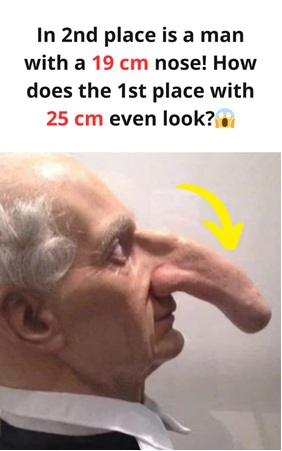
“Thomas Wedders: The Man With the Longest Nose Who Captivated the 1700s”
In the rolling countryside of 18th-century Yorkshire, England, lived a man whose name would survive centuries.
Not for military victories, scientific discoveries, or political power, but for a single, extraordinary physical feature.
Thomas Wedders, also known in historical references as Thomas Wadhouse, is widely recognized as the man with the largest nose ever documented in human history.
Measuring an astonishing 7.5 inches (approximately 19 centimeters) in length, his nose earned him a unique and unusual place in historical records.
At a time when physical difference often drew public attention and curiosity, Wedders became a figure of fascination, speculation, and satire.
Although much of his life remains wrapped in mystery, the fragments that remain offer insight into society’s long-standing obsession with the unusual and the extraordinary.
A Remarkable Feature in an Unremarkable Time
Thomas Wedders was born around 1730, likely in Yorkshire, England. Little is known about his childhood, family background, or upbringing.
Historical records from the period were often sparse, particularly for individuals who were not wealthy or politically influential.
What is known is that Wedders’ facial appearance—specifically his nose—was so striking that it set him apart in a society where conformity was the norm.
A nose measuring 7.5 inches would have been impossible to ignore. Contemporary accounts suggest it extended far beyond typical proportions, dominating his facial structure and making him instantly recognizable.
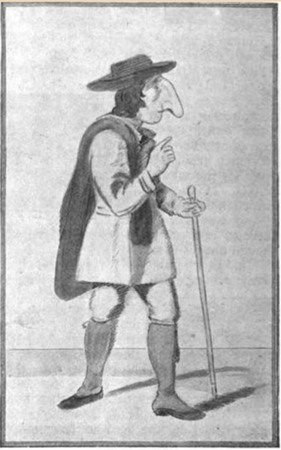
In an era before photography, written descriptions and illustrations were the primary means of documentation, yet Wedders’ nose was so extraordinary that it was consistently described in exaggerated detail, even by writers known for skepticism.
From Curiosity to Public Spectacle
During the 18th century, public exhibitions—often referred to today as “freak shows”—were common forms of entertainment throughout Europe.
People with unusual physical characteristics were frequently displayed for public viewing, sometimes willingly, sometimes out of economic necessity.
While modern perspectives view such exhibitions as exploitative, they were a widely accepted social phenomenon at the time.

It is widely believed that Thomas Wedders participated in these exhibitions. His appearance would have made him an ideal candidate for public display, drawing crowds eager to witness something they had never seen before.
However, historical records do not clearly state whether he joined willingly or was pressured by circumstances.
Newspapers and pamphlets of the era often mentioned him, sometimes with humor, sometimes with mockery.
One of the most famous references appeared much later, in The Strand Magazine in 1896, which jokingly remarked that if greatness were measured by nose size, Wedders could have “conquered Europe.”
This satirical comment reflects both the fascination and the lack of sensitivity typical of the time.
Fame Without a Voice
Despite his notoriety, Thomas Wedders left behind no personal writings, letters, or recorded interviews.
We do not know how he felt about his appearance, how he experienced public attention, or whether he embraced or resented his fame. His inner life—his thoughts, fears, ambitions, and emotions—remains entirely unknown.
This absence of personal testimony is one of the most striking aspects of his story.
Wedders is remembered almost exclusively through the observations of others, filtered through humor, exaggeration, and curiosity. As a result, his identity has been reduced, historically, to a single physical attribute.
He reportedly died in his early to mid-50s, around 1780. The cause of his death is unknown, and there is no known grave or memorial marking his passing.
Medical Mystery: What Caused His Extraordinary Nose?
One of the enduring questions surrounding Thomas Wedders is what caused his unusually large nose.
No medical records from his lifetime exist, and modern diagnoses can only be speculative.
Some researchers and historians suggest that Wedders may have had a rare genetic condition or developmental anomaly affecting cartilage and soft tissue growth.
Conditions such as rhinophyma or other connective tissue disorders have been mentioned, though none fully explain the extreme size described in historical accounts.
Others have proposed that exaggerated reporting may have played a role. In an age when sensational storytelling sold newspapers and attracted crowds, it is possible that his nose was large but described in increasingly dramatic terms over time.
Still, the consistency of measurements—7.5 inches—across multiple sources suggests that the feature was genuinely remarkable.
There are also rumors, unsupported by evidence, suggesting unusual family traits or inherited conditions. However, no documentation exists regarding relatives with similar features.
From History to Wax and Legend
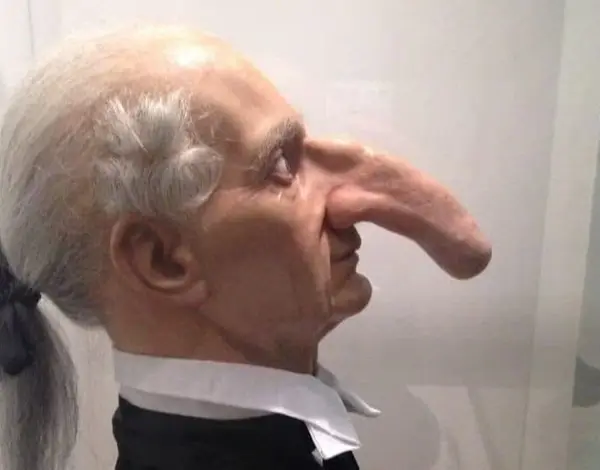
Centuries after his death, Thomas Wedders experienced a second wave of fame—this time through wax replicas.
His likeness has appeared in exhibitions such as Ripley’s Believe It or Not, where exaggerated human traits are preserved and displayed for modern audiences.
These wax figures are based on historical descriptions rather than photographs, meaning they represent interpretations rather than exact representations.
Still, they have helped keep Wedders’ story alive, introducing him to generations far removed from 18th-century England.
Viral Fame in the Digital Age
In recent years, a photograph of one such wax figure resurfaced online, particularly on platforms like Reddit, where it quickly went viral.
Modern audiences responded with a mix of amazement, humor, and disbelief. Some users compared Wedders’ appearance to fictional characters such as Squidward from SpongeBob SquarePants or even animals like anteaters.
While these comparisons were often lighthearted, they also highlight how public reactions to physical difference have evolved—and, in some ways, remained the same.
Curiosity, humor, and exaggeration continue to shape how extraordinary individuals are perceived.
Guinness World Records and Modern Comparisons

According to Guinness World Records, Thomas Wedders remains the historical record holder for the longest nose ever documented.
Because no verified measurements from living individuals come close to his reported 7.5 inches, his record stands unchallenged.
The current living record holder is Mehmet Özyürek of Turkey, whose nose measures 3.46 inches (8.8 cm) from the bridge to the tip.
Özyürek’s nose was officially measured on March 18, 2010, during the Italian television program Lo Show dei Record in Rome.
In April 2014, Özyürek appeared as a commercial actor in Trabzon, Turkey, gaining media attention not only for his record but also for his confidence and willingness to embrace public recognition.
Unlike Wedders, Özyürek has spoken openly about his experience, offering a modern contrast in how society treats physical uniqueness.
Changing Perspectives on Difference
The contrast between Thomas Wedders and Mehmet Özyürek illustrates how societal attitudes toward physical differences have changed over time.
In the 18th century, unusual traits often meant public display with little regard for dignity. Today, while curiosity remains, individuals are more likely to be recognized with respect, consent, and personal agency.
Yet, Wedders’ story also serves as a reminder that fascination with the extraordinary is a deeply human trait—one that transcends centuries, cultures, and technologies.
A Legacy Beyond Measurement
Although Thomas Wedders is remembered primarily for the size of his nose, his story carries broader significance.
It reflects how history chooses to remember people, how physical appearance can overshadow personal identity, and how narratives are shaped by the values of their time.
His life, though largely undocumented, continues to spark interest, discussion, and reflection.
Whether viewed as a curiosity, a historical footnote, or a symbol of humanity’s enduring fascination with extremes, Thomas Wedders remains unforgettable.
More than two centuries after his death, his name still circulates in books, museums, online discussions, and record books—a testament to how even the most unusual stories can outlive their era.
Final Reflection
Thomas Wedders never ruled a nation, wrote a book, or led an army. Yet his extraordinary appearance ensured that he would not be forgotten.
His story bridges history and modern culture, reminding us that behind every remarkable feature is a human being whose full story may never be known—but whose existence continues to intrigue the world.
In the rolling countryside of 18th-century Yorkshire, England, lived a man whose name would survive centuries.
Not for military victories, scientific discoveries, or political power, but for a single, extraordinary physical feature.
Thomas Wedders, also known in historical references as Thomas Wadhouse, is widely recognized as the man with the largest nose ever documented in human history.
Measuring an astonishing 7.5 inches (approximately 19 centimeters) in length, his nose earned him a unique and unusual place in historical records.
At a time when physical difference often drew public attention and curiosity, Wedders became a figure of fascination, speculation, and satire.
Although much of his life remains wrapped in mystery, the fragments that remain offer insight into society’s long-standing obsession with the unusual and the extraordinary.
A Remarkable Feature in an Unremarkable Time
Thomas Wedders was born around 1730, likely in Yorkshire, England. Little is known about his childhood, family background, or upbringing.
Historical records from the period were often sparse, particularly for individuals who were not wealthy or politically influential.
What is known is that Wedders’ facial appearance—specifically his nose—was so striking that it set him apart in a society where conformity was the norm.
A nose measuring 7.5 inches would have been impossible to ignore. Contemporary accounts suggest it extended far beyond typical proportions, dominating his facial structure and making him instantly recognizable.
In an era before photography, written descriptions and illustrations were the primary means of documentation, yet Wedders’ nose was so extraordinary that it was consistently described in exaggerated detail, even by writers known for skepticism.
From Curiosity to Public Spectacle
During the 18th century, public exhibitions—often referred to today as “freak shows”—were common forms of entertainment throughout Europe.
People with unusual physical characteristics were frequently displayed for public viewing, sometimes willingly, sometimes out of economic necessity.
While modern perspectives view such exhibitions as exploitative, they were a widely accepted social phenomenon at the time.
It is widely believed that Thomas Wedders participated in these exhibitions. His appearance would have made him an ideal candidate for public display, drawing crowds eager to witness something they had never seen before.
However, historical records do not clearly state whether he joined willingly or was pressured by circumstances.
Newspapers and pamphlets of the era often mentioned him, sometimes with humor, sometimes with mockery.
One of the most famous references appeared much later, in The Strand Magazine in 1896, which jokingly remarked that if greatness were measured by nose size, Wedders could have “conquered Europe.”
This satirical comment reflects both the fascination and the lack of sensitivity typical of the time.
Fame Without a Voice
Despite his notoriety, Thomas Wedders left behind no personal writings, letters, or recorded interviews.
We do not know how he felt about his appearance, how he experienced public attention, or whether he embraced or resented his fame. His inner life—his thoughts, fears, ambitions, and emotions—remains entirely unknown.
This absence of personal testimony is one of the most striking aspects of his story.
Wedders is remembered almost exclusively through the observations of others, filtered through humor, exaggeration, and curiosity. As a result, his identity has been reduced, historically, to a single physical attribute.
He reportedly died in his early to mid-50s, around 1780. The cause of his death is unknown, and there is no known grave or memorial marking his passing.
Medical Mystery: What Caused His Extraordinary Nose?
One of the enduring questions surrounding Thomas Wedders is what caused his unusually large nose.
No medical records from his lifetime exist, and modern diagnoses can only be speculative.
Some researchers and historians suggest that Wedders may have had a rare genetic condition or developmental anomaly affecting cartilage and soft tissue growth.
Conditions such as rhinophyma or other connective tissue disorders have been mentioned, though none fully explain the extreme size described in historical accounts.
Others have proposed that exaggerated reporting may have played a role. In an age when sensational storytelling sold newspapers and attracted crowds, it is possible that his nose was large but described in increasingly dramatic terms over time.
Still, the consistency of measurements—7.5 inches—across multiple sources suggests that the feature was genuinely remarkable.
There are also rumors, unsupported by evidence, suggesting unusual family traits or inherited conditions. However, no documentation exists regarding relatives with similar features.
From History to Wax and Legend
Centuries after his death, Thomas Wedders experienced a second wave of fame—this time through wax replicas.
His likeness has appeared in exhibitions such as Ripley’s Believe It or Not, where exaggerated human traits are preserved and displayed for modern audiences.
These wax figures are based on historical descriptions rather than photographs, meaning they represent interpretations rather than exact representations.
Still, they have helped keep Wedders’ story alive, introducing him to generations far removed from 18th-century England.
Viral Fame in the Digital Age
In recent years, a photograph of one such wax figure resurfaced online, particularly on platforms like Reddit, where it quickly went viral.
Modern audiences responded with a mix of amazement, humor, and disbelief. Some users compared Wedders’ appearance to fictional characters such as Squidward from SpongeBob SquarePants or even animals like anteaters.
While these comparisons were often lighthearted, they also highlight how public reactions to physical difference have evolved—and, in some ways, remained the same.
Curiosity, humor, and exaggeration continue to shape how extraordinary individuals are perceived.
Guinness World Records and Modern Comparisons
According to Guinness World Records, Thomas Wedders remains the historical record holder for the longest nose ever documented.
Because no verified measurements from living individuals come close to his reported 7.5 inches, his record stands unchallenged.
The current living record holder is Mehmet Özyürek of Turkey, whose nose measures 3.46 inches (8.8 cm) from the bridge to the tip.
Özyürek’s nose was officially measured on March 18, 2010, during the Italian television program Lo Show dei Record in Rome.
In April 2014, Özyürek appeared as a commercial actor in Trabzon, Turkey, gaining media attention not only for his record but also for his confidence and willingness to embrace public recognition.
Unlike Wedders, Özyürek has spoken openly about his experience, offering a modern contrast in how society treats physical uniqueness.
Changing Perspectives on Difference
The contrast between Thomas Wedders and Mehmet Özyürek illustrates how societal attitudes toward physical differences have changed over time.
In the 18th century, unusual traits often meant public display with little regard for dignity. Today, while curiosity remains, individuals are more likely to be recognized with respect, consent, and personal agency.
Yet, Wedders’ story also serves as a reminder that fascination with the extraordinary is a deeply human trait—one that transcends centuries, cultures, and technologies.
A Legacy Beyond Measurement
Although Thomas Wedders is remembered primarily for the size of his nose, his story carries broader significance.
It reflects how history chooses to remember people, how physical appearance can overshadow personal identity, and how narratives are shaped by the values of their time.
His life, though largely undocumented, continues to spark interest, discussion, and reflection.
Whether viewed as a curiosity, a historical footnote, or a symbol of humanity’s enduring fascination with extremes, Thomas Wedders remains unforgettable.
More than two centuries after his death, his name still circulates in books, museums, online discussions, and record books—a testament to how even the most unusual stories can outlive their era.
Final Reflection
Thomas Wedders never ruled a nation, wrote a book, or led an army. Yet his extraordinary appearance ensured that he would not be forgotten.
His story bridges history and modern culture, reminding us that behind every remarkable feature is a human being whose full story may never be known—but whose existence continues to intrigue the world.


