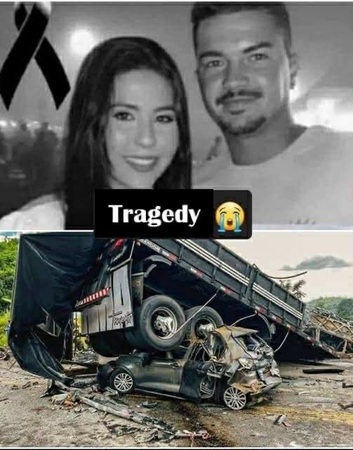
Tragic Accident Claims Lives of Couple Early Today — “She Was the Daughter of the Pre…”
The deadly crash on Rodovia do Sol has left residents shaken and communities asking questions that may never have clear answers.
Witnesses describe a scene that seemed to defy the randomness of typical accidents.
Just moments before the collision, locals reported hearing the violent screeching of tires — a sound that makes the heart stop — and spotting a Chevrolet S10 pickup swerving uncontrollably down the highway.
To some, the driving did not appear merely reckless but desperate, as though the vehicle and its driver were fleeing from something unseen.
The incident began as an ordinary roadside emergency.
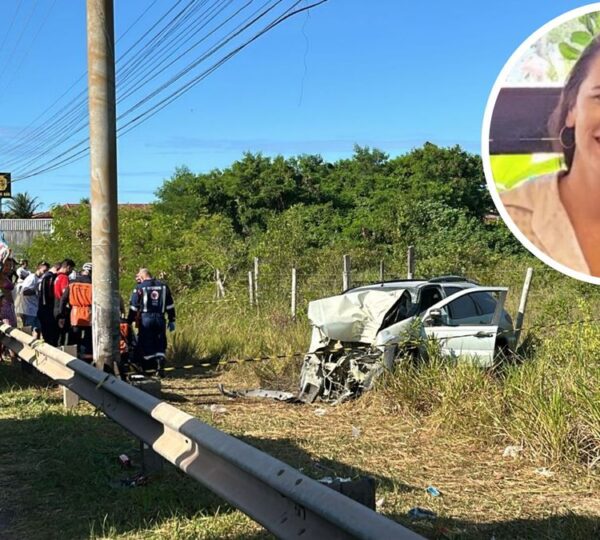
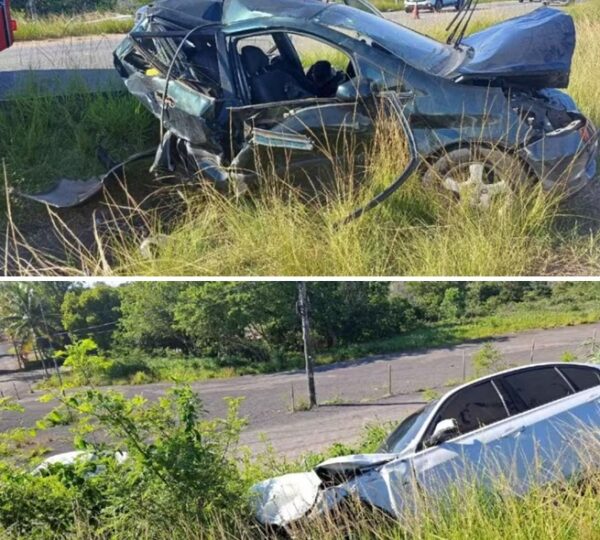
A young couple had pulled their Chevrolet Cruze onto the shoulder to repair a flat tire, accompanied by family members including Ingrid and her brother, who were assisting in a safe and methodical way.
The afternoon, seemingly routine and uneventful, took a devastating turn in an instant.
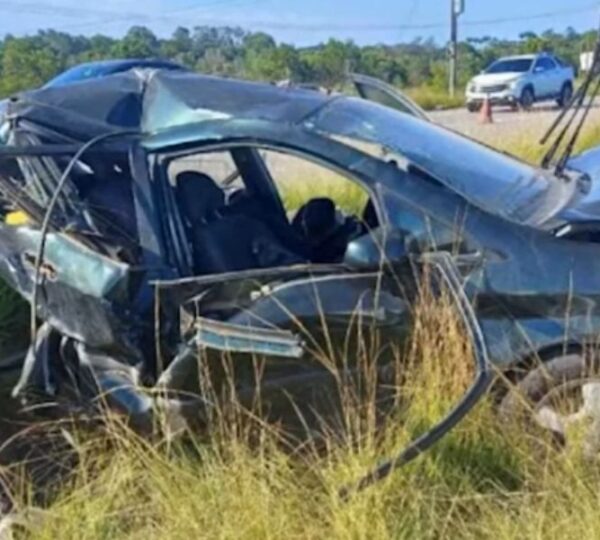
The Chevrolet S10 barreled toward the parked vehicle at a dangerous speed, striking the Cruze with immense force.
The sound of metal crushing metal shattered the calm of the afternoon, leaving behind twisted wreckage and stunned witnesses struggling to process the sudden catastrophe.
Firefighters, paramedics, and police arrived within minutes, working under tense and chaotic conditions to rescue the injured.
Three people in the Cruze suffered injuries ranging from severe to moderate and were rushed to nearby hospitals for treatment.
While their physical wounds were addressed, the emotional scars — the trauma of an unanticipated life-altering moment — will take far longer to heal.
When authorities turned to the S10, it was empty. The driver had fled, abandoning not only the truck but also the victims and any immediate explanations that might clarify the circumstances leading to the collision.
Investigators have not ruled out alcohol as a contributing factor, yet witness testimonies complicate the narrative.
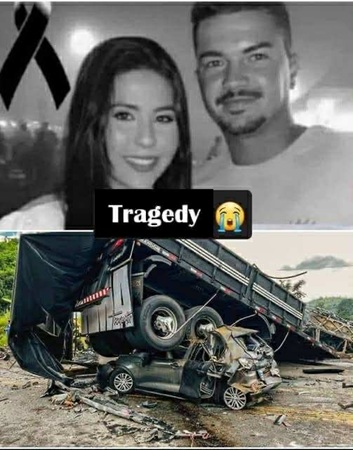
Several people reported that the pickup seemed “out of control,” weaving erratically as if the driver was terrified.
The central question remains: why flee if the incident was purely accidental? Was the driver fearing legal repercussions, or was there another factor — something deeper — motivating the escape?
As the investigation continues, the community grapples with a mixture of grief, anger, and confusion.
Residents along Rodovia do Sol are no strangers to accidents; the highway has claimed too many lives due to speed, fatigue, and intoxication over the years.
Yet this case resonates differently, stirring a more profound sense of unease and moral reflection.
Online discussions and social media posts reflect this duality — some suggest the driver acted out of panic, while others speculate about underlying motives beyond ordinary recklessness.
Amid the speculation, one truth remains unambiguous: a family’s life has been shattered, and their suffering transcends debate or conjecture.
For Ingrid and her family, the crash is not a statistic or a fleeting news item. It is the piercing reality of a life interrupted, a phone call that no one wishes to receive, and the haunting vision of headlights that did not slow or stop.
The consequences of a single moment of carelessness ripple outward, altering lives in ways that cannot be undone.
The tragedy underscores a fundamental truth about road safety and human responsibility: every decision made behind the wheel carries the potential for irreversible impact.
Beyond the immediate trauma, the crash prompts a broader societal reflection. Communities often confront their shared vulnerability in the aftermath of such events, questioning not only legal obligations but ethical responsibilities.
Every incident, from minor fender-benders to catastrophic collisions, tests the moral compass of those involved and those who witness it.
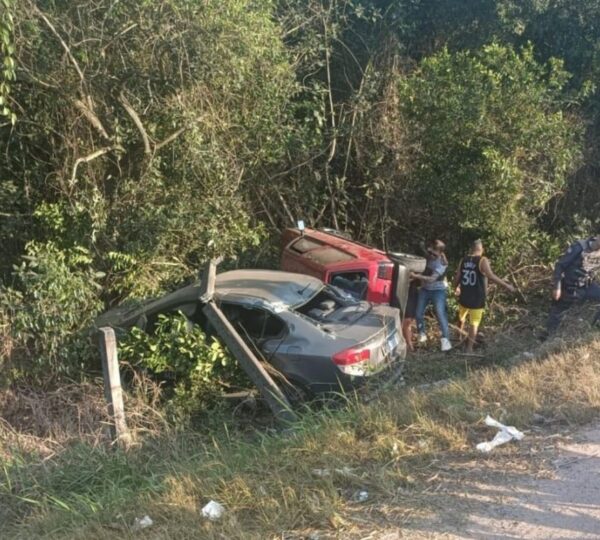
Rodovia do Sol’s latest tragedy illustrates the delicate balance between chance and consequence, highlighting the need for vigilance, empathy, and a heightened sense of accountability on the roads.
Emergency responders, from firefighters to paramedics, demonstrated extraordinary commitment during the aftermath.
Working under intense pressure, they managed to extract and stabilize the victims, showcasing the critical role of first responders in mitigating the consequences of roadway disasters.
Police officers faced their own set of challenges, coordinating a rapidly evolving scene while beginning an investigation into a driver who had vanished without a trace.
Collecting witness statements, reviewing surveillance footage, and analyzing the trajectory and impact of the vehicles involved are part of a painstaking investigative process that may take weeks or months to yield definitive answers.
For the broader community, the event has fostered both mourning and reflection.
Neighbors, many of whom had witnessed or experienced accidents on the same stretch of highway, expressed sorrow for the victims and their families while simultaneously questioning how similar tragedies could be prevented in the future.
Community leaders and local authorities have begun discussions about improving roadway safety, such as implementing more visible signage, traffic calming measures, and stricter enforcement of speed and sobriety laws.
The goal is not only to punish wrongdoing but to foster a culture of vigilance and care that can avert future calamities.
The human element of the story is particularly poignant. Ingrid and her relatives, while assisting the young couple, experienced an immediate transition from everyday concern to profound loss and shock.
Their narrative underscores the fragility of life and the unpredictable nature of roadway hazards.
For them, the incident is a constant reminder of vulnerability, and their efforts to support the injured have been both emotionally taxing and vital for recovery.
The family’s experience highlights the dual reality of accidents: the physical consequences are immediate, but the psychological ramifications persist long after the event.
The mystery surrounding the fleeing driver deepens the emotional impact. Witness accounts describing erratic driving and visible fear raise questions that complicate a straightforward assessment of responsibility.
The driver’s absence prevents authorities from obtaining a complete understanding of motive and intent, leaving a community in a state of uncertainty.
Was the act driven by alcohol, panic, or an attempt to evade an unknown danger? These unanswered questions create an atmosphere of unease and highlight the importance of accountability, both legally and morally.
Amid the grief, community members are seeking ways to honor the victims and advocate for systemic change.
Local support networks, including volunteer groups, neighborhood associations, and online forums, have emerged to provide assistance, share information, and foster dialogue about prevention and awareness.
These efforts reflect a collective desire to transform tragedy into action, ensuring that the lives affected serve as catalysts for greater caution and responsibility among drivers.
From a legal perspective, the case raises critical issues regarding hit-and-run incidents, vehicular negligence, and potential criminal liability.
Authorities face the dual challenge of locating the missing driver and establishing whether the act constitutes simple recklessness, impaired driving, or more complex circumstances.
Each scenario carries distinct implications for justice and restitution, emphasizing the multifaceted nature of road accident investigations.
Rodovia do Sol’s crash also serves as a cautionary tale about the broader societal implications of irresponsible driving.
Every vehicle on the road represents not only the autonomy of the driver but also a moral obligation to protect fellow travelers.
When that responsibility is neglected, the results are often catastrophic, leaving families, first responders, and communities to grapple with the aftermath.
The event underscores the ethical dimension of driving: legal compliance alone does not suffice; conscientious behavior is essential to prevent loss and preserve trust within a community.
In the days and weeks following the collision, the search for the missing driver continues. Authorities are reviewing vehicle registrations, nearby surveillance footage, and witness accounts to reconstruct the events leading to the crash.
The investigation is ongoing, with many critical questions yet unanswered. Why did the driver flee? Was alcohol involved, or was there another underlying factor driving the erratic behavior?
Until these questions are resolved, the community remains suspended between mourning and the hope for clarity and accountability.
Ultimately, the tragedy on Rodovia do Sol is more than an isolated accident; it is a stark reminder of human vulnerability, the consequences of inattention and recklessness, and the enduring need for moral responsibility on the roads.
For Ingrid, her family, and the victims, the incident has irrevocably altered the course of their lives.
For the broader community, it is a call to vigilance, awareness, and empathy, emphasizing that every choice behind the wheel has profound implications.
Lives have been torn apart, families shaken, and a community left in mourning. Yet, amid grief and uncertainty, one principle remains clear: justice must encompass more than punishment.
It requires remembrance, accountability, and active engagement to prevent similar tragedies in the future. The Rodovia do Sol crash exemplifies the human cost of negligence and the importance of collective responsibility.
As investigators continue their work, the memory of those affected serves as both a somber reflection and a rallying point for safer, more conscientious driving.
The road to healing may be long, but the hope is that lessons learned from this tragedy will resonate, ensuring that no one else becomes another name etched into the history of Rodovia do Sol.
The deadly crash on Rodovia do Sol has left residents shaken and communities asking questions that may never have clear answers.
Witnesses describe a scene that seemed to defy the randomness of typical accidents.
Just moments before the collision, locals reported hearing the violent screeching of tires — a sound that makes the heart stop — and spotting a Chevrolet S10 pickup swerving uncontrollably down the highway.
To some, the driving did not appear merely reckless but desperate, as though the vehicle and its driver were fleeing from something unseen.
The incident began as an ordinary roadside emergency.
A young couple had pulled their Chevrolet Cruze onto the shoulder to repair a flat tire, accompanied by family members including Ingrid and her brother, who were assisting in a safe and methodical way.
The afternoon, seemingly routine and uneventful, took a devastating turn in an instant.
The Chevrolet S10 barreled toward the parked vehicle at a dangerous speed, striking the Cruze with immense force.
The sound of metal crushing metal shattered the calm of the afternoon, leaving behind twisted wreckage and stunned witnesses struggling to process the sudden catastrophe.
Firefighters, paramedics, and police arrived within minutes, working under tense and chaotic conditions to rescue the injured.
Three people in the Cruze suffered injuries ranging from severe to moderate and were rushed to nearby hospitals for treatment.
While their physical wounds were addressed, the emotional scars — the trauma of an unanticipated life-altering moment — will take far longer to heal.
When authorities turned to the S10, it was empty. The driver had fled, abandoning not only the truck but also the victims and any immediate explanations that might clarify the circumstances leading to the collision.
Investigators have not ruled out alcohol as a contributing factor, yet witness testimonies complicate the narrative.
Several people reported that the pickup seemed “out of control,” weaving erratically as if the driver was terrified.
The central question remains: why flee if the incident was purely accidental? Was the driver fearing legal repercussions, or was there another factor — something deeper — motivating the escape?
As the investigation continues, the community grapples with a mixture of grief, anger, and confusion.
Residents along Rodovia do Sol are no strangers to accidents; the highway has claimed too many lives due to speed, fatigue, and intoxication over the years.
Yet this case resonates differently, stirring a more profound sense of unease and moral reflection.
Online discussions and social media posts reflect this duality — some suggest the driver acted out of panic, while others speculate about underlying motives beyond ordinary recklessness.
Amid the speculation, one truth remains unambiguous: a family’s life has been shattered, and their suffering transcends debate or conjecture.
For Ingrid and her family, the crash is not a statistic or a fleeting news item. It is the piercing reality of a life interrupted, a phone call that no one wishes to receive, and the haunting vision of headlights that did not slow or stop.
The consequences of a single moment of carelessness ripple outward, altering lives in ways that cannot be undone.
The tragedy underscores a fundamental truth about road safety and human responsibility: every decision made behind the wheel carries the potential for irreversible impact.
Beyond the immediate trauma, the crash prompts a broader societal reflection. Communities often confront their shared vulnerability in the aftermath of such events, questioning not only legal obligations but ethical responsibilities.
Every incident, from minor fender-benders to catastrophic collisions, tests the moral compass of those involved and those who witness it.
Rodovia do Sol’s latest tragedy illustrates the delicate balance between chance and consequence, highlighting the need for vigilance, empathy, and a heightened sense of accountability on the roads.
Emergency responders, from firefighters to paramedics, demonstrated extraordinary commitment during the aftermath.
Working under intense pressure, they managed to extract and stabilize the victims, showcasing the critical role of first responders in mitigating the consequences of roadway disasters.
Police officers faced their own set of challenges, coordinating a rapidly evolving scene while beginning an investigation into a driver who had vanished without a trace.
Collecting witness statements, reviewing surveillance footage, and analyzing the trajectory and impact of the vehicles involved are part of a painstaking investigative process that may take weeks or months to yield definitive answers.
For the broader community, the event has fostered both mourning and reflection.
Neighbors, many of whom had witnessed or experienced accidents on the same stretch of highway, expressed sorrow for the victims and their families while simultaneously questioning how similar tragedies could be prevented in the future.
Community leaders and local authorities have begun discussions about improving roadway safety, such as implementing more visible signage, traffic calming measures, and stricter enforcement of speed and sobriety laws.
The goal is not only to punish wrongdoing but to foster a culture of vigilance and care that can avert future calamities.
The human element of the story is particularly poignant. Ingrid and her relatives, while assisting the young couple, experienced an immediate transition from everyday concern to profound loss and shock.
Their narrative underscores the fragility of life and the unpredictable nature of roadway hazards.
For them, the incident is a constant reminder of vulnerability, and their efforts to support the injured have been both emotionally taxing and vital for recovery.
The family’s experience highlights the dual reality of accidents: the physical consequences are immediate, but the psychological ramifications persist long after the event.
The mystery surrounding the fleeing driver deepens the emotional impact. Witness accounts describing erratic driving and visible fear raise questions that complicate a straightforward assessment of responsibility.
The driver’s absence prevents authorities from obtaining a complete understanding of motive and intent, leaving a community in a state of uncertainty.
Was the act driven by alcohol, panic, or an attempt to evade an unknown danger? These unanswered questions create an atmosphere of unease and highlight the importance of accountability, both legally and morally.
Amid the grief, community members are seeking ways to honor the victims and advocate for systemic change.
Local support networks, including volunteer groups, neighborhood associations, and online forums, have emerged to provide assistance, share information, and foster dialogue about prevention and awareness.
These efforts reflect a collective desire to transform tragedy into action, ensuring that the lives affected serve as catalysts for greater caution and responsibility among drivers.
From a legal perspective, the case raises critical issues regarding hit-and-run incidents, vehicular negligence, and potential criminal liability.
Authorities face the dual challenge of locating the missing driver and establishing whether the act constitutes simple recklessness, impaired driving, or more complex circumstances.
Each scenario carries distinct implications for justice and restitution, emphasizing the multifaceted nature of road accident investigations.
Rodovia do Sol’s crash also serves as a cautionary tale about the broader societal implications of irresponsible driving.
Every vehicle on the road represents not only the autonomy of the driver but also a moral obligation to protect fellow travelers.
When that responsibility is neglected, the results are often catastrophic, leaving families, first responders, and communities to grapple with the aftermath.
The event underscores the ethical dimension of driving: legal compliance alone does not suffice; conscientious behavior is essential to prevent loss and preserve trust within a community.
In the days and weeks following the collision, the search for the missing driver continues. Authorities are reviewing vehicle registrations, nearby surveillance footage, and witness accounts to reconstruct the events leading to the crash.
The investigation is ongoing, with many critical questions yet unanswered. Why did the driver flee? Was alcohol involved, or was there another underlying factor driving the erratic behavior?
Until these questions are resolved, the community remains suspended between mourning and the hope for clarity and accountability.
Ultimately, the tragedy on Rodovia do Sol is more than an isolated accident; it is a stark reminder of human vulnerability, the consequences of inattention and recklessness, and the enduring need for moral responsibility on the roads.
For Ingrid, her family, and the victims, the incident has irrevocably altered the course of their lives.
For the broader community, it is a call to vigilance, awareness, and empathy, emphasizing that every choice behind the wheel has profound implications.
Lives have been torn apart, families shaken, and a community left in mourning. Yet, amid grief and uncertainty, one principle remains clear: justice must encompass more than punishment.
It requires remembrance, accountability, and active engagement to prevent similar tragedies in the future. The Rodovia do Sol crash exemplifies the human cost of negligence and the importance of collective responsibility.
As investigators continue their work, the memory of those affected serves as both a somber reflection and a rallying point for safer, more conscientious driving.
The road to healing may be long, but the hope is that lessons learned from this tragedy will resonate, ensuring that no one else becomes another name etched into the history of Rodovia do Sol.


