...

She Took My Mom’s $25K Meant for Me — What Happened Next Was Pure Karma

Some stories don’t begin with loud explosions or dramatic twists. Some begin quietly — with a child holding onto the last promise his mother ever made.

My name is Ryan, I’m 19, and this is the story of how everything I thought was safe, everything I thought was mine, was taken from me… and how life eventually took care of the people who thought I was too small to matter.

I’ve never posted something this personal before. But I’m angry. And tired. And the whole truth needs to live somewhere other than my chest.

So if you’re reading this — really reading — thank you.

The Last Gift My Mom Ever Gave Me

Before everything in my life fell apart, things were… good. Not perfect, not easy, but filled with warmth. Filled with her.
My mom’s name was Melissa.

She loved Friday-night mac and cheese, hated rainy mornings, and somehow always remembered every silly thing I liked — which Pokémon card I was missing, how I took my hot chocolate, which stuffed animal I hid when kids from school came over so I wouldn’t look “uncool.”

She kissed my forehead every night, even when I pretended to be too old for it.

She was my home.

And then cancer took her — fast, sudden, and cruel. I was nine years old the day I held her hand in that hospital room.

Her skin was cold. She told me to be strong. I tried. I really did. But when the machines beeped their last round, I felt something inside me break in a way no child knows how to describe.

Before she died, she created a $25,000 trust for me — “for his future,” she said.

She whispered in my ear: “Use it for college, or your first place, or something that makes you proud.

That money is for you, baby. Only you.”

My dad stood beside her. He promised he’d protect it.

Back then, I believed him. Back then, I believed in a lot of things.

The Woman Who Changed Everything

For a while after Mom died, Dad and I lived in a quiet grief. He wasn’t perfect, but he tried.

He worked long shifts yet still drove me to science fairs. He tried to keep her memory alive — making the same mac and cheese on Fridays, trying to laugh at the same jokes she used to tell.

But grief has a strange way of weakening people.

When I was 11, Dad met a woman named Tracy. She had a sugary smile — the kind you notice before you realize it never touches the eyes.

At first she seemed kind. She brought brownies. She complimented my hair. She acted patient, warm, almost too warm. Dad fell for her fast. I wanted to believe she could be good for him — for us.

Then came her son, Connor.

My age. Louder. Flashier. Entitled in ways I couldn’t understand yet.

Tracy and Dad got married a year later.

That was the day her mask slipped.

Slowly at first — removing my mom’s things “for healing,” rearranging the house, correcting me for tiny things.

Then aggressively — replacing photos, donating my toys without asking, dismissing any memory of Mom as “unhealthy attachment.”

Then she moved Connor into the biggest bedroom and handed him everything — new clothes, new shoes, new phone.

“Ryan can wear your old stuff,” she’d say.

As if I were a charity case living in my own house.

Losing My Dad Too

When I was 15, Dad died of a heart attack.

I remember Tracy’s scream echoing through the house. I remember seeing the paramedics rolling him away, pale and still. I remember thinking, not again, please not again.

Mom. Then Dad.
Half the world gone in six years.

After the funeral, something inside Tracy hardened.
She became my legal guardian, but she made sure I felt like an intruder.

My room? Taken.
I was moved to the basement — cold concrete walls, a thin mattress, no window, barely any heat.

Dinner?
I ate whatever scraps were left after she and Connor finished.
Sometimes cold. Sometimes half-eaten.

My clothes?
Connor’s castoffs — torn, stained, too small.

My identity?
Reduced to “that boy.”

My existence became something she tolerated, not something she cared for.

I learned to survive quietly.
To shrink myself.
To wait for 18 — the day my mother’s last gift would free me.

Or so I thought.

The Birthday That Unraveled Everything

When I turned 18, Tracy surprised me with a “party.”
Balloons, a cheap store-bought cake, forced smiles.
It felt staged — like she was performing kindness for an invisible audience.

But none of it mattered.
Because after that day, I was supposed to access the trust.
My mom’s promise.
My way out.

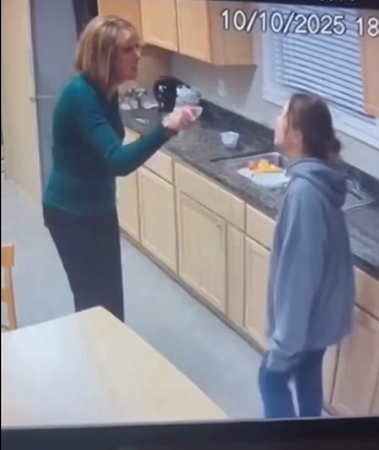
So when the guests left, I walked into the kitchen and asked:

“So… about the trust.”

She didn’t turn around.
Just kept wiping the same spot on the counter — wiping, wiping, wiping.

Then she said softly:

“Honey… that money’s gone.”

My stomach dropped.

“What do you mean gone?”

She finally turned, her fake sweetness melting into irritation.

“You’ve lived here rent-free for years.
I used the money on the family.
On groceries, bills… transportation.”

“Transportation?” I repeated.
“You mean Connor’s Jeep?”

Her eyes went cold.

“Watch your tone,” she snapped.
“That car was for everyone.”
“You won’t even let me upstairs,” I said.

She stepped toward me, jabbing her finger.

“You should thank me for raising you.”

I walked out into the cold night with nothing but my anger shaking inside me.

The Call That Changed Everything

The next day, I called my mom’s old lawyer — Mr. Latham.


She trusted him. I trusted her.

He looked through the documents and said the words that broke me:

“She withdrew every dollar six months ago.
It was filed under ‘guardian expenses.’
It’s technically legal.”

I felt like ice water poured into my chest.

But I didn’t cry.
I didn’t scream.

I got to work.

Two jobs — grocery store and a mechanic’s shop.
I bought my own clothes, saved every dollar.
Slowly, painfully, I rebuilt myself from ashes.

Meanwhile Connor bragged about his Jeep —
my Jeep —
revving it in the driveway like a trophy.

“Want to wash it, basement boy?”
I ignored him, but the fury stayed locked behind my teeth.

I didn’t know karma was already on its way.

The Night Connor’s Luck Ran Out

Two months later, on a rainy October night, Connor was speeding, texting, showing off — the usual.
He hit a slick curve.
Lost control.
Crashed hard into another car.

The Jeep was destroyed.
He survived — barely.

Broken bones.
Concussion.
Career-ending shoulder damage.

The other car held a woman and her teenage son.
Both seriously injured.
Both hospitalized.

For once, the noise in our house wasn’t Tracy yelling at me —
it was her crying for him.

And me?
I drove her to the hospital.
Not because she deserved it.
But because I knew what losing someone felt like.

Connor recovered slowly.
Blamed everyone but himself.
The police report said otherwise.

Then Tracy got a letter.

She was being sued.
Because the Jeep was registered in her name.

And just like that, her world began to collapse.

Court, Karma, and the Truth Finally Unmasked

A month later, the court date arrived.

Tracy walked in dressed like grief and humility itself.
Tears in her eyes, trembling hands — the whole performance.

“I’m a single mother,” she sniffed. “I’m doing my best.”

Then the opposing lawyer pulled out the financial records.

Bank statements.
Withdrawal forms.
Dates.
Signatures.
Every dollar she stole from my trust — in print.

The judge leaned forward.

“Mrs. Thomas, can you confirm you used your stepson’s inheritance?”

She stuttered, “It was for family expenses…”

He asked, “Did those expenses include your biological son’s Jeep?”

Silence.
Heavy.
Perfect.

In the end, the ruling was clear:

She owed $75,000 to the injured family.
She owed me $25,000 for misusing my inheritance.
Total: $100,000.

She didn’t have it.
She had to sell the house — within one month.

The house where she banished me to the basement.
The house she “ran.”
Gone.

The Jeep was already scrap metal in a yard.

She and Connor moved in with her sister three states away.
No forwarding address.
No apology.

On the day she left, she tried one last line:

“You’re cold, Ryan.
I treated you like my own.”

I looked her straight in the eyes.

“No.
You treated me like a burden.
My mom treated me like her world.
That’s the difference.”

She had nothing left to say.

Building the Life She Said I Didn’t Deserve

I stayed in town.
Kept working at the mechanic shop.
Saved every paycheck.
The guys at the garage helped me fix up an old Ford Ranger someone donated.
It runs.
It’s mine.
And it feels like freedom.

I’m saving for college — slowly, honestly, proudly.

No basement.
No scraps.
No fear.

Just a 19-year-old rebuilding a future that was stolen and returned by something bigger than revenge.

Tracy texted me once after the court ruling:

“You got what you wanted. Hope you’re happy.”

I replied with one last message:

“I never wanted revenge.
I wanted justice.”

Then I blocked her.

Sometimes, I drive past the junkyard.
Connor’s Jeep sits there — rusting, broken, twisted.

A monument to greed.
And a reminder that the universe keeps receipts.

My Mom Was Right

Some nights, I remember what Mom told me when I was small, safe in her arms, before the world got heavy:

“You don’t have to get even, baby.
The universe has a long memory.”

She was right.

I didn’t destroy Tracy.
I didn’t ruin her life.
I didn’t push karma.

It found her on its own.

And for the first time in years…
I finally feel free.

Some stories don’t begin with loud explosions or dramatic twists. Some begin quietly — with a child holding onto the last promise his mother ever made.

My name is Ryan, I’m 19, and this is the story of how everything I thought was safe, everything I thought was mine, was taken from me… and how life eventually took care of the people who thought I was too small to matter.

I’ve never posted something this personal before. But I’m angry. And tired. And the whole truth needs to live somewhere other than my chest.

So if you’re reading this — really reading — thank you.

The Last Gift My Mom Ever Gave Me

Before everything in my life fell apart, things were… good. Not perfect, not easy, but filled with warmth. Filled with her.

My mom’s name was Melissa.

She loved Friday-night mac and cheese, hated rainy mornings, and somehow always remembered every silly thing I liked — which Pokémon card I was missing, how I took my hot chocolate, which stuffed animal I hid when kids from school came over so I wouldn’t look “uncool.”

She kissed my forehead every night, even when I pretended to be too old for it.

She was my home.

And then cancer took her — fast, sudden, and cruel. I was nine years old the day I held her hand in that hospital room.

Her skin was cold. She told me to be strong. I tried. I really did. But when the machines beeped their last round, I felt something inside me break in a way no child knows how to describe.

Before she died, she created a $25,000 trust for me — “for his future,” she said.

She whispered in my ear: “Use it for college, or your first place, or something that makes you proud.

That money is for you, baby. Only you.”

My dad stood beside her. He promised he’d protect it.

Back then, I believed him. Back then, I believed in a lot of things.

The Woman Who Changed Everything

For a while after Mom died, Dad and I lived in a quiet grief. He wasn’t perfect, but he tried.

He worked long shifts yet still drove me to science fairs. He tried to keep her memory alive — making the same mac and cheese on Fridays, trying to laugh at the same jokes she used to tell.

But grief has a strange way of weakening people.

When I was 11, Dad met a woman named Tracy. She had a sugary smile — the kind you notice before you realize it never touches the eyes.

At first she seemed kind. She brought brownies. She complimented my hair. She acted patient, warm, almost too warm. Dad fell for her fast. I wanted to believe she could be good for him — for us.

Then came her son, Connor.

My age. Louder. Flashier. Entitled in ways I couldn’t understand yet.

Tracy and Dad got married a year later.

That was the day her mask slipped.

Slowly at first — removing my mom’s things “for healing,” rearranging the house, correcting me for tiny things.

Then aggressively — replacing photos, donating my toys without asking, dismissing any memory of Mom as “unhealthy attachment.”

Then she moved Connor into the biggest bedroom and handed him everything — new clothes, new shoes, new phone.

“Ryan can wear your old stuff,” she’d say.

As if I were a charity case living in my own house.

Losing My Dad Too

When I was 15, Dad died of a heart attack.

I remember Tracy’s scream echoing through the house. I remember seeing the paramedics rolling him away, pale and still. I remember thinking, not again, please not again.

Mom. Then Dad.
Half the world gone in six years.

After the funeral, something inside Tracy hardened.
She became my legal guardian, but she made sure I felt like an intruder.

My room? Taken.
I was moved to the basement — cold concrete walls, a thin mattress, no window, barely any heat.

Dinner?
I ate whatever scraps were left after she and Connor finished.
Sometimes cold. Sometimes half-eaten.

My clothes?
Connor’s castoffs — torn, stained, too small.

My identity?
Reduced to “that boy.”

My existence became something she tolerated, not something she cared for.

I learned to survive quietly.
To shrink myself.
To wait for 18 — the day my mother’s last gift would free me.

Or so I thought.

The Birthday That Unraveled Everything

When I turned 18, Tracy surprised me with a “party.”
Balloons, a cheap store-bought cake, forced smiles.
It felt staged — like she was performing kindness for an invisible audience.

But none of it mattered.
Because after that day, I was supposed to access the trust.
My mom’s promise.
My way out.

So when the guests left, I walked into the kitchen and asked:

“So… about the trust.”

She didn’t turn around.
Just kept wiping the same spot on the counter — wiping, wiping, wiping.

Then she said softly:

“Honey… that money’s gone.”

My stomach dropped.

“What do you mean gone?”

She finally turned, her fake sweetness melting into irritation.

“You’ve lived here rent-free for years.
I used the money on the family.
On groceries, bills… transportation.”

“Transportation?” I repeated.
“You mean Connor’s Jeep?”

Her eyes went cold.

“Watch your tone,” she snapped.
“That car was for everyone.”
“You won’t even let me upstairs,” I said.

She stepped toward me, jabbing her finger.

“You should thank me for raising you.”

I walked out into the cold night with nothing but my anger shaking inside me.

The Call That Changed Everything

The next day, I called my mom’s old lawyer — Mr. Latham.


She trusted him. I trusted her.

He looked through the documents and said the words that broke me:

“She withdrew every dollar six months ago.
It was filed under ‘guardian expenses.’
It’s technically legal.”

I felt like ice water poured into my chest.

But I didn’t cry.
I didn’t scream.

I got to work.

Two jobs — grocery store and a mechanic’s shop.
I bought my own clothes, saved every dollar.
Slowly, painfully, I rebuilt myself from ashes.

Meanwhile Connor bragged about his Jeep —
my Jeep —
revving it in the driveway like a trophy.

“Want to wash it, basement boy?”
I ignored him, but the fury stayed locked behind my teeth.

I didn’t know karma was already on its way.

The Night Connor’s Luck Ran Out

Two months later, on a rainy October night, Connor was speeding, texting, showing off — the usual.
He hit a slick curve.
Lost control.
Crashed hard into another car.

The Jeep was destroyed.
He survived — barely.

Broken bones.
Concussion.
Career-ending shoulder damage.

The other car held a woman and her teenage son.
Both seriously injured.
Both hospitalized.

For once, the noise in our house wasn’t Tracy yelling at me —
it was her crying for him.

And me?
I drove her to the hospital.
Not because she deserved it.
But because I knew what losing someone felt like.

Connor recovered slowly.
Blamed everyone but himself.
The police report said otherwise.

Then Tracy got a letter.

She was being sued.
Because the Jeep was registered in her name.

And just like that, her world began to collapse.

Court, Karma, and the Truth Finally Unmasked

A month later, the court date arrived.

Tracy walked in dressed like grief and humility itself.
Tears in her eyes, trembling hands — the whole performance.

“I’m a single mother,” she sniffed. “I’m doing my best.”

Then the opposing lawyer pulled out the financial records.

Bank statements.
Withdrawal forms.
Dates.
Signatures.
Every dollar she stole from my trust — in print.

The judge leaned forward.

“Mrs. Thomas, can you confirm you used your stepson’s inheritance?”

She stuttered, “It was for family expenses…”

He asked, “Did those expenses include your biological son’s Jeep?”

Silence.
Heavy.
Perfect.

In the end, the ruling was clear:

She owed $75,000 to the injured family.
She owed me $25,000 for misusing my inheritance.
Total: $100,000.

She didn’t have it.
She had to sell the house — within one month.

The house where she banished me to the basement.
The house she “ran.”
Gone.

The Jeep was already scrap metal in a yard.

She and Connor moved in with her sister three states away.
No forwarding address.
No apology.

On the day she left, she tried one last line:

“You’re cold, Ryan.
I treated you like my own.”

I looked her straight in the eyes.

“No.
You treated me like a burden.
My mom treated me like her world.
That’s the difference.”

She had nothing left to say.

Building the Life She Said I Didn’t Deserve

I stayed in town.
Kept working at the mechanic shop.
Saved every paycheck.
The guys at the garage helped me fix up an old Ford Ranger someone donated.
It runs.
It’s mine.
And it feels like freedom.

I’m saving for college — slowly, honestly, proudly.

No basement.
No scraps.
No fear.

Just a 19-year-old rebuilding a future that was stolen and returned by something bigger than revenge.

Tracy texted me once after the court ruling:

“You got what you wanted. Hope you’re happy.”

I replied with one last message:

“I never wanted revenge.
I wanted justice.”

Then I blocked her.

Sometimes, I drive past the junkyard.
Connor’s Jeep sits there — rusting, broken, twisted.

A monument to greed.
And a reminder that the universe keeps receipts.

My Mom Was Right

Some nights, I remember what Mom told me when I was small, safe in her arms, before the world got heavy:

“You don’t have to get even, baby.
The universe has a long memory.”

She was right.

I didn’t destroy Tracy.
I didn’t ruin her life.
I didn’t push karma.

It found her on its own.

And for the first time in years…
I finally feel free.