

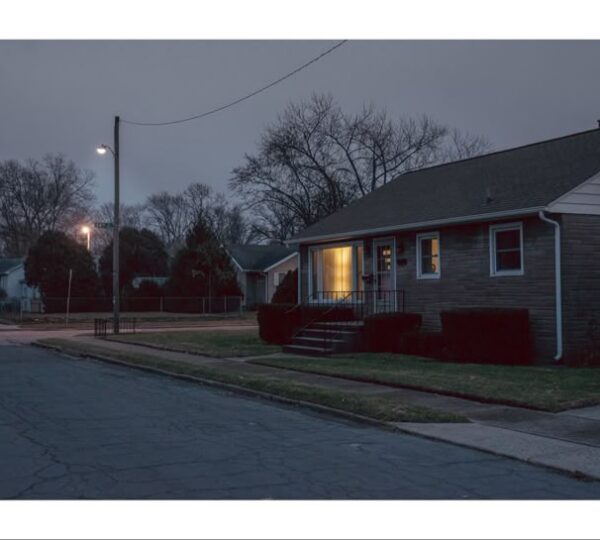
It was the kind of neighborhood people describe as “safe” without thinking twice about it. A quiet suburban street lined with nearly identical houses, two-car garages, and neatly edged lawns.
Porch lights glowed softly, not because anyone was afraid, but out of habit. Families waved to each other on weekends, and children rode bikes in slow circles until dinner was called.
On that particular night, everything seemed perfectly ordinary. The air was still, curtains were drawn, televisions had gone dark one by one, and dogs had settled at the foot of beds.
Parents had checked locks, turned off kitchen lights, and slipped under blankets, believing they had done everything necessary to protect the people they loved. The illusion of safety was complete—until 1:07 a.m.
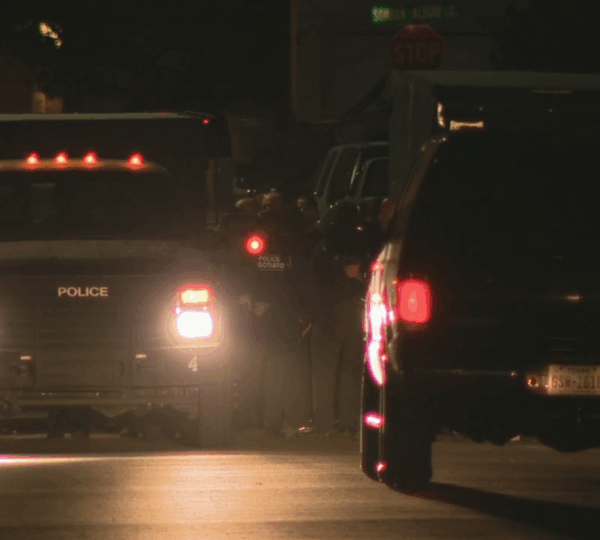
At the county emergency dispatch center, the overnight shift was quiet, with only a few routine calls: a minor fender-bender, a noise complaint, a child afraid of the dark. Then a line lit up.
The dispatcher answered in the steady, professional tone that had become second nature. “911, what’s your emergency?” Silence. Not static. Not the abrupt click of a dropped call. Just quiet.
And then, barely above a whisper, a small voice said, “Please… come quick. There’s someone in my room.” The dispatcher’s body went rigid. Training took over: stay calm, gather information, don’t alarm the caller.
“What’s your name?” she asked. A pause. Then the child answered, giving her name and address. She did not cry, and that—more than anything—made the dispatcher uneasy. Children who imagine monsters usually cry. This one did not.
Officer James Mallory had been on the force for nine years. He had seen his share of midnight calls from frightened children, but most ended in reassurance, not danger.
Nightmares and misunderstandings were common. Still, he never ignored a child’s fear. When the dispatch details came through, he headed toward the address without hesitation.
The neighborhood was familiar—the kind of place where officers rarely found trouble. As he turned onto the street, everything looked exactly as it should: no shattered glass, no forced doors, no suspicious vehicles.
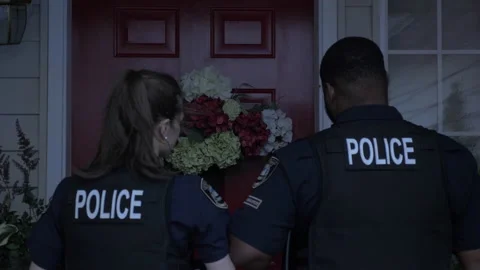
The house in question seemed peaceful. The porch light glowed, curtains were drawn, nothing disturbed. Mallory approached the door, rang the bell, and waited.
A woman opened the door, her robe tied loosely and hair disheveled from sleep. “Yes?” she asked. “Ma’am, we received a 911 call from this address,” Mallory explained. Confusion spread across her face.
“I didn’t call,” she said. He hesitated. “It was placed by a child.” Her expression shifted from confusion to mild embarrassment. “Oh,” she said, exhaling. “It must have been my daughter.
She’s been having bad dreams lately.” She turned toward the hallway. “Sweetie? Did you call 911?” There was no answer. Mallory didn’t dismiss it. “Would you mind if I just spoke with her for a moment?” The mother sighed but stepped aside.
The hallway was dimly lit, lined with family photos capturing vacations, birthdays, and first days of school. The girl’s bedroom door was slightly open, and inside a small bedside lamp cast a soft glow across pastel walls and shelves filled with stuffed animals.
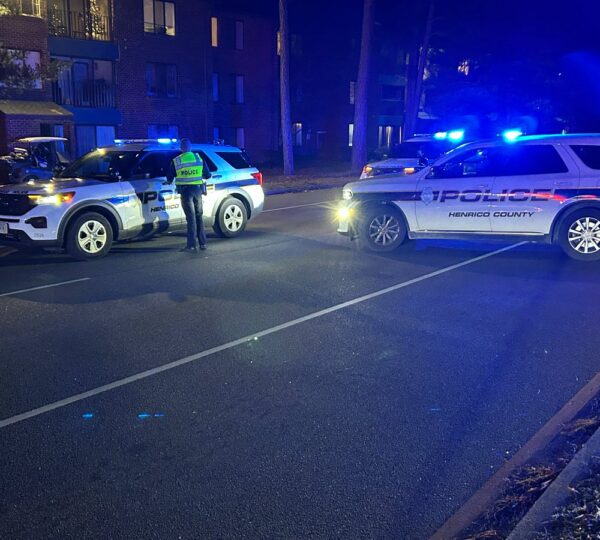
The little girl was sitting upright in bed, holding a worn stuffed elephant. She wasn’t crying or moving—just still, with eyes wide and fixed. Mallory crouched beside her.
“Hey there,” he said gently. “I’m Officer Mallory. You called for help?” She nodded once and whispered, “There’s someone in my room.” Her mother stepped forward quickly.
“Honey, we talked about this. There’s no one here,” she said. But the girl didn’t look at her mother. She kept staring at the far wall. Slowly, she lifted her hand and pointed—toward the air vent.
The vent was standard—metallic, slightly rusted—but the intensity of her gaze made Mallory instinctively alert. He walked closer, knelt, and ran his fingers along the screws. Loose.
Not dangling, but not tight. “Has this vent ever been removed?” he asked the mother. “Not that I know of,” she replied. Mallory stood slowly. “Ma’am, I’m going to take a closer look.”
Removing the vent cover, he shined his flashlight inside. At first, it looked like ductwork, but then he noticed open space—a hollow cavity large enough for a person. He called for backup.
The house, built in the 1940s, included service shafts and vertical tunnels used decades ago for dumbwaiter systems and utilities.
The flashlight revealed that the vent opened into one such shaft, which had not been accessed in years. Backup arrived within minutes, and the shaft was carefully widened.
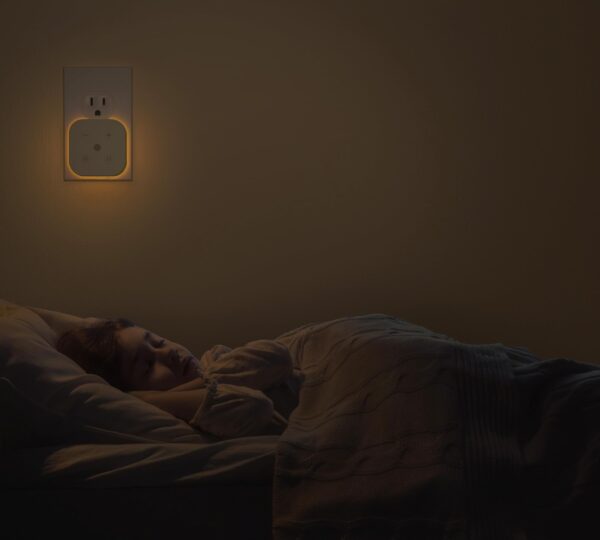
By morning, the neighborhood was awake to something it had never imagined. Police vehicles lined the street, crime scene technicians combed the home, and neighbors clustered in driveways whispering questions: “How long has this been going on?”
“Could it happen to us?” Search dogs and investigators examined every crevice, from the attic to the basement. No forced entry. Whoever had been there had vanished.
The bedding was cold, the food stale, and the prints were fading. Weeks of investigation produced no arrest, no name, no face. Only the knowledge that someone had been living inside the walls, unseen.
Life on the street changed forever. Parents double-checked vents at night. Children slept with doors firmly closed. Neighborhood watch programs expanded. Some families moved away.
Others stayed, determined not to give fear the power to dominate their lives. The most haunting part was not only the intrusion itself, but the narrow margin by which it was discovered.
If the dispatcher had dismissed the whisper, if the officer had trusted the mother’s assumption, if the girl had stayed silent, the hidden space might never have been revealed.
In the end, the bravest person that night was a five-year-old girl holding a stuffed elephant. She didn’t scream, she didn’t panic, and she didn’t exaggerate. She simply spoke the truth.
Because she did, a secret hiding in the walls was brought into the light. The story remains a reminder: sometimes danger does not crash through doors or leave broken windows.
Sometimes it lives quietly beside us, in places no one thinks to check, and the smallest voice can be the one that saves lives. Awareness, courage, and listening—sometimes from the least expected source—are what stand between safety and disaster.
