
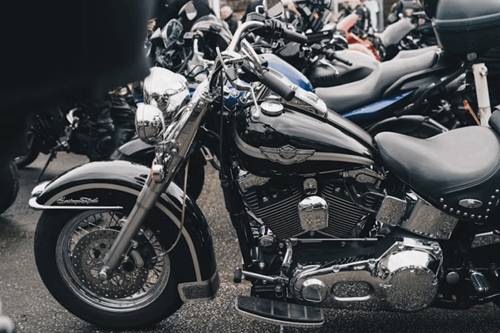
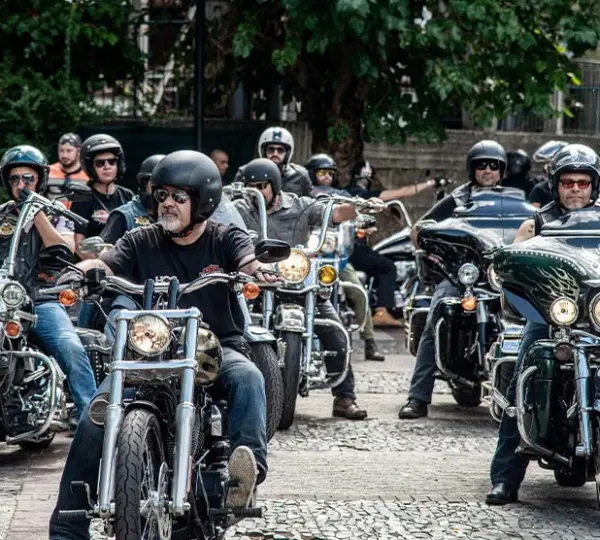
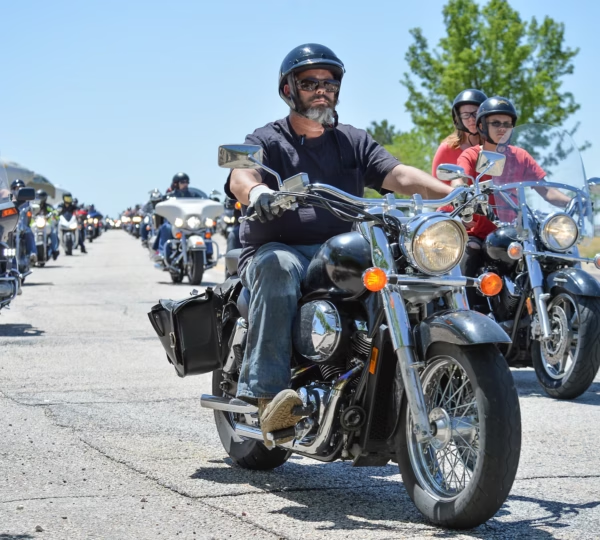
In the early hours of a quiet spring morning, precisely at seven o’clock, a convoy of 47 motorcycles rolled down our narrow street.
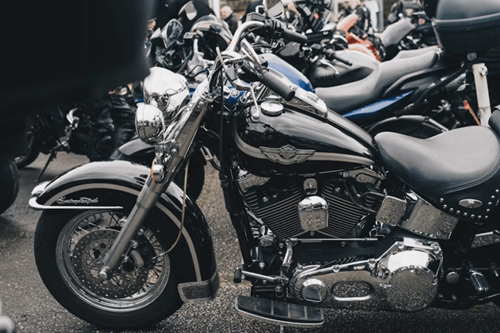
The soft golden light of dawn caught the chrome and leather of each bike, reflecting off helmets and polished gas tanks.
The rumble of engines, low and steady, announced their arrival long before they reached our small home. For a moment, I was frozen, uncertain what to expect. The bikers wore leather vests etched with patches, names, and symbols—marks of a life lived fiercely.
Many had gray beards, sun-worn faces, and tattoos tracing years of personal battles, both on and off the road. They seemed formidable, yet there was an undeniable warmth in the way they rode in formation, moving with discipline and purpose, as if protecting a sacred space.
They weren’t just friends of my late husband, Jim; they were guardians of memory, carrying a collective promise to a boy who had lost his hero.
For three weeks, my son Tommy had refused to leave our home. Since his father’s tragic death in a motorcycle accident on the way to work, Tommy had been gripped by a constant, choking fear.
He would cling to me each morning, small hands pressed to my knees, whispering, “Don’t let them take you too, Mommy. I don’t want to be alone.” Each sob, each plea, tore at my heart. No amount of gentle coaxing, no bedtime story, no promises of safety could soothe his terror.
But that morning was different. Tommy ran to the window as the first motorcycles appeared, his tiny frame pressing against the glass. His eyes widened with awe, reflecting the sunlight bouncing off leather and chrome.
One by one, Jim’s brothers, close friends, and former comrades from his Army days arrived, riding with the precision and quiet discipline of men who had faced danger together.
They hadn’t been seen since the funeral three months prior, and their presence brought a strange mix of comfort and disbelief.
“Why are Daddy’s friends here, Mommy?” Tommy whispered, his voice trembling with curiosity and hope.
Leading the group was Bear, a towering man whose presence commanded attention without intimidation. Bear had been Jim’s closest confidant since their Army days, a man whose strength was matched by the gentleness in his eyes.
He walked up the driveway holding a helmet, one that made my chest tighten instantly—it was Jim’s, the very one he had worn the day he was killed by a drunk driver.
For months, I had kept the helmet tucked away in the attic, unable to face it. Its presence was a haunting reminder of a day I wanted to erase from memory.
Yet here it was, carefully held in Bear’s hands, looking almost restored, the leather polished and the scratches softened. Behind dark sunglasses, I could see Bear’s eyes rimmed red with emotion.
“We heard Tommy is having a hard time going to school, Ma’am,” Bear said quietly, his voice calm but filled with meaning. “Jim would have wanted us to help.”
I stared at him, confused. “How did you…?”
“There’s something you need to see,” Bear interrupted gently. “While we were restoring the helmet, we found a letter Jim left for Tommy inside.”
My heart stuttered. “A letter?”
Bear nodded solemnly. “We didn’t read it at first. We thought it was private, between father and son. But now… it seems important.”
With trembling hands, I unfolded the worn, creased note tucked inside the helmet’s lining. Jim’s handwriting, familiar and earnest, filled the page:
“If you’re reading this, my boy Tommy, it means I didn’t make it home one day. I want you to know something very important. More than anything, your father loved you. I’m sorry I can’t help you tie your shoes or chase away the monsters under your bed.
But you have your mother—she is the strongest person I know. And you have my brothers, who will always be there for you. You’re never alone. Be kind, live honestly, and ride hard. Love, Dad.”
Tears streamed down my face as Tommy climbed into my lap, small hands pressed to my chest, his forehead resting against my collarbone. “Did Daddy really write that?” he asked softly.
“Yes, sweetheart. He did,” I whispered, choking back my tears.
Bear knelt down beside Tommy. “Your dad was brave, kid. And he loved you more than you can imagine.”
Tommy’s lower lip trembled, but then he straightened with surprising courage. “Will you help me go to school?”
Bear smiled, the warmth in his eyes steady. “That’s exactly why we’re here.”
Within moments, the 47 bikers formed a protective convoy outside our home. Each engine roared with gentle power, a sound both fierce and reassuring.
Tommy, clad in a small helmet decorated with hand-painted flames, climbed onto the back of Bear’s Harley. As we rolled down the quiet street, engines harmonizing like a collective heartbeat, I could see the transformation in my son.
He wasn’t just riding; he was stepping into courage with the support of an extended family of men and women who had lived, loved, and lost.
At the school gates, neighbors peeked from behind curtains in disbelief. Children in the playground ran to the fence, pointing and cheering. Teachers stood stunned, unsure how to respond to such an extraordinary display of support. Tommy dismounted Bear’s bike, standing tall, eyes shining with newfound bravery.
“I think I can go now,” he said firmly, turning back to me. “Daddy sent his friends to protect me.”
I kissed his forehead and whispered, “He really did.”
One of the younger riders, a woman named Cricket, handed Tommy a lunchbox embroidered with his name. “From all of us,” she said softly. “And we’ll be here after school, too. You’ll never have to walk alone.”
That morning marked the beginning of a new normal. Each day, Tommy was escorted to school by bikers. Sometimes it was Bear and Cricket; other times, several members of the pack accompanied him.
Their engines purred and leather jackets cracked in comforting rhythm. The school even reserved a special parking space for them. Gradually, Tommy’s fear faded.
He began sleeping in his own bed again, joined the school’s “Kindness Club,” and made friends more easily, inspired by the unwavering example of courage he witnessed daily.
Two months later, there was another unexpected visitor. During dinner, a woman named Sarah came to our door, holding the hand of her young daughter, Lily, who had a pink cast on her arm.
“I hope this isn’t strange,” Sarah began hesitantly. “My daughter Lily and Tommy go to the same school. Last week, Lily fell from the monkey bars, and Tommy stayed by her side until help came. She says he wouldn’t leave her alone.”
I was surprised. “I didn’t know that.”
Lily smiled shyly. “He told me his dad taught him to always be kind.”
Sarah’s eyes glistened. “I wanted to thank you. My brother died in Afghanistan, and when I saw the bikers, I realized I wasn’t alone in my grief. Would it be okay if I joined one of your rides sometime? Just to feel that connection again?”
The movement that began as Jim’s friends supporting his son grew into something larger. Veterans, widows, parents who had lost children, and young adults who had lost friends—all came together, united by the mission to ensure no child felt as alone as Tommy had.
The bikers were no longer seen simply as “rough guys” on the outskirts of society; they were mentors, protectors, and pillars of the community.
By spring, our town had transformed. Bikers taught kids how to maintain motorcycles, built wheelchair ramps, and organized community events to support grieving families.
Tommy, inspired by these examples, brought home a school project flyer: “Bring an item that reminds you of your hero.” Without hesitation, he chose Jim’s original helmet, the one Bear had carefully restored and kept safe.
“Are you sure?” I asked gently.
“Daddy is my hero,” he said firmly. “Not just because he was brave, but because even when he’s not here, what he left me makes me strong.”
At school, Tommy shared his story with classmates. “My dad died because someone drove drunk. But he left me a letter, and his friends make sure I’m never afraid again.
That’s what being a hero means to me.” Parents and teachers wept openly, touched by the bravery and compassion the boy exhibited.
Word of “Tommy’s Crew” spread. The mayor announced a townwide ride to raise awareness about drunk driving and support families affected by tragedy. Hundreds of riders joined, forming a convoy that stretched for miles.
Tommy led the group, flanked by Bear and Cricket, while I followed in a sidecar, gripping the handlebars with a sense of awe. The ride was not only a tribute to Jim but a celebration of resilience, community, and the enduring power of love.
Later that night, Bear handed me a small, worn notebook found in Jim’s old army locker. Pages were filled with drawings of motorcycles, baby names, hopes, fears, and little doodles reflecting a life full of care. The final page read:
“Let me give my boy the tools to live a full life if I don’t get to grow old. And maybe my brothers will hold his hand if I’m not there.”
Jim never wanted a monument or a gravestone. His wish was far simpler, yet infinitely more profound: a boy who could face the world courageously, surrounded by a family of chosen angels, mentors, and friends.
Our small town learned a powerful lesson: true strength is not defined by loud engines or leather jackets but by perseverance, love, and community.
Life can shatter us, yet love finds ways to slip through the cracks, if we let it. Tommy rides forward every morning, fearless and hopeful, a living testament to what happens when compassion is acted upon. Just like that once-broken helmet, life may bruise us—but with care, it can be made whole again.
If this story touched you, please share it. Let others know that compassion, courage, and the willingness to stand beside someone in fear can transform lives, creating ripples that last far beyond a single day.
